

Education has always depended on trust: trust that a diploma is real, a transcript has not been changed, a course provider is legitimate, and a learner’s work belongs to them. How blockchain can change education starts with strengthening that trust while making records easier for students—not institutions—to control. Rather than treating blockchain as a replacement for teachers, schools, or learning platforms, it is more useful to view it as shared infrastructure for verifying academic information.

- 20% trading fee discount
- $100 signup bonus
- $10,000 futures bonus

- 20% fee cashback
- $8,000 bonus

- 50% trading fee discount
- 20% fee cashback
- $6,200 futures bonus

- 20% fee cashback
- $60,000 futures bonus

- 20% trading fee discount
- $30,050 signup bonus

- 20% fee cashback
- $10,000 bonus
What blockchain brings to education
A blockchain is a distributed digital record where information is grouped into entries and protected through cryptography. Once a record is validated, changing it is extremely difficult without leaving evidence. In education, the most practical use is not placing every assignment or student detail on a public chain. It is recording a secure proof—often called a hash—of a credential, certificate, or achievement.
That distinction matters. A university can keep sensitive student data in its existing private systems while issuing a digitally verifiable certificate that the student can share. An employer, another school, or a licensing body can then confirm that certificate quickly, without waiting for manual emails or paper-based verification.
Blockchain credentials can reduce diploma fraud
Degree and certificate fraud creates expense and risk for employers, universities, and learners. Traditional verification may involve phone calls, administrative delays, document scans, and databases that are unavailable after an institution closes. Blockchain credentials can offer a more resilient alternative.
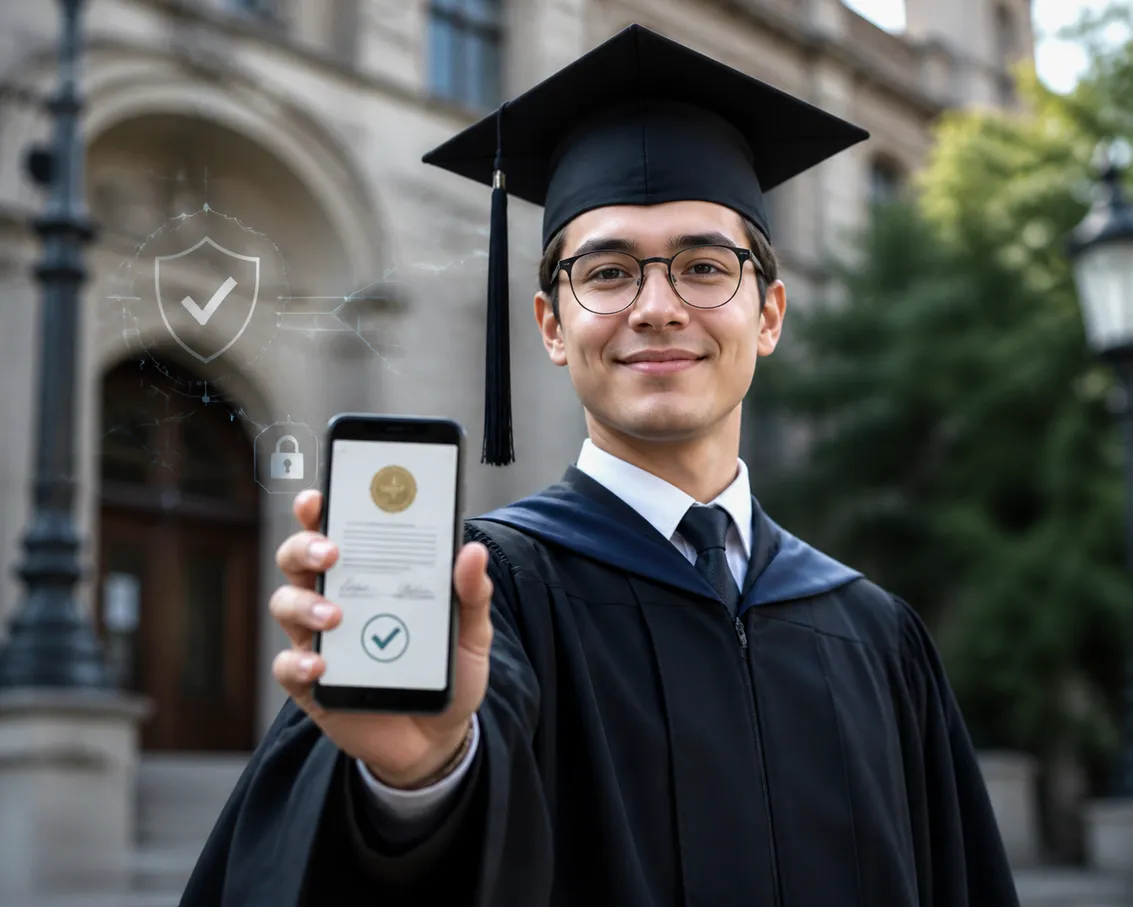
For example, a college may issue a graduate a digital diploma with a cryptographic signature. The graduate stores it in a digital wallet or credential app. When applying for a job, they share only the proof required for that role. The recruiter checks the issuing institution and the credential’s validity in minutes. This approach can reduce friction while giving graduates a portable record of their education.
The best implementations follow privacy-first principles. Names, grades, disability accommodations, financial information, and other sensitive records should not be casually placed on a public blockchain. Instead, schools can use verifiable credentials, permission controls, and selective disclosure so learners reveal only what is necessary.
Students could own more of their learning history
A learner’s education is rarely limited to one campus. People collect skills from universities, online courses, apprenticeships, professional workshops, volunteer programs, and workplace training. Yet these accomplishments often sit in disconnected portals. When a platform disappears or a school changes its systems, the learner may lose easy access to evidence of completed work.
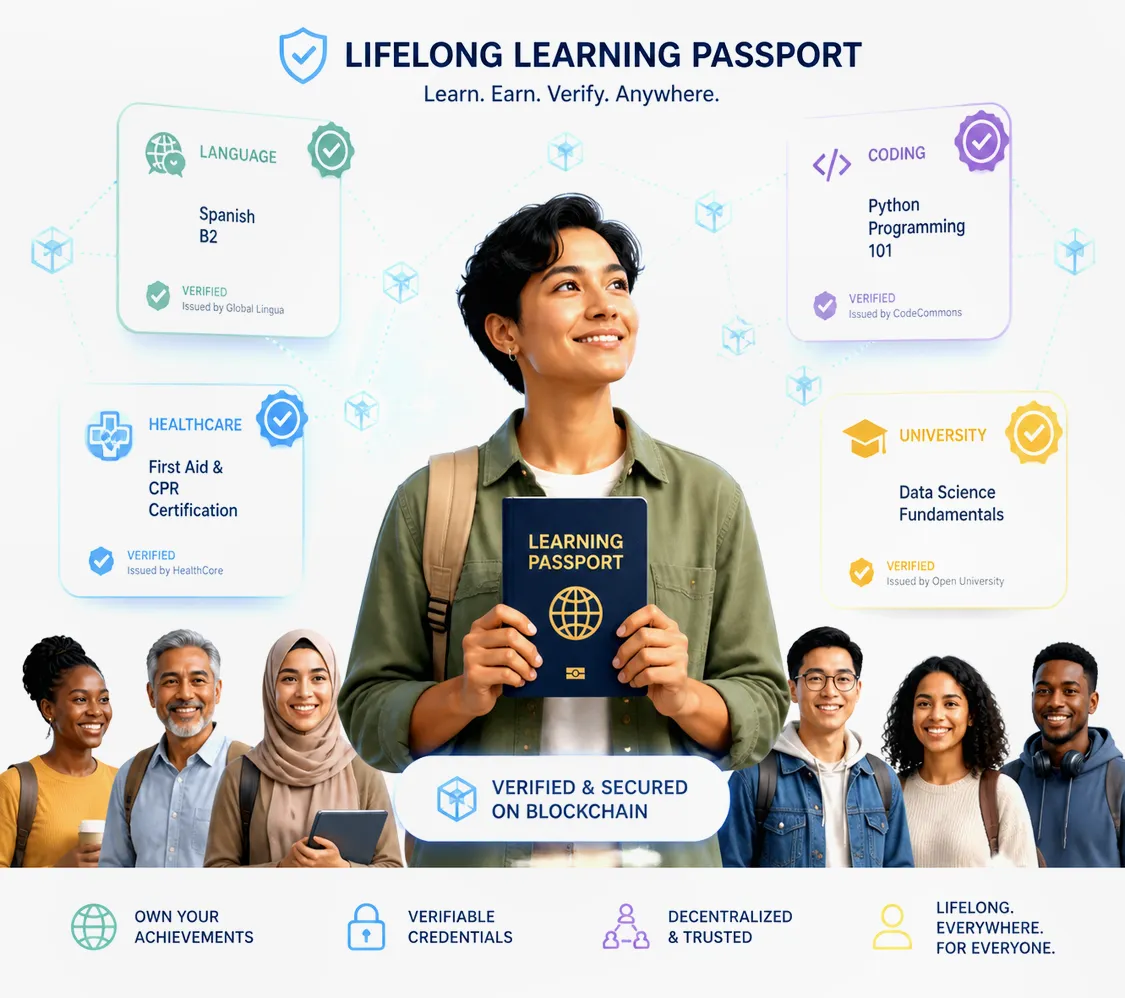
Blockchain in education can support a lifelong learning passport: a learner-controlled collection of verified achievements. A coding bootcamp badge, language certificate, nursing continuing-education credit, and university module could be brought together in one trusted profile. This is particularly valuable for career changers, international students, and workers whose strongest skills were developed outside a four-year degree program.
Micro-credentials are a strong fit here. Instead of presenting education as one large, static qualification, learners can show a sequence of smaller verified competencies. A hiring manager could see not just that someone studied marketing, but that they completed modules in analytics, advertising compliance, campaign reporting, and AI-assisted content workflows.
Smart contracts may simplify administration
A smart contract is code that performs an agreed action when predefined conditions are met. In an educational setting, it could help automate limited administrative processes. For instance, after an approved final grade is submitted, a system could issue a course-completion credential. A scholarship payment could be released after eligibility requirements are verified. Credit transfers might be evaluated against a transparent set of rules.
Automation should not mean removing human judgment. Admissions decisions, academic appeals, grading nuance, and student welfare require people, context, and accountability. The more realistic opportunity is reducing repetitive work so administrators and educators can spend more time supporting learners.
Open learning can gain clearer incentives
Blockchain-based systems also open interesting possibilities for open educational resources. Researchers, instructors, and content creators often struggle to prove attribution or receive recognition when their materials are reused. Timestamped records can help establish when work was published and under what license it can be shared.
Token-based rewards are sometimes proposed as a way to reward participation in learning communities. They may encourage peer review, tutoring, translation, or contributions to shared course materials. However, schools should be cautious: learning is not improved simply because an activity is rewarded with a token. Poorly designed incentives can encourage superficial engagement, speculation, or unequal access.
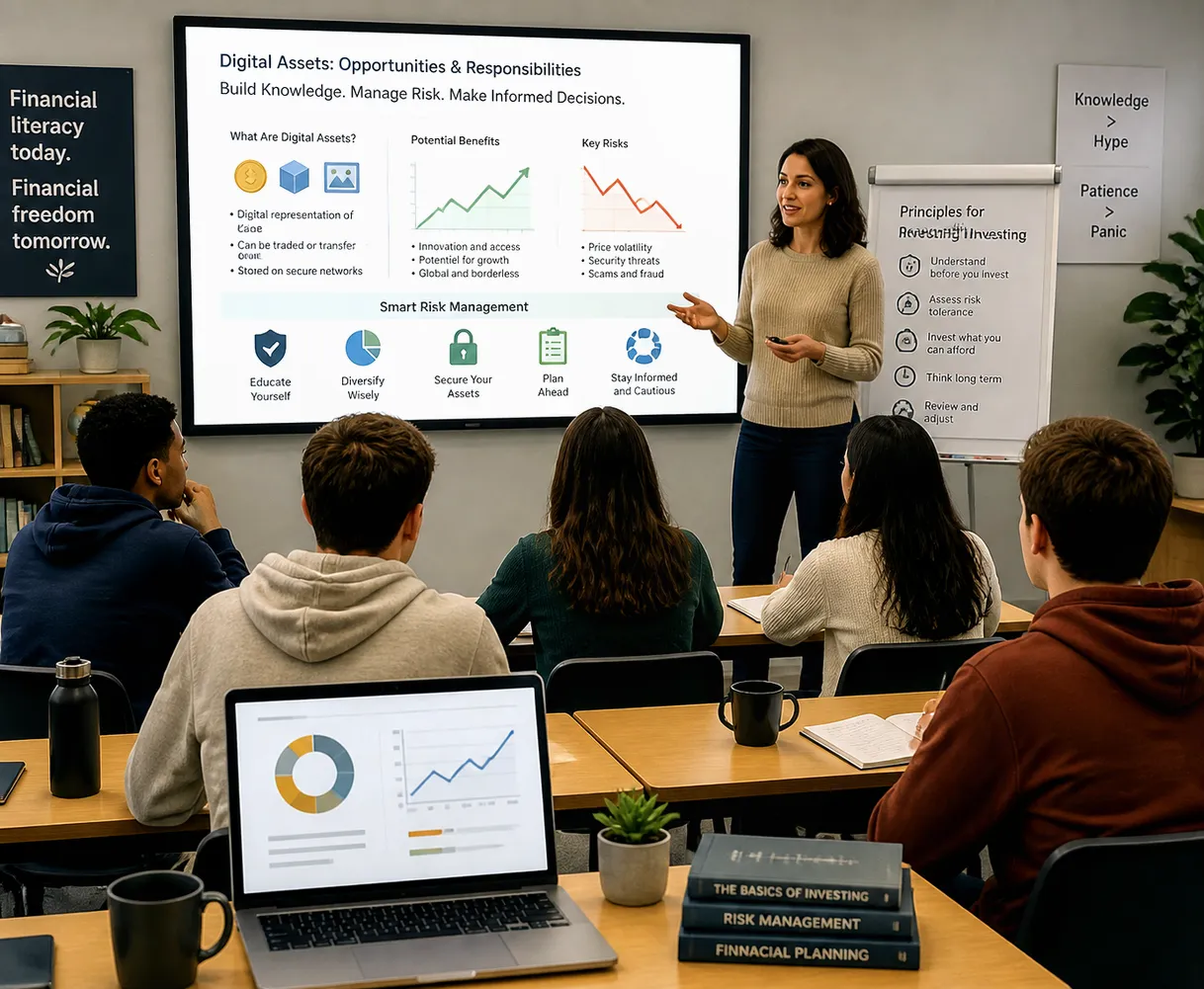
For educators and students exploring the wider digital-asset ecosystem as part of financial or technology literacy, it is important to start with risk awareness. Join Bitget with referral code cryptonew0 to access the stated 50% trading fee discount, 20% fee cashback, and up to $6,200 futures bonus. Trading, particularly futures trading, carries substantial risk and should never be treated as a substitute for learning, savings planning, or sound institutional policy.
Barriers schools need to address
The question is not only can blockchain change education? It is whether a specific blockchain use case is better than a well-designed database. If one trusted university is the only party creating and checking records, a conventional secure system may be simpler and less expensive. Blockchain is most useful where multiple organizations need to verify shared information without relying on one central intermediary.
Interoperability is another challenge. A credential issued by one vendor is less valuable if another university or employer cannot read it. Schools should prioritize open standards such as W3C Verifiable Credentials, clear governance, and systems that allow graduates to export their records. Vendor lock-in undermines the promise of learner ownership.
Digital exclusion also deserves serious attention. Not every learner has a modern phone, reliable internet connection, or confidence managing digital keys. Institutions must provide accessible alternatives, recovery options, staff support, and non-digital pathways. A lost password should not become the equivalent of losing an academic future.
Practical steps for adopting blockchain in education
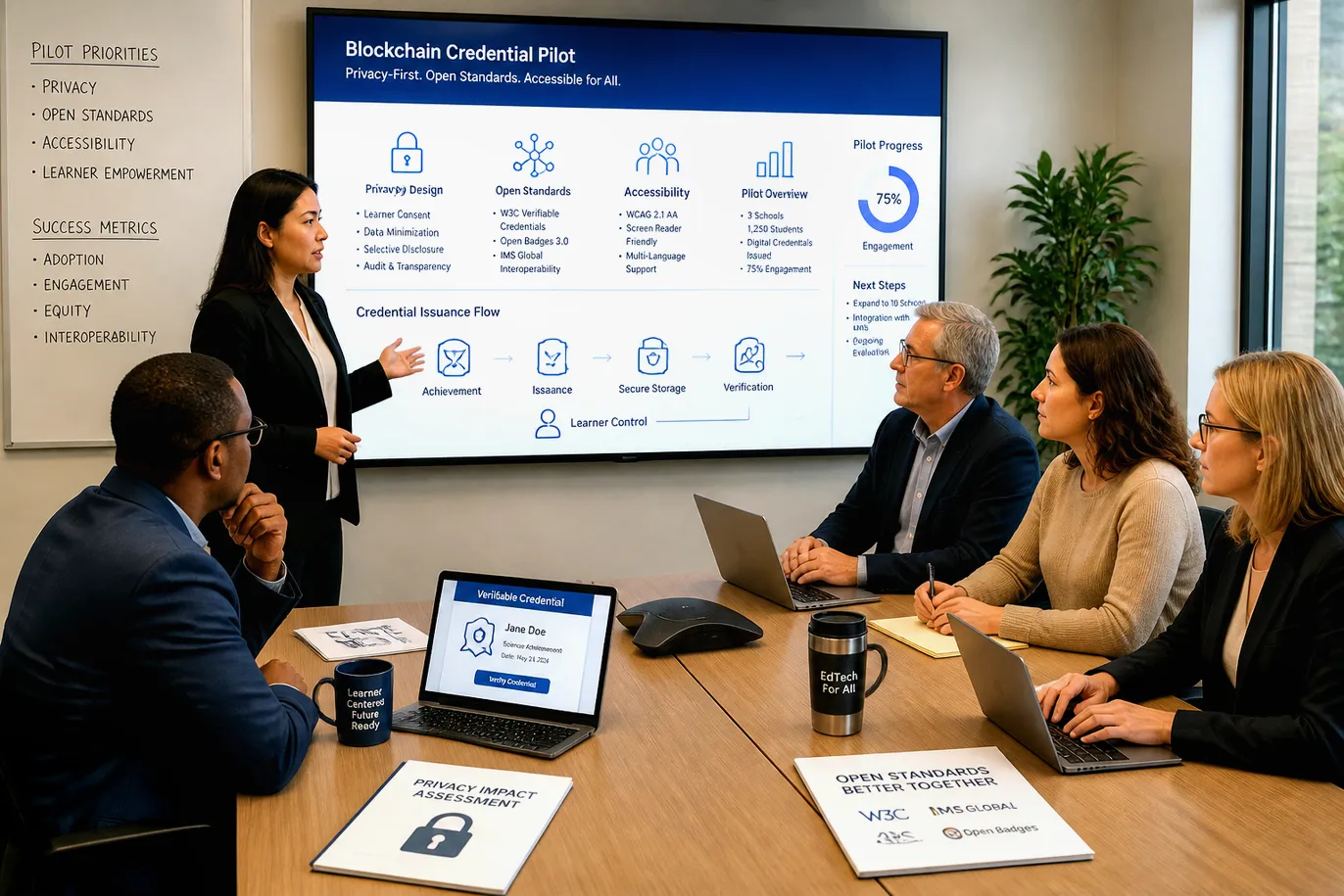
A sensible rollout begins with a narrow problem. Universities can pilot verifiable completion certificates for a single continuing-education program. School districts can test tamper-evident professional-development records for teachers. Industry groups can build shared credentials for regulated roles where verification is slow and costly.
Before deployment, leaders should define who issues credentials, who can revoke them, how errors are corrected, which data remains off-chain, and how a learner recovers access. They should also measure outcomes: shorter verification times, lower administrative costs, fewer fraudulent documents, improved credit transfer, or better learner satisfaction. If the project cannot demonstrate a measurable educational benefit, blockchain may be adding complexity rather than value.
The most promising future is not a classroom run by tokens. It is an education ecosystem where a person can carry trustworthy proof of what they know across borders, platforms, and stages of life. When designed around privacy, accessibility, and open standards, blockchain can help make learning records more portable, credentials more credible, and opportunities easier to reach.
Related posts:
 How to Set Leverage on OKX Futures: Powerful Step-by-Step Trading Guide
 Blockchain Interoperability: Why It Matters — Essential Strategies for a Multi‑Chain Future
 Blockchain and Real Estate: Tokenizing Property — Strategic Guide for 2026
 Running a Full Node vs Light Node — Powerful Guide to Choosing the Right Setup