
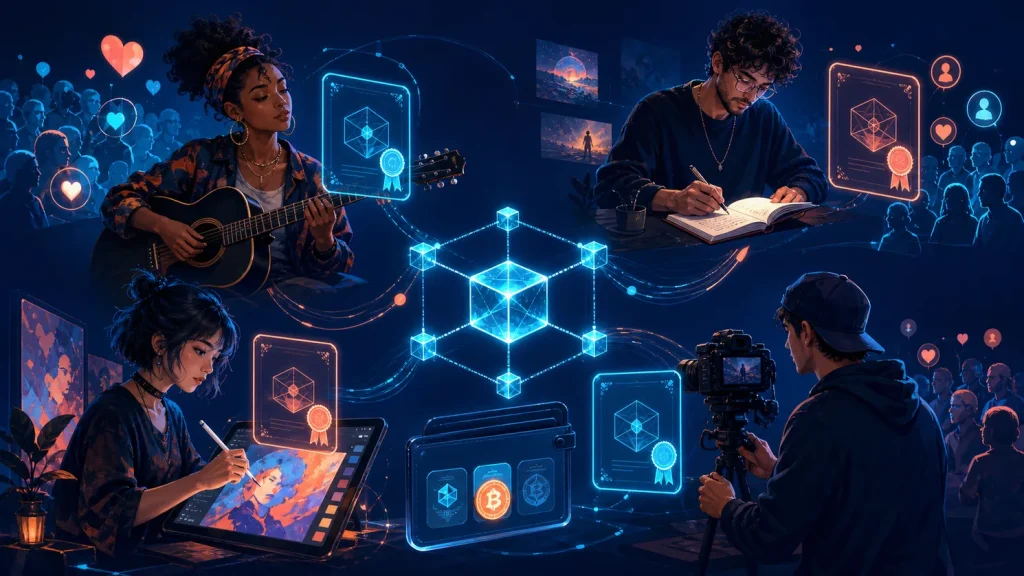
The blockchain creator economy is changing a basic rule of online work: creators no longer have to rely entirely on a platform to own their audience, distribute value, or monetize a loyal community. Writers, musicians, illustrators, video makers, educators, gamers, and independent brands have traditionally built their reach on centralized services that control discovery, take fees, and can change terms without notice. Blockchain introduces a different toolkit—one built around verifiable ownership, programmable payments, and portable digital assets.

- 20% fee cashback
- $10,000 bonus

- 50% trading fee discount
- 20% fee cashback
- $6,200 futures bonus

- 20% trading fee discount
- $100 signup bonus
- $10,000 futures bonus

- 20% fee cashback
- $60,000 futures bonus

- 20% fee cashback
- $8,000 bonus

- 20% trading fee discount
- $30,050 signup bonus
This does not mean every creator needs to launch a token or turn every post into an NFT. The meaningful opportunity is more practical. Web3 creator monetization can help people create direct relationships with supporters, prove authenticity, split revenue automatically, and give communities a stake in the projects they help grow.
From Platform Dependence to Digital Ownership
In the conventional creator economy, a creator may have a large following but limited control. Their subscriber list, recommendation traffic, storefront, and income can all depend on one company’s policies and algorithms. A suspended account, a reduced reach rate, or a revised revenue-share policy can quickly disrupt a business.
Blockchain-based records offer a path toward digital ownership for creators. A wallet can act as a portable identity and can hold assets such as membership passes, collectibles, event tickets, and access credentials. Instead of those records living only inside one platform’s database, they can be verified on a public or permissioned network.
Portability matters. A supporter who holds a creator’s on-chain membership can potentially prove that membership across several compatible applications. The creator is not simply renting a follower list; they are building an ecosystem of owned relationships and credentials.
Direct Monetization Without So Many Middlemen

Subscriptions, advertisements, sponsorships, affiliate income, and merchandise remain valuable. Blockchain expands the choices. A creator can issue limited digital editions, token-gated workshops, paid community access, or collectible rewards attached to meaningful moments in their work.
For example, a musician could release 500 digital collector editions of a demo alongside a private listening session. An educator could provide holders of a course credential with continuing access to new lessons. A gaming creator could offer community badges that unlock tournaments or cosmetic in-game items. These models work best when the asset has clear utility, not merely speculative language.
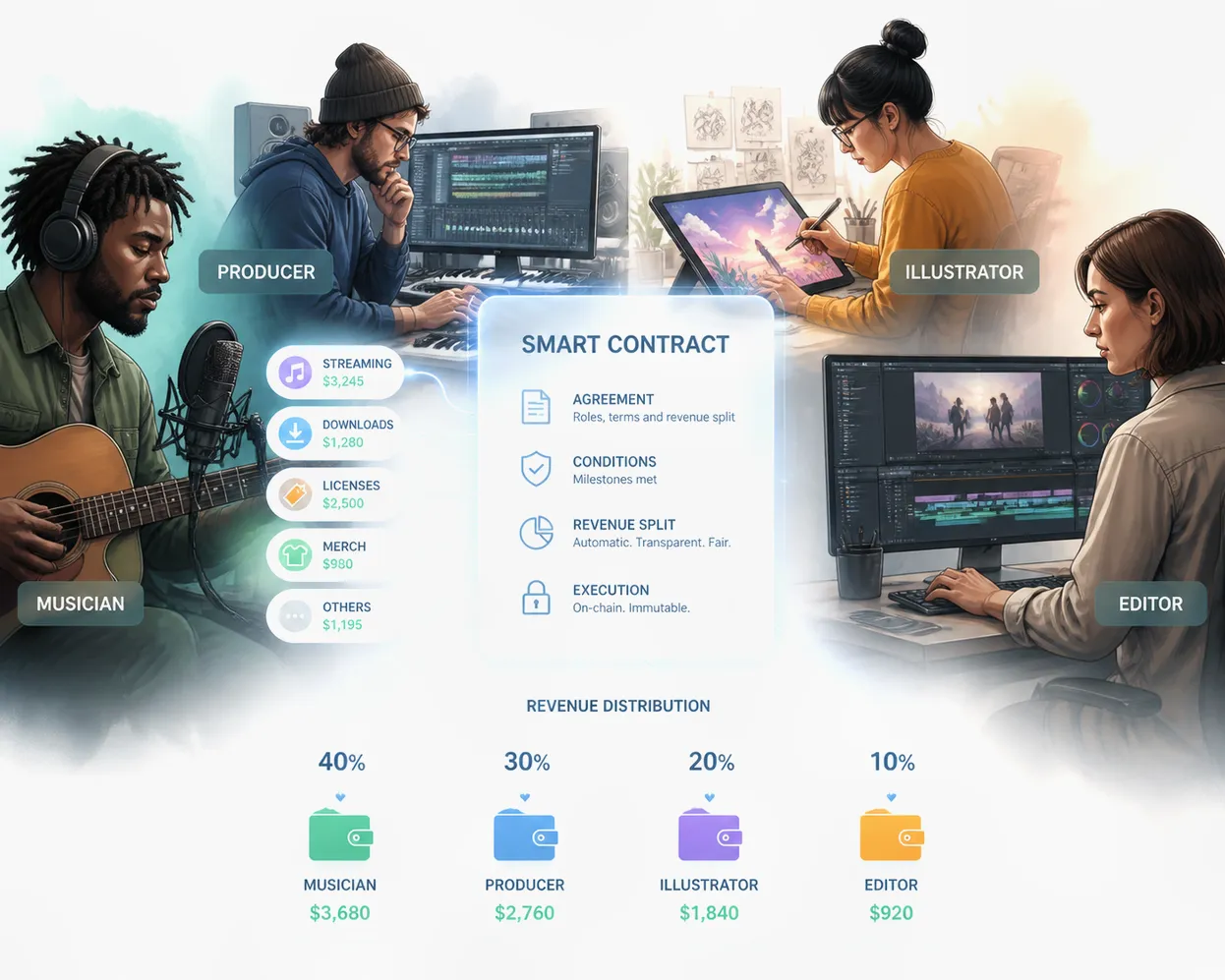
Smart contracts are especially relevant here. They can execute predefined rules automatically: when a buyer purchases an item, funds can be directed to the creator, a collaborator, and a community treasury according to agreed percentages. This can make accounting clearer and reduce payment friction for global teams.
Transparent Royalties and Fairer Collaboration
Creative work is rarely created by one person alone. A track may involve performers, producers, designers, and engineers. A video may have editors, researchers, animators, and writers. Yet tracking each person’s share over time can be complicated, particularly when content is resold or licensed internationally.
With carefully designed smart contracts, royalty splits can be encoded at the point of sale. This does not remove the need for legal agreements or professional accounting, but it can create a transparent payment trail and speed up distribution. Every participant can inspect the logic before work is released, which encourages better expectations and fewer disputes.
The same idea supports creator collaboration on blockchain. A small studio can use an on-chain treasury to document contributions and distribute funds based on community-approved milestones. The technology is not a replacement for trust, but it offers shared records that make trust easier to verify.
Community Membership That Has Real Utility
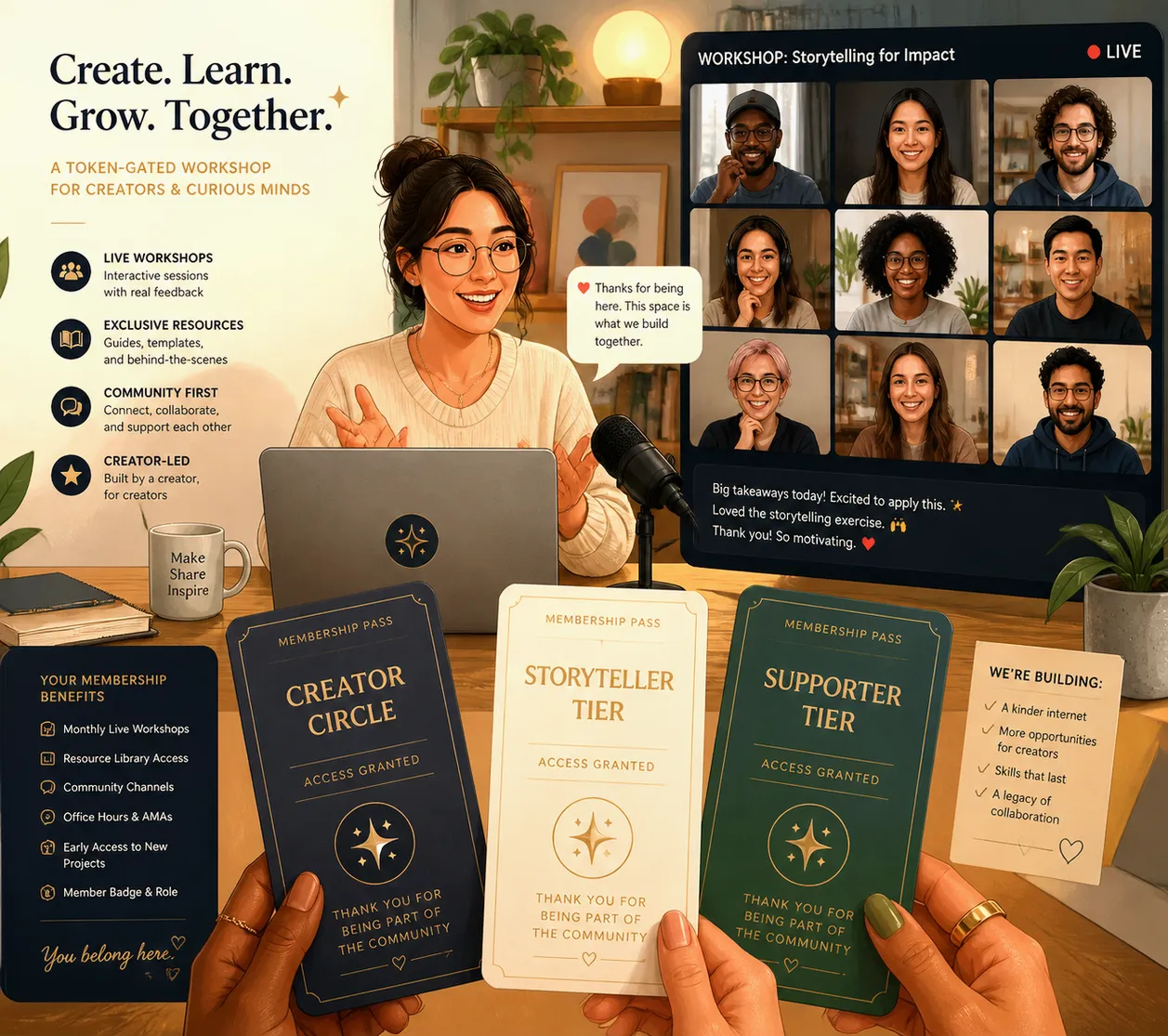
The strongest creator communities are not passive audiences. They give feedback, share work, attend events, and help a project reach people who would never discover it through an algorithm. Blockchain can make membership more tangible through token-gated spaces and verifiable passes.
A membership pass might grant access to a private Discord channel, monthly office hours, early product launches, digital downloads, or voting on a future project. Importantly, creators should keep the experience understandable for newcomers. People should be able to join because they value the work and the community—not because they feel pressured to speculate on an asset’s price.
For communities that want to experiment with trading or explore the market infrastructure behind digital assets, join Bitget with referral code cryptonew0. The offer includes a 50% trading fee discount, 20% fee cashback, and up to a $6,200 futures bonus. Trading digital assets and futures involves substantial risk, so creators and supporters should treat any market activity separately from long-term community building and never use funds they cannot afford to lose.
Authenticity, Provenance, and Fighting Copycats
Online copying is easy. A viral illustration, clip, or design can be reposted thousands of times with no source attached. Blockchain cannot stop someone from downloading an image or imitating an idea, but it can provide stronger provenance: a timestamped, verifiable record of a work’s release, edition details, and associated creator wallet.
That provenance can be useful for collectors, licensing partners, and fans who want confidence that they are supporting the original creator. A digital certificate can also preserve the story behind a piece—why it was made, who collaborated on it, and what rights are attached. For premium works and limited editions, this context can be just as valuable as scarcity.
Creators should still register copyrights where appropriate and use clear license terms. On-chain provenance is a helpful layer of evidence and transparency; it is not an automatic substitute for intellectual-property protection.
Micro-Payments Can Broaden Global Support
A major advantage of blockchain payments is the ability to send value across borders without every supporter needing the same bank or payment processor. In theory, this makes micro-payments, tips, and international memberships more accessible. A fan could support a writer with a small amount after reading an article, while a creator can receive it without waiting for a monthly payout cycle.
Practical details matter, though. Network fees, wallet security, taxes, local regulations, and conversion volatility can affect the experience. Stablecoins and low-fee networks may reduce some friction, but creators should disclose payment options clearly and avoid making promises about value or returns.
Building a Sensible Web3 Creator Strategy
The best blockchain projects start with the audience problem, not the technology. Before choosing a chain, marketplace, or token model, creators can ask a few direct questions:
- What does my community actually need? Early access, direct support, event tickets, proof of completion, or collaborative ownership may all call for different tools.
- What utility will this digital asset provide? Describe benefits in plain language and avoid vague claims.
- Can a non-crypto fan participate easily? Good onboarding, customer support, and payment alternatives are essential.
- How will rights, privacy, and taxes be handled? Seek qualified legal and tax advice for launches involving revenue sharing, tokens, or regulated products.
- What happens if the chosen platform disappears? Favor interoperable standards, exportable community data, and transparent backup plans.
A small pilot is often better than a large launch. A limited membership drop for a workshop, a collectible tied to a live event, or a gated resource library can reveal whether supporters find the experience useful. Feedback from that test can guide the next stage without overwhelming the creator or their audience.
The Creator Economy Becomes More Participatory
The promise of How Blockchain Empowers the Creator Economy is not that technology magically makes creative work profitable. Great work, trust, consistency, and audience understanding are still the foundation. What blockchain changes is the infrastructure around those fundamentals: who owns the relationship, how value is shared, and how participation can be recognized.
As wallets become easier to use and standards become more interoperable, creator-owned communities may feel less like a specialist Web3 concept and more like a normal part of doing business online. The creators who benefit most will likely be those who use the technology quietly and thoughtfully—making support simpler, rewards clearer, and collaboration more transparent for the people who believe in their work.
Related posts:
 Critical Government Regulations on Blockchain Technology: What Users and Businesses Must Know
 Blockchain in the Music Industry: A Powerful Shift in Music Rights and Royalties
 CoinEx vs OKX: A Powerful Feature Comparison for Crypto Traders
 Actionable MEXC Copy Trading Guide — Step-by-Step Blueprint for Smarter Crypto Income