
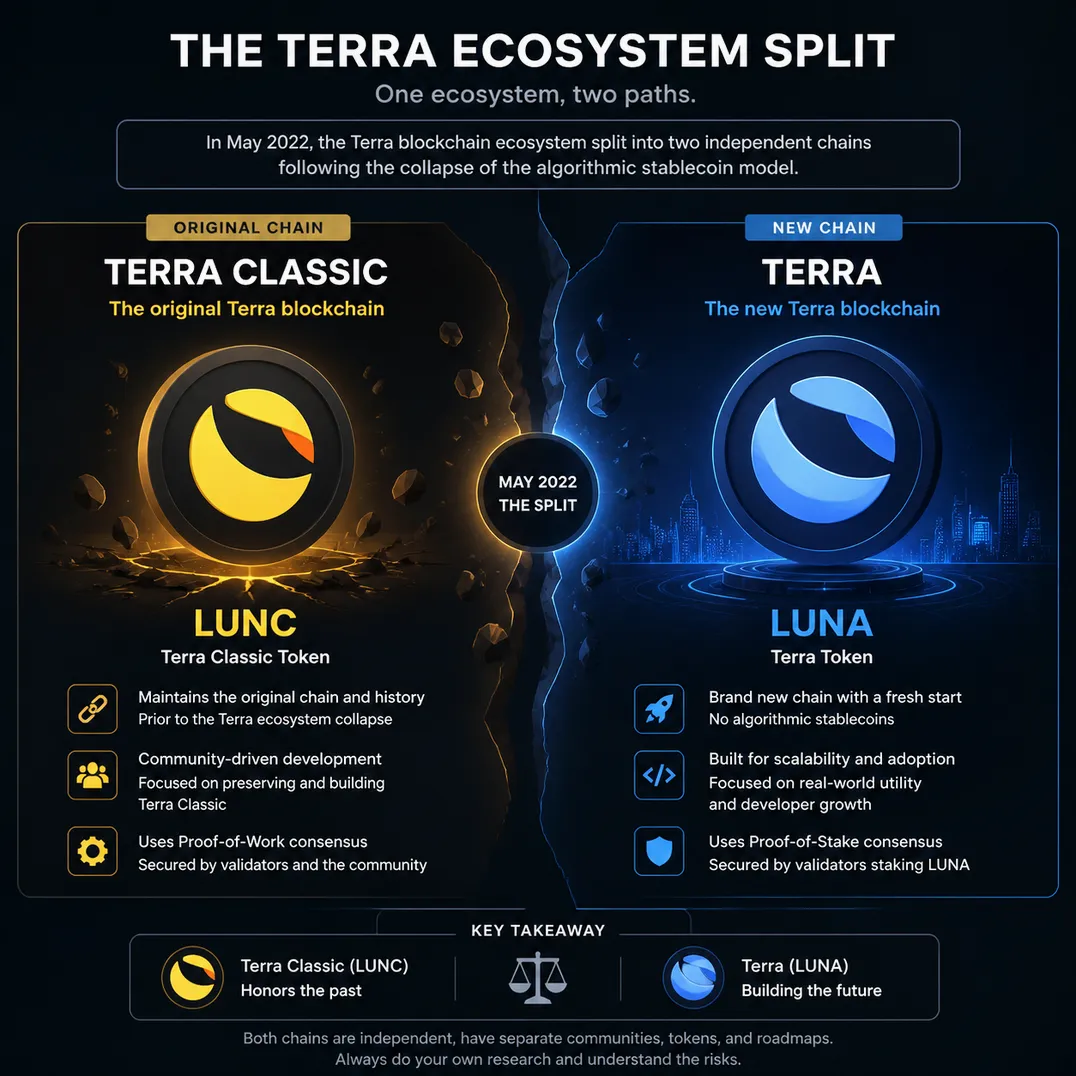
LUNC (Terra Classic) is the native token of the original Terra blockchain. If you are searching for what is the LUNC (Terra Classic) coin, and how to buy, the most important point is that LUNC is not the same asset as the newer Terra token, LUNA. The original network was renamed Terra Classic after the May 2022 collapse of the Terra ecosystem, while its former LUNA token adopted the ticker LUNC. (binance.com)

- 20% fee cashback
- $8,000 bonus

- 20% fee cashback
- $60,000 futures bonus

- 20% fee cashback
- $10,000 bonus

- 20% trading fee discount
- $100 signup bonus
- $10,000 futures bonus

- 20% trading fee discount
- $30,050 signup bonus

- 50% trading fee discount
- 20% fee cashback
- $6,200 futures bonus
LUNC remains a tradable, community-governed crypto asset, but it comes with unusually high risk and a complicated history. Before buying it, understand what it does, what it does not promise, and how to place an order without confusing LUNC with LUNA or sending funds on the wrong network.
What is LUNC?
Terra Classic is a public blockchain whose core software is built with the Cosmos SDK and Tendermint BFT consensus. LUNC is the chain’s native asset: it is used for transaction fees, staking, validator security, and governance. In practical terms, holders can delegate LUNC to validators, and staked holders can take part in protocol-governance decisions. (github.com)
The phrase “Terra Classic” matters. It identifies the original chain, not the post-collapse Terra network. On most exchanges, always check the ticker carefully:
- LUNC = Luna Classic, the native asset of Terra Classic.
- LUNA = the token associated with the newer Terra chain.
- USTC = TerraClassicUSD, the historical stablecoin asset on the Classic chain.
This distinction is essential because buying the wrong ticker is an easy—and potentially costly—mistake.
Why does LUNC have a controversial history?
LUNC’s story cannot be separated from the May 2022 Terra crisis. The original Terra system included algorithmic stablecoin products, including UST. When UST lost its dollar peg, the mechanism that linked it with LUNA led to an extreme expansion of LUNA supply and a major loss of value. The old chain continued as Terra Classic, and the old token was renamed LUNC. (binance.com)
Today, Terra Classic documentation states that the chain has no pegged stablecoins and describes UST as a speculative asset following its depeg. Legacy references to the earlier mint-and-burn stablecoin design should therefore not be treated as evidence that a dollar peg exists or will return. (terra-classic.io)
That history makes LUNC especially speculative. Its price can move sharply based on broader crypto conditions, exchange activity, community proposals, token-burn discussions, development updates, and market sentiment. A low token price alone does not mean an asset is “cheap”; supply, market capitalization, liquidity, and risk all matter.
How LUNC staking, governance, and burns work
Terra Classic uses a delegated proof-of-stake model. Validators produce blocks, while delegators can stake LUNC with a validator to help secure the network. In return, staking may generate rewards, but rewards are variable and staking introduces risks including validator performance, slashing conditions, lock-up or unbonding mechanics, and price volatility. (docs.terra-classic.io)
LUNC holders also watch burns closely because some transfers can be subject to a burn tax. However, buyers should avoid assuming that every exchange trade automatically triggers the same on-chain burn treatment. Binance previously clarified that its spot and margin trading were not affected by the network tax-burn notice. Always check the current exchange and network rules rather than relying on old social-media claims. (binance.com)
How to buy LUNC (Terra Classic) on Binance
For many beginners, a centralized exchange is the most straightforward route to buy Terra Classic. Binance lists a guided purchase flow for LUNC in supported regions, with options that can include card purchases, bank transfer, Convert, and Spot trading. Availability, identity-verification requirements, currencies, and payment methods depend on your location and account eligibility. (binance.com)
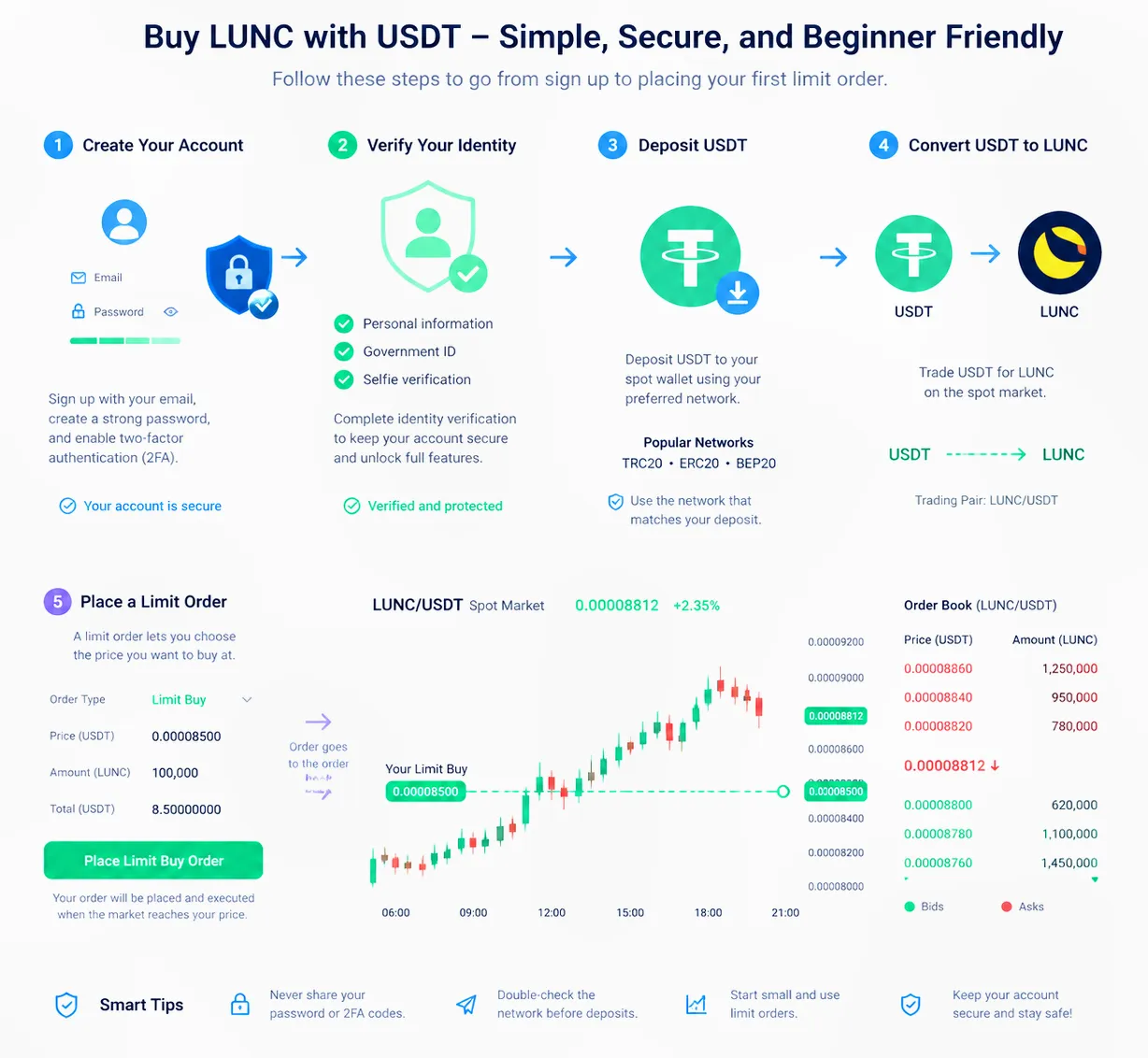
Step 1: Create and secure your account
Start through Binance with referral code CRYPTONEWER. The promotion advertises a 20% fee discount and up to $10,000 in benefits. Promotional rewards, eligibility, supported jurisdictions, and the exact fee rebate shown can change, so read the offer displayed on the Binance registration page before completing sign-up.
Use a unique password, activate two-factor authentication, and complete identity verification if required. Never share your password, one-time codes, recovery phrase, or API keys.
Step 2: Deposit funds or choose a payment method
After account setup, open Buy Crypto and check the purchase methods available in your country. Depending on local availability, you may be able to use a debit or credit card, bank transfer, existing crypto balance, or another displayed option. Review the quoted LUNC amount, processing fees, and any payment-provider charges before confirming.
Step 3: Buy LUNC using Convert or Spot
If you already hold a supported cryptocurrency or stablecoin, Binance Convert offers a simple conversion path into LUNC. Choose the asset you are converting from, select Terra Classic (LUNC) as the destination, review the quote, and confirm before it expires.
For more control, use Spot trading:
- Go to Trade → Spot.
- Search for LUNC.
- Select an available pair, such as LUNC/USDT where available.
- Choose a market order to buy at the best available price, or a limit order to set the maximum price you are willing to pay.
- Enter a small, deliberate amount and review the order total.
- Confirm the purchase and check your Spot Wallet.
A market order prioritizes execution, but the final price can differ from the screen price in a fast-moving market. A limit order gives you price control, but it may never fill if the market does not reach your chosen level.
Storing LUNC after purchase
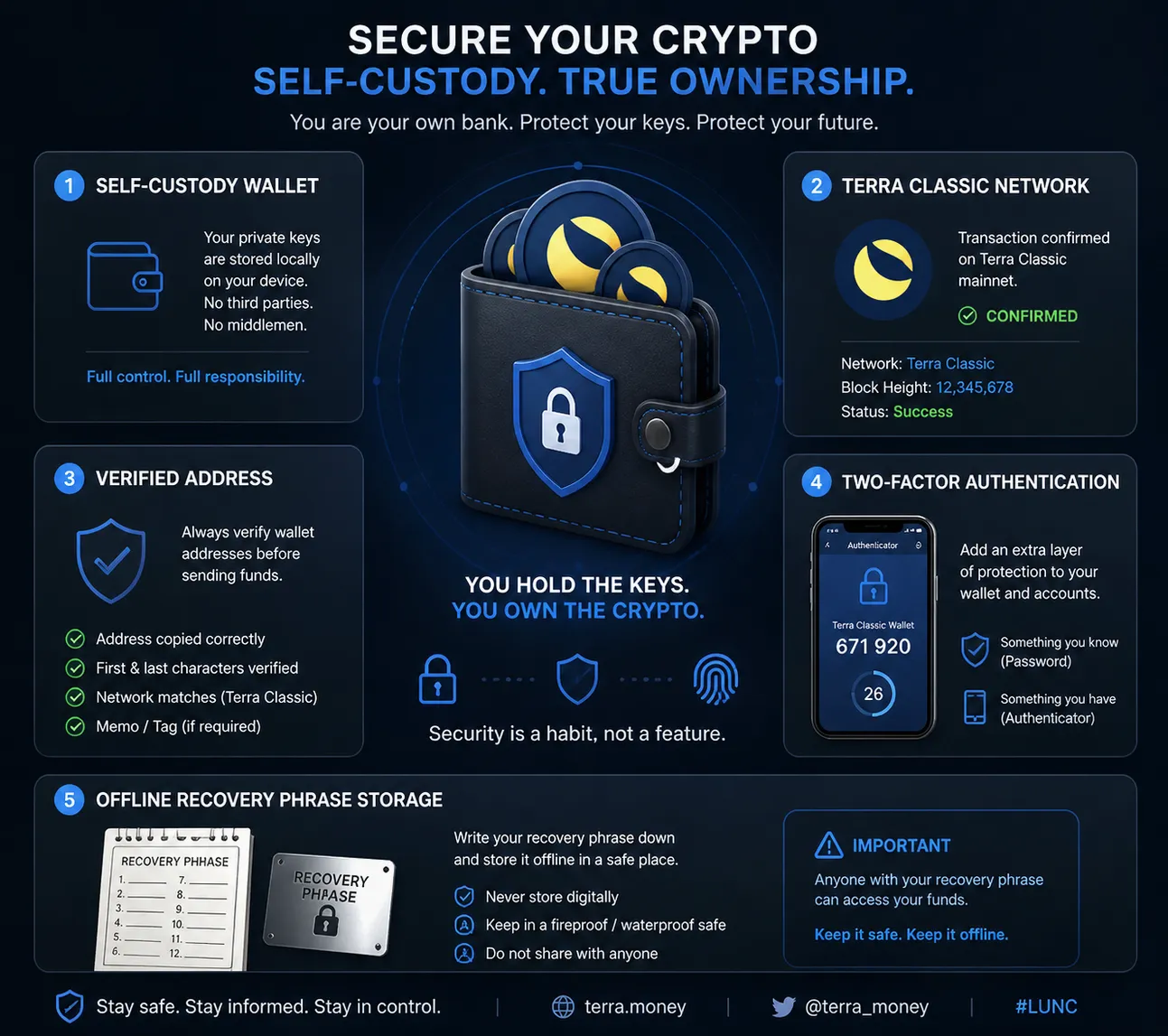
You can keep LUNC on an exchange for convenient trading, but that means the platform controls the private keys. Alternatively, you may withdraw to a compatible self-custody wallet. If you choose self-custody, test with a small withdrawal first, select the Terra Classic network exactly as instructed, and verify the destination address character by character.
Self-custody puts you in charge of access and security. Back up the wallet recovery phrase offline, never enter it into a website or chat, and beware of fake wallet apps, impersonators, and “support” messages asking for credentials.
LUNC buying checklist
Before you buy LUNC coin, make sure you can answer these questions:
- Am I buying LUNC, not LUNA or USTC?
- Do I understand Terra Classic’s 2022 collapse and the absence of a currently pegged Terra Classic stablecoin?
- Have I checked the actual trading pair, fees, payment costs, and order type?
- Can I afford to lose the amount I am allocating to this high-volatility asset?
- If withdrawing, have I verified the wallet address and the exact Terra Classic network?
- Have I secured my Binance account and my wallet recovery information?
LUNC can be researched, traded, staked, and used in governance, but none of those features removes the substantial market and operational risks involved. Treat any purchase as a speculative decision, use position sizing that fits your own risk tolerance, and do not rely on price predictions or burn narratives as investment guarantees.
Related posts:
 Binance Margin Trading Explained: A Powerful Guide to Borrowing, Leverage, and Risk
 Blockchain and Data Privacy: Pros and Cons — A Powerful Guide to What Really Changes
 What Is the RIF (Rootstock Infrastructure Framework) Coin, and How to Buy It: A Powerful Guide
 How Are Cryptocurrencies Related to Blockchain? 강력하게 이해하는 암호화폐와 블록체인의 관계