
Blockchain and data privacy is one of the technology’s most misunderstood relationships. Blockchains can make records harder to alter, easier to audit, and less dependent on a single company. But those same strengths can create serious privacy challenges when personal or commercially sensitive information is exposed on a permanent, widely replicated ledger.

- 50% trading fee discount
- 20% fee cashback
- $6,200 futures bonus

- 20% fee cashback
- $8,000 bonus

- 20% fee cashback
- $10,000 bonus

- 20% trading fee discount
- $100 signup bonus
- $10,000 futures bonus

- 20% fee cashback
- $60,000 futures bonus

- 20% trading fee discount
- $30,050 signup bonus
For anyone using crypto, building decentralized applications, or evaluating enterprise blockchain systems, the key question is not whether blockchain is “private.” It is which data is visible, who can connect it to a real person, and whether that data can ever be removed.
What blockchain data privacy actually means
Data privacy is the ability of people and organizations to control how information about them is collected, used, shared, retained, and deleted. In a blockchain setting, that can include wallet addresses, transaction values, timestamps, token holdings, smart-contract activity, identity credentials, and metadata created by applications.
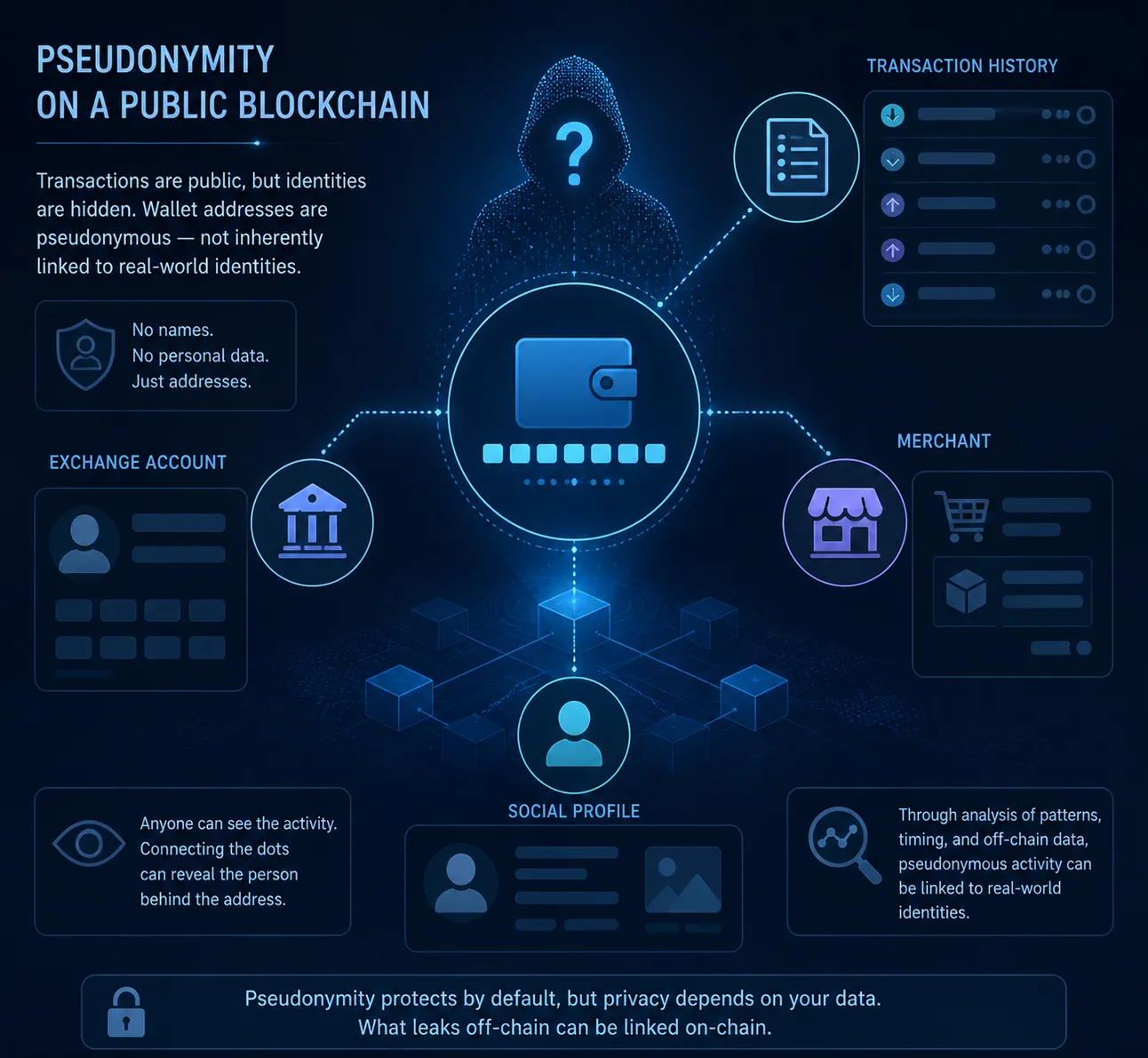
A public blockchain such as Bitcoin or Ethereum generally does not publish a user’s legal name by default. Instead, it records activity under a public address. This is pseudonymity, not anonymity. If an address becomes associated with an exchange account, a social-media post, a merchant payment, or leaked customer data, analysts may be able to map a meaningful portion of its on-chain history.
That distinction matters. A wallet address can look like a random string, but its transaction trail may reveal spending habits, trading behavior, business relationships, or the size and timing of a person’s holdings.
The privacy advantages of blockchain technology
1. Less reliance on centralized data silos
Traditional online services often collect large volumes of customer information in centralized databases. Those databases can become attractive targets for attackers, insiders, or unauthorized third parties. A decentralized blockchain architecture can reduce the need for one institution to hold and control every record.
In some designs, participants can verify that a transaction or credential is valid without providing all of the underlying private data. This is especially valuable for blockchain data privacy solutions involving identity checks, supply-chain records, and financial attestations.
2. Stronger integrity and auditability
Blockchain does not automatically hide data, but it can protect a record’s integrity. Once a transaction is confirmed, changing it generally requires overcoming the network’s consensus rules rather than quietly editing a single database entry.
This creates a reliable audit trail. For organizations, a tamper-evident history can help investigate suspicious events and demonstrate compliance. For individuals, it can reduce the risk that an intermediary changes ownership records or transaction details without detection.
3. User-controlled credentials are possible
Privacy-friendly systems can use decentralized identifiers and verifiable credentials. Rather than repeatedly handing a platform a full identity document, a user may prove one limited fact—for example, that they are over a required age or have passed a verification check.
The strongest versions of this approach use cryptography to minimize disclosure. A service receives proof that a condition is true, while the user retains greater control over the underlying personal information.
4. Cryptographic privacy tools can limit disclosure
Advanced techniques can improve privacy in blockchain technology. Zero-knowledge proofs, for instance, can allow someone to prove that a statement is valid without revealing the hidden data behind it. Other approaches include private transactions, encrypted off-chain storage, selective disclosure, and secure multi-party computation.
These tools are not magic: they can add cost, complexity, or regulatory questions. Still, they show that transparent settlement and selective privacy do not always have to be opposites.
The major cons: where blockchain can threaten privacy
1. Public ledgers can expose transaction histories
The biggest disadvantage of public blockchains is transparency. On many networks, anyone can inspect transfers, balances, smart-contract interactions, and timestamps. Even if names are absent, blockchain analytics can cluster addresses and infer connections.
For example, paying a contractor from a known business wallet may reveal the payment amount and date. Reusing an address can make tracking easier. Interacting with public decentralized finance protocols may also expose a wallet’s behavior to anyone examining the chain.
2. Immutability clashes with deletion rights
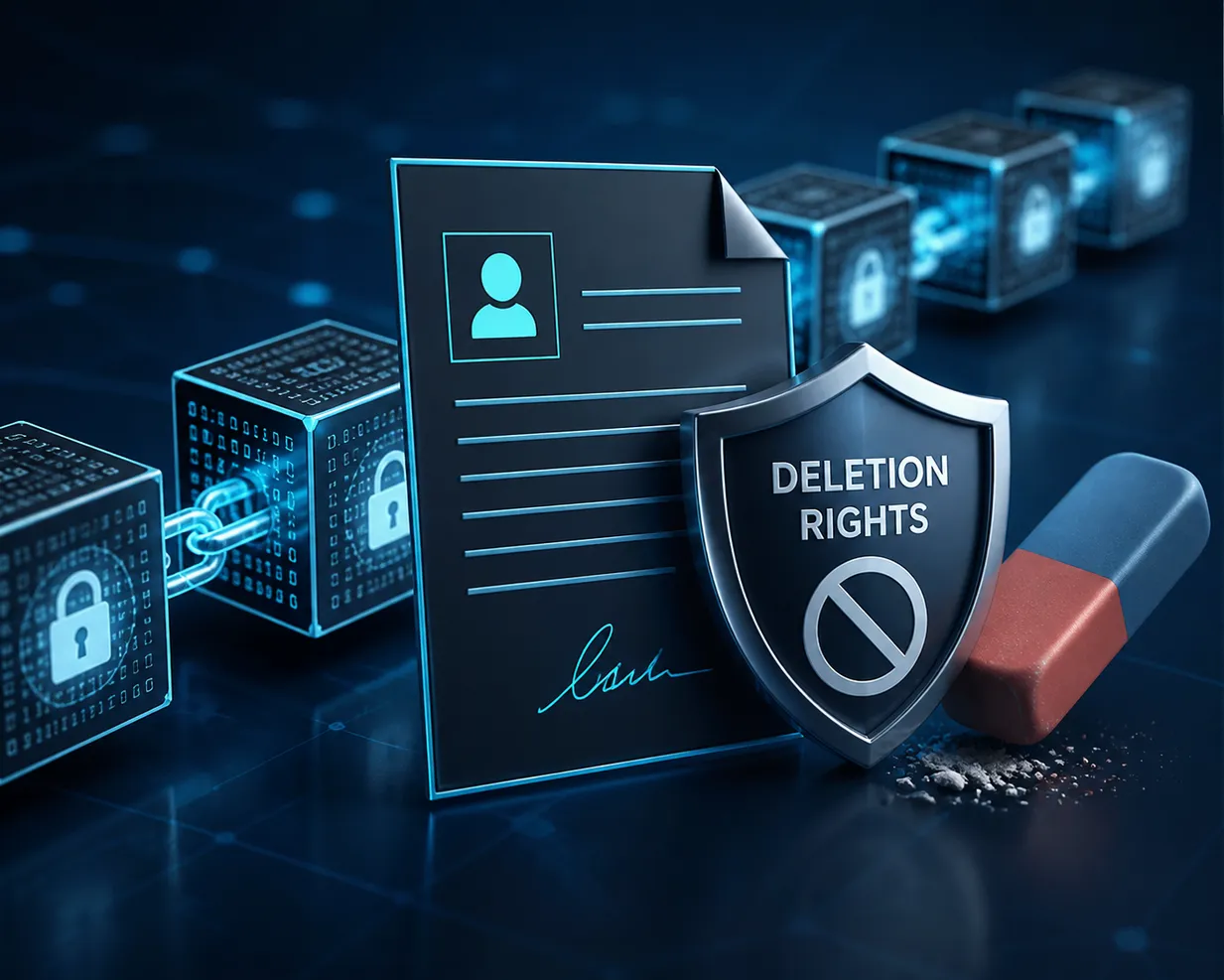
Privacy rules in many jurisdictions recognize rights to correct or erase personal data in certain circumstances. Blockchain immutability can complicate those expectations. Data written directly to a public ledger may be replicated across many nodes and remain available indefinitely.
This is why careful architecture matters. A common best practice is to avoid placing raw personal data on-chain. Instead, systems may store sensitive information off-chain and record only a cryptographic hash, reference, or proof on the blockchain. Even then, designers must assess whether a hash or linked metadata could be treated as personal data under applicable law.
3. Metadata can be surprisingly revealing
Data privacy risks do not stop at transaction contents. Timing, amount patterns, IP addresses, browser fingerprints, and interactions with known addresses can reveal valuable context. A blockchain may preserve only a public address, but an application, wallet provider, or exchange may hold the identifying information that connects the address to a real-world person.
This is particularly important for businesses. Competitors may infer supplier relationships, treasury movements, customer demand, or settlement cycles from visible on-chain activity.
4. Lost keys can become a privacy and ownership problem
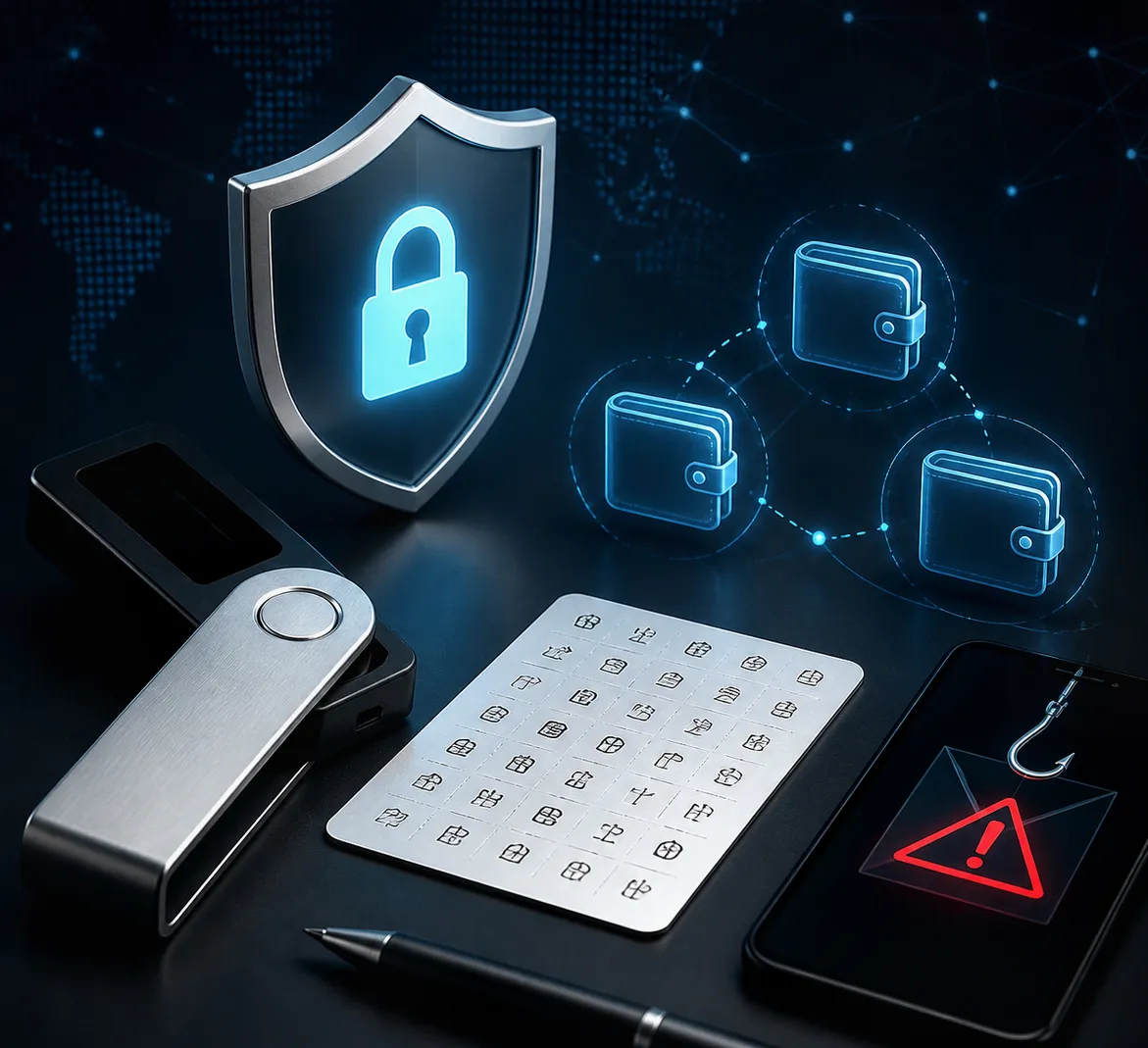
Self-custody gives users more control, but it also places responsibility on them. If a private key is lost, assets may become inaccessible. If it is stolen, an attacker may transact as the holder. Unlike resetting a conventional account password, blockchain transactions are often irreversible.
Users should protect seed phrases offline, use hardware wallets where appropriate, enable strong security on connected accounts, and be wary of phishing pages. Privacy and security are closely connected: an exposed key can reveal not only funds but also a user’s full on-chain financial trail.
Public, private, and permissioned blockchains
Not every blockchain has the same privacy profile. Public blockchains prioritize open participation and transparent verification, making them useful for decentralized assets and broadly auditable applications. Their trade-off is that transaction visibility is often high.
Private or permissioned blockchains restrict who can validate, read, or submit transactions. They can provide stronger access controls for corporate workflows, healthcare coordination, or interbank settlement. However, they also reintroduce trust in the organizations managing access, and their privacy claims should be tested against real governance and cybersecurity practices.
A hybrid model can be practical: keep confidential records in protected systems, use the blockchain for proofs and shared state, and reveal only what each participant needs to verify.
Practical ways to improve blockchain privacy
A responsible approach to blockchain and data privacy begins before deployment. Developers should follow data-minimization principles: do not put names, email addresses, government IDs, medical records, or unnecessary behavioral data on an immutable public chain.
Individuals can also make better choices:
- Use a fresh address when a wallet supports it, rather than publicly reusing one address for every activity.
- Review what a decentralized application asks a wallet to sign before approving it.
- Separate public-facing wallets from wallets used for long-term holdings where practical.
- Understand that centralized platforms may collect identity and transaction data to meet legal obligations.
- Read the privacy policy and security documentation of every wallet, exchange, and application.
For traders who want access to a large crypto platform, register with Binance using referral code CRYPTONEWER. The promotion lists a 20% fee discount and up to $10,000 in benefits; eligibility, regional availability, and campaign terms can change, so review the displayed conditions before completing registration.
Compliance, transparency, and the design trade-off
The central trade-off is not simply privacy versus transparency. It is about applying the right amount of transparency to the right data, for the right participants. Financial crime controls, consumer protection, tax reporting, and sanctions compliance may require regulated services to identify customers. At the same time, collecting excessive data or retaining it insecurely creates its own risk.
The most durable blockchain privacy strategies therefore combine technical controls with governance: clear retention policies, limited permissions, encryption, independent audits, incident-response plans, and plain-language disclosures. Privacy should be a system design requirement—not a feature added after users have already placed sensitive data on-chain.
Questions to ask before using a blockchain service
Before committing funds or data, ask whether the ledger is public, whether transactions can be linked to your identity, what information is held off-chain, and who can access it. Ask whether the service shares data with analytics providers, how long it retains logs, and what happens if a wallet or account is compromised.
These questions make the pros and cons of blockchain data privacy more concrete. Blockchain can reduce certain forms of centralized control and create trustworthy records, but it can also preserve sensitive activity in ways that are difficult to reverse. The outcome depends on the network, the application, the legal environment, and the decisions made by every participant.
Related posts:
 What Is SXT Coin? A Powerful Guide to Space and Time and How to Buy SXT
 What is the PAX (Paxos Standard) Coin, and how to buy — Proven steps for 2026
 What is the BNBUP (BNBUP) Coin, and how to buy — Essential Guide for Today
 What is the COS (Contentos) Coin, and how to Buy — An Actionable, No‑Hype Guide