
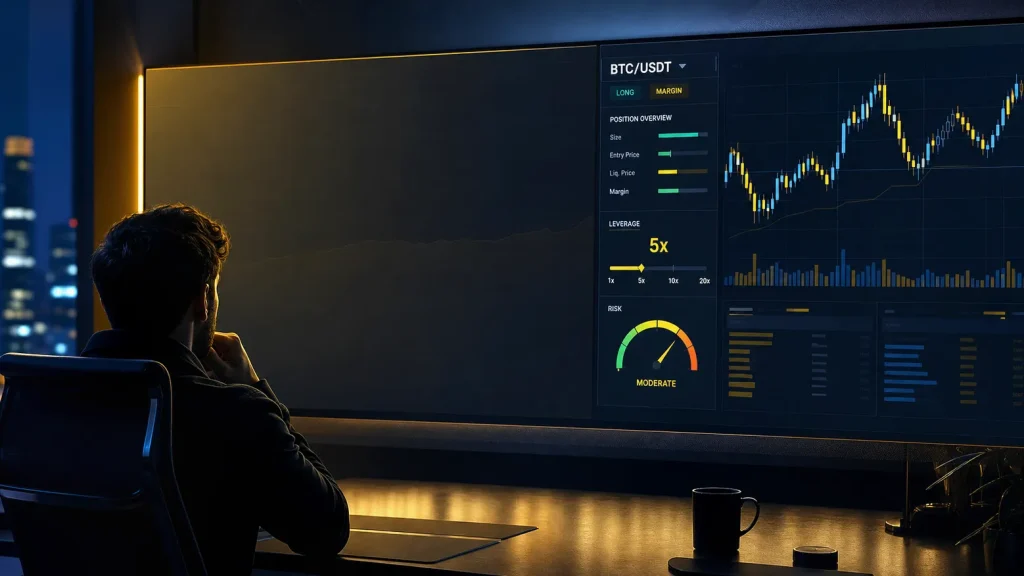
Binance margin trading lets eligible traders borrow crypto assets to open positions larger than their available balance. It can be useful when a trader has a clear plan, understands liquidation, and can actively manage risk. It can also magnify a small mistake very quickly. This guide breaks down how to trade margin on Binance, what the numbers mean, and the practical controls worth setting before placing an order.

- 20% trading fee discount
- $30,050 signup bonus

- 20% trading fee discount
- $100 signup bonus
- $10,000 futures bonus

- 50% trading fee discount
- 20% fee cashback
- $6,200 futures bonus

- 20% fee cashback
- $60,000 futures bonus

- 20% fee cashback
- $10,000 bonus

- 20% fee cashback
- $8,000 bonus
Risk note: Margin trading is high risk. Borrowed funds accrue interest, and leverage can amplify both profits and losses. This article is educational, not financial advice. Check Binance’s availability, eligibility rules, fees, and current product disclosures in your region before using margin.
What is margin trading on Binance?
In a standard spot trade, you buy or sell only with assets you already own. In a Binance margin trading account, you may use eligible assets as collateral and borrow additional assets. That borrowing power gives you leverage.
For example, imagine depositing 1,000 USDT as collateral and opening a position with 3x leverage. Your market exposure could be roughly 3,000 USDT, subject to the platform’s current limits, collateral rules, and the asset pair involved. If the market rises 5%, the position’s gross gain is about 150 USDT before interest, trading fees, and other costs. If it falls 5%, the gross loss is similarly about 150 USDT.
That example is exactly why margin deserves caution: the percentage movement is applied to the larger position, not just your original deposit.
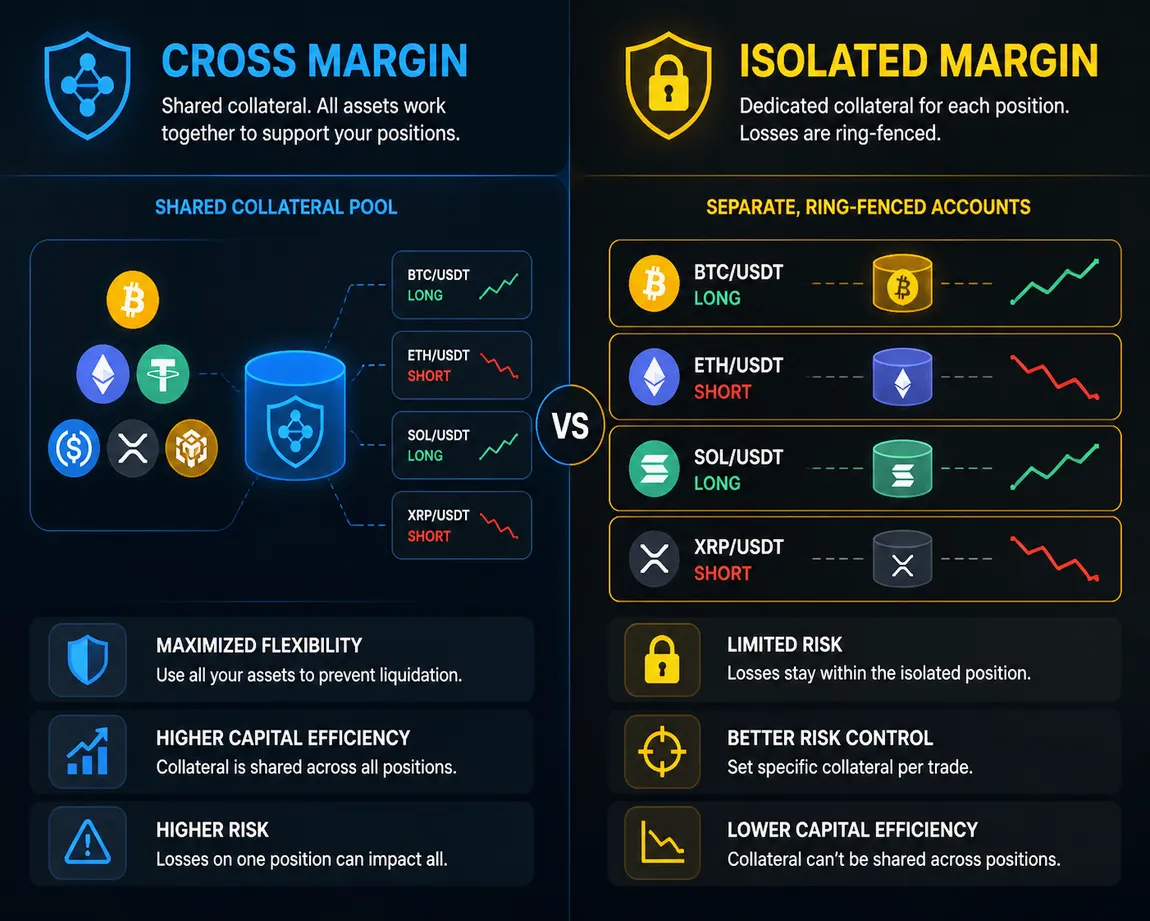
Cross Margin vs. Isolated Margin
A critical part of Binance margin trading explained for beginners is understanding the two account modes.
Cross Margin
With Cross Margin, assets held in the cross-margin account can generally support all eligible cross-margin positions. This may make collateral use more efficient, but it also means a severe loss in one position can put more of the shared account balance at risk.
Cross Margin may suit experienced traders who deliberately manage a portfolio-level view of collateral, debt, and exposure. It is not automatically safer simply because the balance is shared.
Isolated Margin
With Isolated Margin, collateral and borrowed funds are assigned to a specific trading pair. In practical terms, this can help contain the risk to the funds allocated to that isolated position rather than exposing the entire margin account.
For many people learning how to trade margin on Binance, isolated margin is easier to track because the position, debt, and risk metrics are separated by pair. It still carries liquidation risk, however, and adding collateral changes the amount at stake.
Going long and short with borrowed assets
Margin trading can be used for two broad trade ideas:
- Long position: Borrow a quote asset such as USDT, use it to buy an asset such as BTC, then later sell BTC to repay the USDT debt. This approach anticipates a price increase.
- Short position: Borrow the asset you expect to decline, sell it for a quote asset, then aim to buy it back later at a lower price to repay the borrowed asset. This approach anticipates a price decrease.
A short is often harder to understand because the debt is denominated in the asset borrowed. If you borrow 0.01 BTC, you must repay 0.01 BTC plus interest. When BTC rises, buying back that same 0.01 BTC costs more USDT, which is why short positions can become dangerous during fast rallies.
The margin level, interest, and liquidation
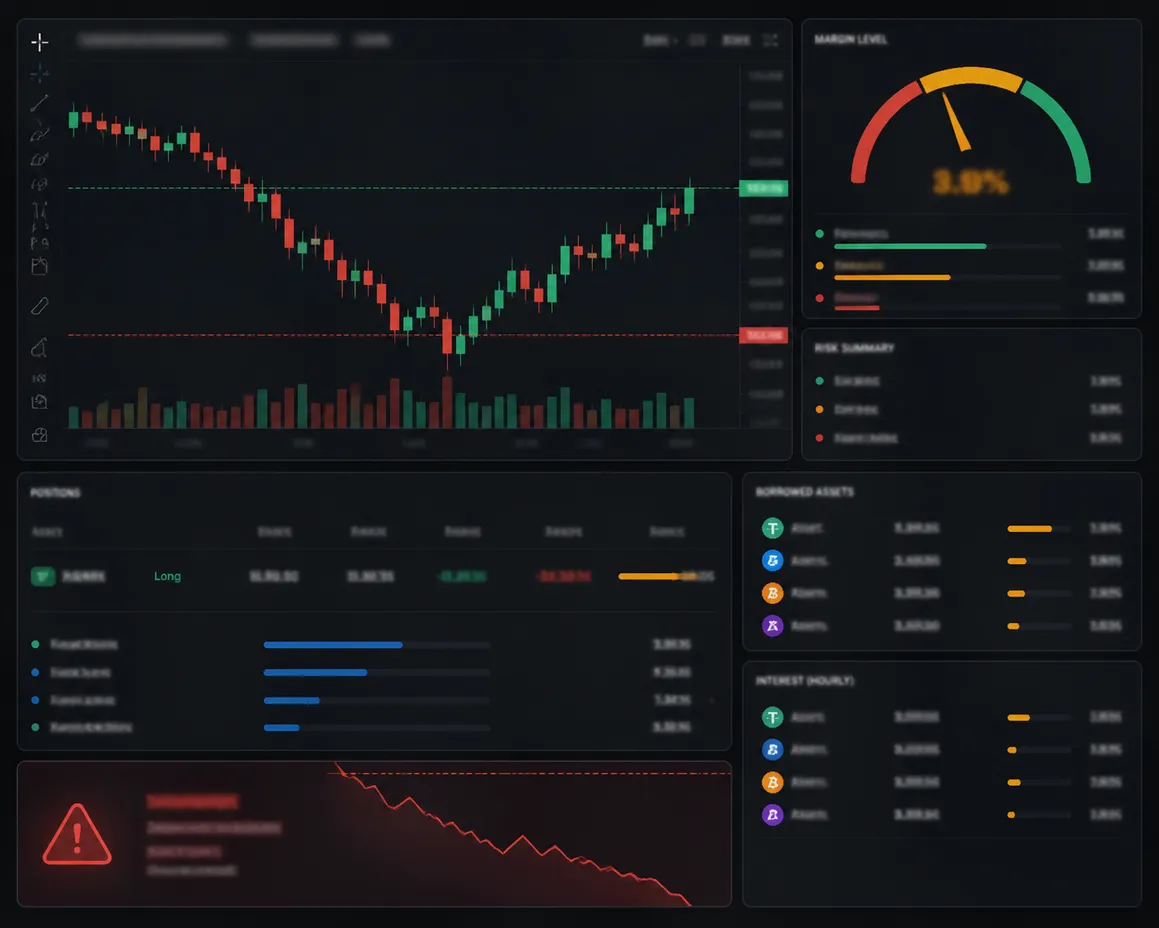
The most important dashboard figure in crypto margin trading is usually the margin level or related risk indicator displayed by the exchange. It reflects the relationship between your account value, borrowed liabilities, and accrued interest. Exact calculations, thresholds, and labels can change by product and platform policy, so use the live values shown in Binance rather than relying on a generic formula.
When risk rises, Binance may issue warnings or margin calls depending on the product setup. If the margin level reaches the liquidation threshold, the platform can sell assets to reduce or close liabilities. Liquidation is not a protective stop-loss that guarantees a tidy exit; during volatile conditions, losses and costs can be significant.
Interest matters too. Borrowed assets generally accrue interest over time. A position that looks profitable on price alone may be less attractive after borrowing costs and trading fees. Before entering, identify:
- The asset you will borrow.
- Its current interest rate and charging schedule.
- The amount of debt you will have after the order fills.
- The liquidation-related risk indicator.
- Your exit price, invalidation level, and maximum acceptable loss.
A practical Binance margin trading workflow
Here is a disciplined, beginner-friendly process for an eligible user:
- Transfer a small amount of collateral into the appropriate Margin wallet.
- Choose Cross or Isolated Margin only after understanding which funds are exposed.
- Select the trading pair and inspect available borrowing limits, interest information, and order book liquidity.
- Borrow manually or use an auto-borrow option if available. Manual borrowing can make the debt easier to see before submitting a trade.
- Place a limit order when precise entry price matters. A market order may fill at a worse price in a rapidly moving market.
- Set an exit plan immediately. Consider a stop-loss order and a take-profit order where available, while remembering that stops can experience slippage.
- Monitor debt and margin level, not only the chart. Price, interest, and collateral value all affect risk.
- Repay the borrowed asset and interest after closing the trade. Verify that the outstanding debt is cleared rather than assuming a sale repaid it automatically.
A sensible first exercise is to use an amount small enough that a complete loss would not disrupt your finances. The goal is to learn the interface and mechanics, not to maximize leverage.
Example: calculating a leveraged long
Suppose ETH is priced at 2,000 USDT. You deposit 500 USDT into an isolated margin account, borrow another 500 USDT, and buy 0.5 ETH for 1,000 USDT. Your exposure is 1,000 USDT while your own starting collateral is 500 USDT.
If ETH climbs 10% to 2,200 USDT, the 0.5 ETH position is worth 1,100 USDT. After repaying 500 USDT plus borrowing interest and trading fees, the remaining value is higher than your initial 500 USDT. Conversely, if ETH falls 10% to 1,800 USDT, the position is worth 900 USDT. After debt repayment, the loss is about 100 USDT before costs—roughly 20% of your 500 USDT starting collateral.
The price moved 10%, but the effect on your capital was approximately doubled because you used 2x exposure. Higher leverage increases this sensitivity further and brings the liquidation point closer.
Risk controls that matter more than a market prediction
Good margin traders focus on survival first. A few practical controls can make the difference between a manageable losing trade and a forced liquidation:
- Use lower leverage than the maximum available. Maximum leverage is a platform limit, not a recommendation.
- Size positions from the stop-loss distance. Decide how much of your account you can lose if invalidated, then calculate position size—not the other way around.
- Keep spare collateral only with intent. Adding collateral may delay liquidation, but it also commits more capital to a losing thesis.
- Avoid holding debt casually. Interest accumulates, and markets can move while you are away.
- Watch highly volatile events. Token unlocks, macro announcements, exchange news, and low-liquidity periods can produce sharp moves and slippage.
- Do not average down automatically. Adding to a losing leveraged position can rapidly increase liquidation risk.
Binance referral offer for new users
If you plan to create a Binance account, use the referral code CRYPTONEWER during registration, or register through Binance referral offer: CRYPTONEWER. The promotion advertises a 20% fee discount and up to $10,000 in benefits; eligibility, reward amounts, products, and terms can vary by location and campaign, so review the live offer details before registering.
Margin trading checklist before every order
Before clicking buy or sell, confirm the exact answers to these questions:
| Check | Why it matters |
|---|---|
| What asset am I borrowing? | You must repay that asset plus interest. |
| Is this Cross or Isolated Margin? | It determines which collateral may be exposed. |
| Where is liquidation risk shown? | This is more important than entry price alone. |
| What is my stop-loss and position size? | It turns a trade idea into defined risk. |
| How much interest will accrue if held overnight? | Carry costs can change the trade’s expected value. |
| Have I checked order-book liquidity? | Thin markets can cause poor fills and stop slippage. |
Binance margin trading can be a flexible tool for hedging or expressing a directional view, but it is not a shortcut to predictable returns. Treat borrowing as a cost and a liability, keep positions small enough to manage, and use the exchange’s current margin metrics as the final source for operational thresholds.
Related posts:
 Bitget Trading Competitions: How to Join and Compete Smarter
 What is Bybit? A Powerful, No‑Nonsense Guide to the Exchange, Fees, and Features
 Proven Insights: How Blockchain Enables Peer-to-Peer Transactions at Internet Speed
 How to Store Crypto Securely: Powerful Steps to Protect Your Digital Assets