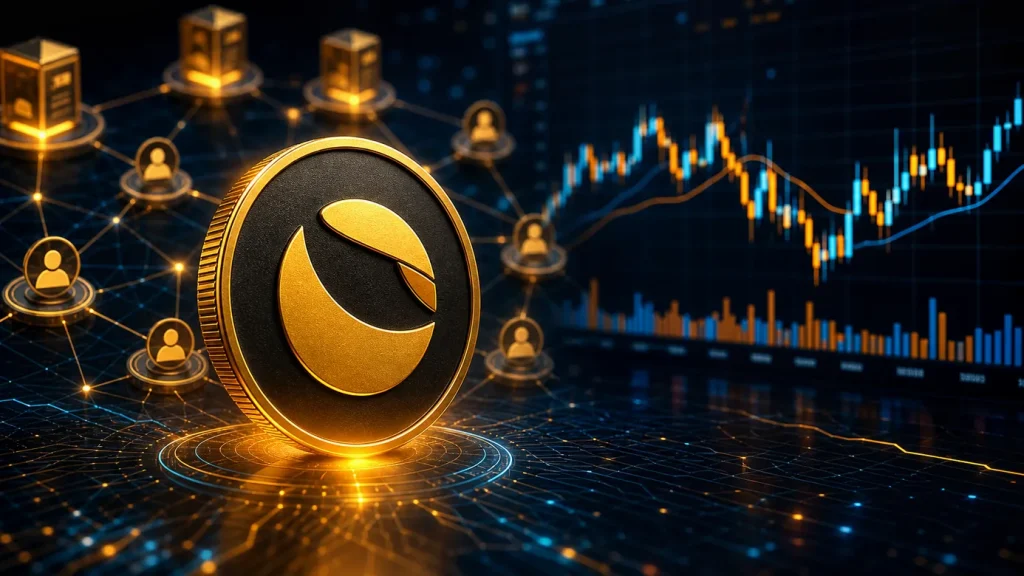
LUNC Coin, also called Terra Classic (LUNC), is the native cryptocurrency of the original Terra blockchain. It remains one of the most closely watched legacy crypto assets because it combines a large community, proof-of-stake validation, on-chain governance, token burns, and an unusually important history in the digital-asset market.

- 20% trading fee discount
- $100 signup bonus
- $10,000 futures bonus

- 20% fee cashback
- $10,000 bonus

- 20% trading fee discount
- $30,050 signup bonus

- 50% trading fee discount
- 20% fee cashback
- $6,200 futures bonus

- 20% fee cashback
- $60,000 futures bonus

- 20% fee cashback
- $8,000 bonus
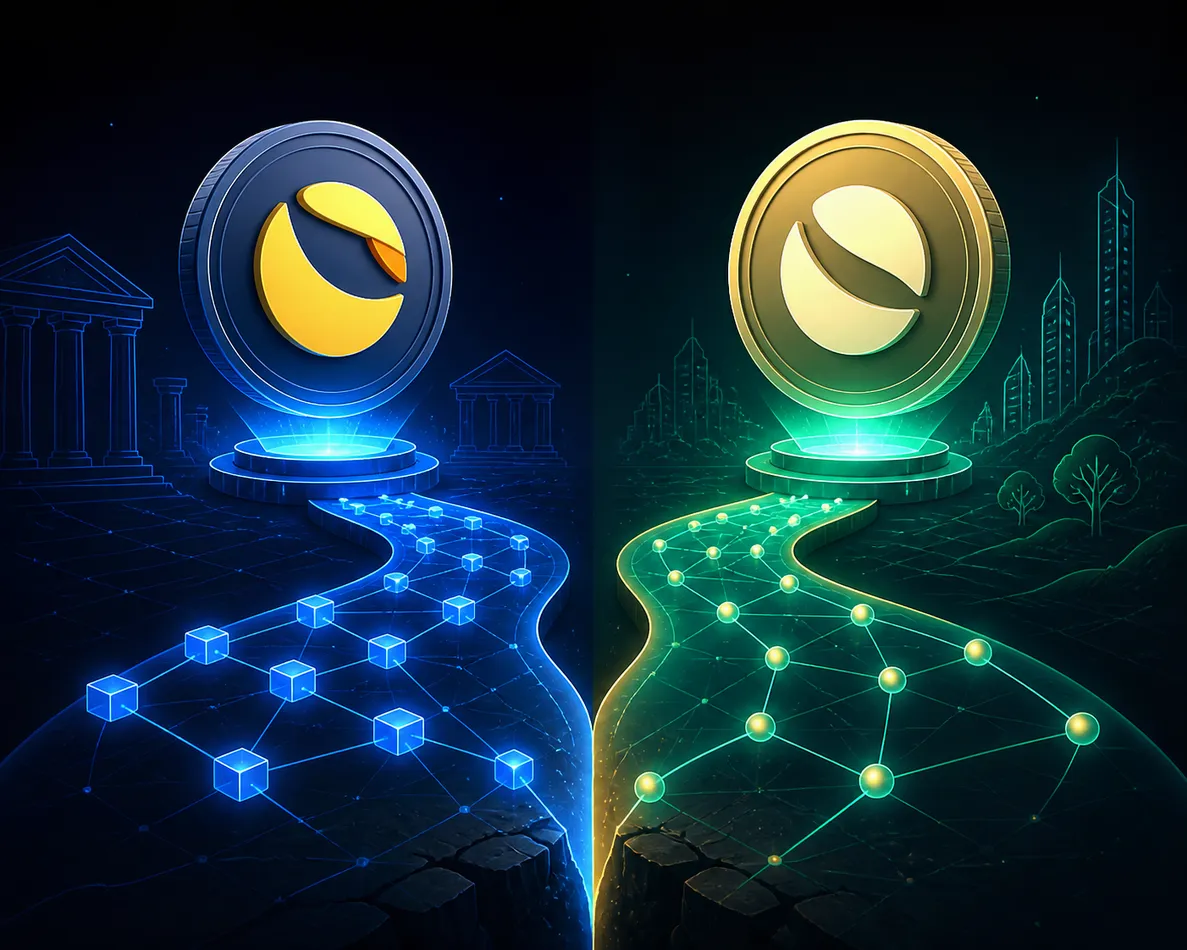
If you are researching what is LUNC Coin and how to buy LUNC, the first thing to understand is that LUNC is not the same asset as LUNA. The original Terra chain was renamed Terra Classic, and its original LUNA token was renamed Luna Classic (LUNC). A separate, newer blockchain adopted the Terra name and uses the ticker LUNA. Confusing the two can lead to an irreversible purchase or withdrawal mistake. (docs.terra.money)
What Is Terra Classic (LUNC)?
Terra Classic is a Cosmos-based Layer 1 blockchain. LUNC is its native asset: it is used to help secure the network through staking, to participate in governance, and to pay for activity on the chain. Holders can delegate LUNC to validators, who help validate transactions and maintain network consensus; in return, delegators may earn staking rewards, subject to validator performance, commissions, protocol conditions, and the usual risks of staking.
The chain continues to support core blockchain functions such as wallets, smart contracts, public endpoints, inter-blockchain communication (IBC), staking, and governance. That means LUNC is more than merely a ticker on an exchange—it is the base coin of the Terra Classic network. (docs.terra-classic.money)
Why Does LUNC Exist? The Terra Classic Background
LUNC’s identity is inseparable from the Terra ecosystem collapse in May 2022, when the algorithmic stablecoin TerraUSD (UST) lost its dollar peg. The historic mint-and-burn mechanism caused the supply of the original LUNA token to expand dramatically during the crisis. The original network continued after the split under the Terra Classic name, while the original LUNA became LUNC. (arxiv.org)
This history matters for every buyer. LUNC is a highly speculative crypto asset with legacy-system risk, strong community-driven narratives, significant supply considerations, and potentially sharp volatility. It should not be treated as a savings product, a guaranteed recovery trade, or a shortcut to profits.
LUNC Coin Utility: Staking, Governance, Fees, and Burns
The practical role of LUNC can be broken into four areas:
- Network security: LUNC can be staked or delegated to validators participating in proof-of-stake consensus.
- Governance: Token holders can take part in governance processes that guide network parameters and upgrades.
- Transaction activity: The asset is used within the chain’s economic system, including transaction-related fees.
- Burn mechanics: Terra Classic uses a tax module and burn-related mechanisms. A 2024 chain update moved burn-tax handling on-chain, introduced a
burn_taxparameter, and set the legacy stability-tax parameter to zero. (github.com)
A burn does not automatically make a token valuable. Reducing supply may be relevant to token economics, but price also depends on demand, liquidity, development activity, exchange availability, market conditions, regulation, and trader sentiment. Always distinguish between a community goal and a guaranteed outcome.
LUNC vs. LUNA: The Difference Buyers Must Check
| Asset | Network | What it represents |
|---|---|---|
| LUNC | Terra Classic | The native coin of the original Terra blockchain |
| LUNA | Terra | The native coin of the newer Terra chain created after the 2022 split |
Before purchasing, confirm the trading pair reads LUNC, such as LUNC/USDT. Before withdrawing, select the Terra Classic network only if your destination wallet or platform explicitly supports it. Sending LUNC through an unsupported network or to an incompatible address can result in permanent loss.
How to Buy LUNC on Binance
For people seeking a straightforward route to buy Terra Classic, an exchange can simplify the process by providing fiat purchase options where available and a spot market for trading. Binance lists a LUNC/USDT spot market, although availability, payment methods, products, and local restrictions can vary by country or region. (binance.com)
Step 1: Open and verify your Binance account
Create an account through Binance with referral code CRYPTONEWER. The promotion information provided for this referral states a 20% fee discount and up to $10,000 in benefits. Review the offer and all eligibility requirements on Binance before relying on any reward, because promotions, jurisdictions, verification requirements, and terms can change.
Step 2: Complete identity verification and secure the account
Complete the verification steps required in your location. Then strengthen the account immediately:
- Enable two-factor authentication (2FA).
- Use a unique, long password stored in a reputable password manager.
- Turn on anti-phishing protections if available.
- Never share a verification code, recovery phrase, password, or remote-access permission with anyone.
Step 3: Add funds
Depending on your region, you may be able to deposit local currency, use a supported payment method, or transfer crypto such as USDT to Binance. Check deposit details carefully: the coin and network selected on the sending platform must match the Binance deposit instructions.
Step 4: Find the LUNC market
Navigate to Spot trading and search for LUNC. A commonly used market is LUNC/USDT. Do not select LUNA by mistake. The exchange trading screen will display the current quote, order book, recent trades, and available order choices.
Step 5: Choose a market or limit order
A market order generally seeks to buy immediately at the best available prices. It is convenient, but the final execution can differ from the displayed price when the market moves or liquidity is thin.
A limit order lets you choose the maximum price you are willing to pay. It will only execute if the market reaches that price, but it may not fill at all. For first-time buyers, understanding this distinction is more important than trying to predict a perfect entry.
Step 6: Review the order before confirming
Check the token ticker, amount, estimated total, and trading fee. After the trade executes, LUNC will appear in your Spot wallet. Keep records of transaction dates, prices, and fees for personal tracking and any tax-reporting obligations that apply where you live.
Should You Keep LUNC on an Exchange or Move It to a Wallet?
Keeping LUNC on an exchange can be practical for active trading. However, self-custody gives you direct control of the private keys. For long-term holders who understand wallet security, a compatible Terra Classic wallet may be an option for holding, staking, and governance participation.
Self-custody also creates full responsibility. Test a small withdrawal first, verify the receiving address character by character, and confirm that the destination supports Terra Classic LUNC. Never use a wallet recovery phrase on a website, in a chat, or with a person claiming to provide support.
Key Risks Before Buying LUNC Coin
LUNC can move quickly in either direction. Consider these risks before buying:
- Historical risk: Terra Classic is connected to a major 2022 ecosystem failure, which remains central to its risk profile.
- Token-supply risk: Burn activity and supply narratives are not a promise of future price appreciation.
- Volatility risk: Small price changes can translate into large percentage swings.
- Liquidity and execution risk: Market orders can execute at less favorable prices during fast moves.
- Operational risk: Network-selection errors, phishing, fake token contracts, and lost recovery phrases can cause permanent loss.
- Regulatory and availability risk: Exchange access and products depend on jurisdiction and may change.
A sensible approach to how to buy LUNC is to decide your maximum allocation beforehand, avoid borrowing to speculate, and never invest funds needed for rent, bills, or emergencies. Research the official Terra Classic documentation, watch governance and technical changes, and treat every social-media price target with skepticism.
Quick LUNC Buying Checklist
- Confirm you want LUNC, not LUNA.
- Register through Binance using CRYPTONEWER if the referral terms suit you.
- Secure the account with 2FA before depositing funds.
- Buy through the correct spot pair, such as LUNC/USDT.
- Use a limit order if you want price control.
- Check fees, network selection, and withdrawal support.
- Start small and keep a record of every transaction.
This article is educational information, not financial, investment, tax, or legal advice. Cryptocurrency investments carry a high risk of loss.