
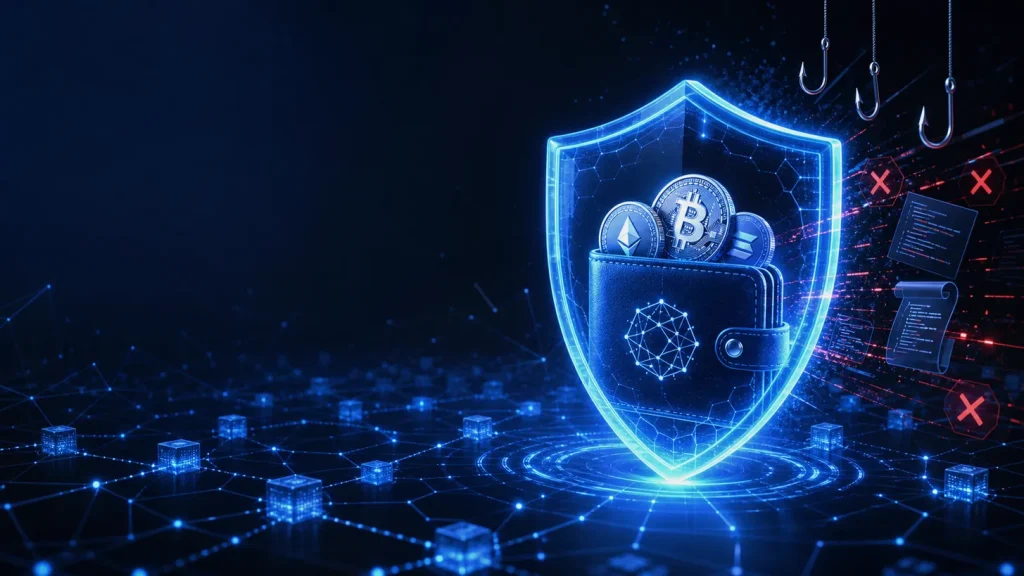
Common Blockchain Security Threats affect far more than developers and large crypto companies. A single rushed wallet transaction, fake support message, or malicious approval can put personal holdings at risk. Blockchain networks are designed to make records difficult to alter, but that does not make every wallet, exchange account, smart contract, or token link automatically safe.

- 20% trading fee discount
- $100 signup bonus
- $10,000 futures bonus

- 20% trading fee discount
- $30,050 signup bonus

- 20% fee cashback
- $10,000 bonus

- 20% fee cashback
- $8,000 bonus

- 50% trading fee discount
- 20% fee cashback
- $6,200 futures bonus

- 20% fee cashback
- $60,000 futures bonus
This guide breaks down the blockchain security risks people encounter most often, the warning signs worth noticing, and practical habits for safer crypto use.
Why blockchain security is different
A public blockchain can be highly resilient while the people and applications around it remain vulnerable. Transactions are generally irreversible, wallet ownership is controlled by private keys, and decentralized apps often ask users to approve contract permissions before assets can move.
That combination means crypto wallet security depends on more than a strong password. Users need to protect credentials, verify addresses, understand permissions, and use platforms with robust account-security features.
Rule of thumb: Treat a wallet signature or transaction confirmation as seriously as a bank transfer. Slow down before approving anything.
1. Phishing and fake crypto support scams
Phishing is one of the most common blockchain security threats because it targets human trust rather than breaking cryptography. Attackers create lookalike exchange pages, fake wallet extensions, imitation social accounts, and urgent messages claiming that an account has been locked or needs verification.
A fraudulent site may look nearly identical to a real platform while using a slightly altered domain. The goal is usually to collect login details, two-factor authentication codes, or a wallet seed phrase. Legitimate platforms do not need your recovery phrase to help you recover an account.
How to reduce phishing risk
- Type important URLs manually or use a verified bookmark.
- Check the entire domain name, not only the logo or page design.
- Never enter a seed phrase into a website, form, chat, or “support portal.”
- Ignore direct messages offering guaranteed recovery, giveaways, or urgent account help.
- Use phishing-resistant two-factor authentication where available.
2. Private key and seed phrase exposure
A private key or seed phrase is the master credential for a self-custody wallet. Anyone who obtains it can usually control the associated assets, with no reversal process. Screenshots, cloud backups, copied notes, browser extensions, and compromised devices can all expose this information.
For long-term holdings, consider storing recovery information offline in a secure physical location. Do not split it across random messages or save it unencrypted in email drafts. Hardware wallets can also reduce exposure by keeping private keys isolated from an internet-connected computer during transaction signing.
3. Smart contract vulnerabilities
Smart contract vulnerabilities are code-level flaws that can allow attackers to drain funds, manipulate prices, bypass access controls, or misuse contract logic. Bugs such as reentrancy issues, poor permission management, faulty arithmetic assumptions, and unsafe upgrade mechanisms have led to major DeFi losses.
Users cannot audit every line of code, but they can make more informed choices. Look for publicly documented audits, active development, transparent governance, bug bounty programs, and a credible history of operation. An audit is helpful, not a guarantee; contracts can still contain undiscovered issues or be used in unexpected ways.
Before interacting with a decentralized finance protocol, assess whether you understand what it does, what permissions it requests, and what assets are exposed if something goes wrong.
4. Malicious token approvals and wallet-draining signatures
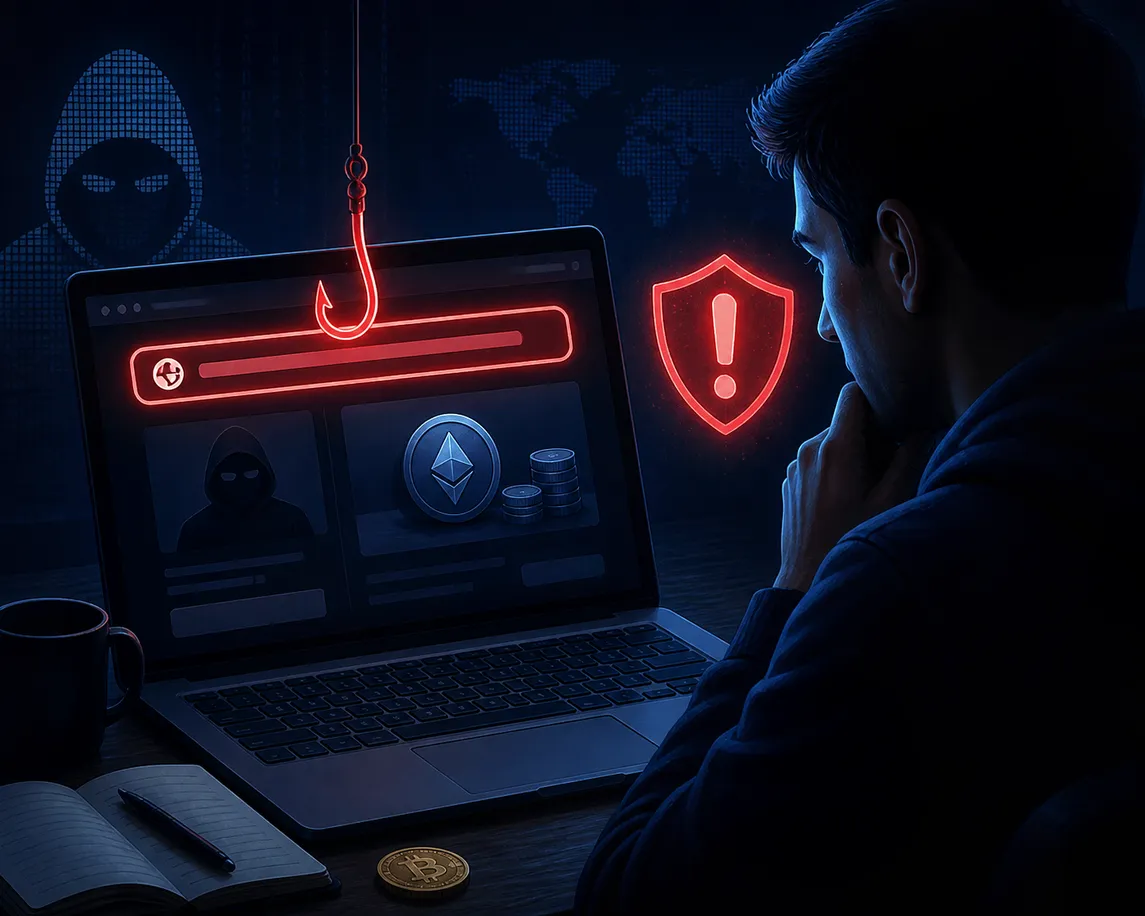
Not every dangerous wallet interaction looks like a transfer. Many scams rely on approvals or signatures that grant a smart contract permission to spend a token. A user may believe they are claiming an airdrop, minting an NFT, or verifying a wallet, while actually approving broad access to their assets.
This is a critical part of how to avoid crypto wallet scams: read signature requests carefully. If a site cannot explain why it needs an approval, do not proceed. Use a separate wallet with limited funds for new mints, experimental dApps, and unfamiliar token claims. Regularly review and revoke token allowances you no longer need.
5. Exchange account takeover
Centralized exchange accounts can be targeted through reused passwords, compromised email inboxes, SIM-swap attacks, malware, and social engineering. Once an attacker gains access, they may change withdrawal settings, trade assets, or attempt to bypass account recovery controls.
Choose unique, long passwords through a reputable password manager. Secure the email account tied to your exchange first, since email is often the recovery path for everything else. Enable two-factor authentication with an authenticator app or hardware security key rather than relying solely on SMS.
For traders looking for a major platform, create a Binance account with referral code CRYPTONEWER to access the advertised 20% fee discount and up to $10,000 in benefits, subject to Binance’s applicable terms, eligibility rules, and regional availability. After registration, immediately review device management, anti-phishing settings, withdrawal protections, and 2FA options.
6. 51% attacks and blockchain network risks
A 51% attack occurs when a party gains enough control over a proof-of-work network’s mining power to influence transaction ordering or potentially reorganize recent blocks. This can enable double-spending in some circumstances, particularly on smaller networks with limited hash power.
It is important to separate this from a common misconception: an attacker controlling majority hash power cannot simply take coins from arbitrary wallets or derive private keys. Still, merchants, exchanges, and users accepting low-liquidity assets should account for confirmation depth and network security when receiving payments.
Smaller chains can also face risks from low validator diversity, governance capture, bridge dependence, and concentrated token ownership. The security of an asset includes the security assumptions of the network it runs on.
7. Cross-chain bridge exploits
Cross-chain bridges connect assets and data between different blockchains, but they are complex systems with valuable pools of locked funds. Their attack surface may include smart contracts, validator sets, multisignature controls, message verification, and off-chain infrastructure.
Bridge exploits have repeatedly shown why “multichain” does not automatically mean “low risk.” Before using a bridge, verify that you are on the official site, confirm the destination network, start with a small test transaction, and avoid rushing because of a temporary incentive or social-media hype.
8. Malware, clipboard hijacking, and compromised devices
Malware can steal wallet files, record keystrokes, alter copied addresses, or manipulate what appears on screen. Clipboard hijackers are especially dangerous: you copy a recipient address, but malware silently replaces it with an attacker’s address before you paste it.
Always compare the first and last characters of the pasted address with the intended recipient. For larger transfers, verify the full address on a hardware wallet display and send a small test amount first. Keep operating systems, browsers, wallet software, and security tools updated, and avoid installing pirated software or unknown browser extensions.
Practical blockchain security checklist
Use this compact checklist before sending funds, connecting a wallet, or signing a message:
- Verify the URL through a trusted bookmark or official source.
- Check the network and recipient address before confirming a transaction.
- Read approvals and signatures instead of clicking through pop-ups.
- Use unique passwords and strong 2FA for exchanges and email accounts.
- Keep seed phrases offline and never share them with anyone.
- Segment wallets: one for savings, one for trading, and one for dApp testing.
- Revoke unnecessary approvals after using unfamiliar or temporary services.
- Start small when using a new chain, bridge, contract, or withdrawal route.
- Distrust urgency—pressure is a classic social-engineering signal.
- Review platform security settings regularly, especially after changing devices.
A safer approach to everyday crypto activity
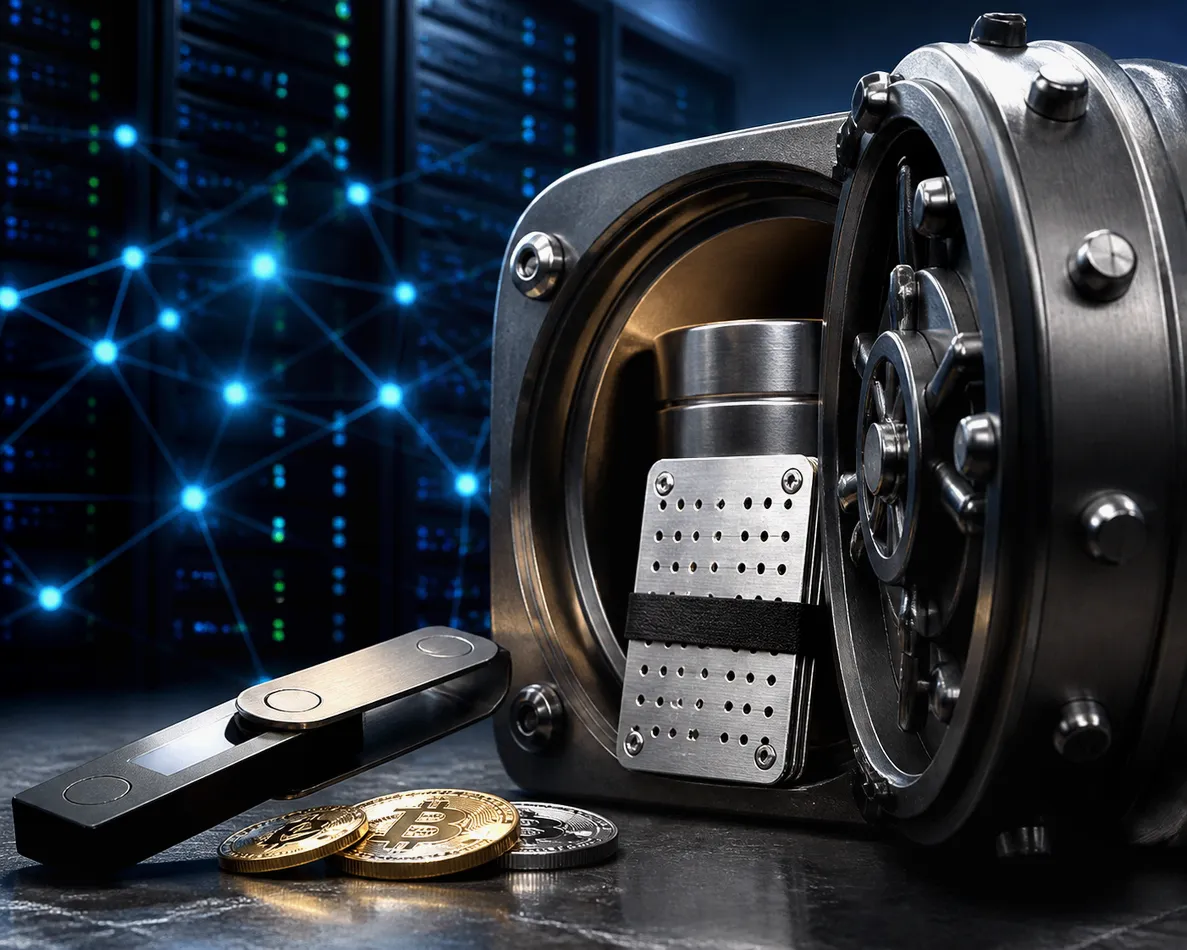
Good blockchain security is a repeatable process rather than a one-time setup. Keep high-value assets separated from experimental activity, confirm every destination independently, and assume that unsolicited messages are untrusted until proven otherwise. These habits reduce exposure to phishing, compromised accounts, malicious smart contracts, and many other common blockchain security threats.
For active trading, also make a habit of checking your login history, authorized devices, and withdrawal settings. If you decide Binance suits your needs, use Binance referral code CRYPTONEWER for the 20% fee discount offer and review all current promotional terms before depositing or trading.
Related posts:
 What Is VISTA (Ethervista) Coin? A Powerful Guide to Buying VISTA
 Running a Full Node vs Light Node — Powerful Guide to Choosing the Right Setup
 Top NFT Marketplaces Compared Expert Breakdown of Fees Liquidity Royalties and Chains
 How Blockchain Can Change Education: A Powerful Shift for Credentials, Learning, and Access