

The phrase Blockchain in the Music Industry used to sound like a marketing slogan attached to NFT artwork. It has become much more practical than that. Music is a business built on ownership data, licensing permissions, royalty splits, and payments—yet those records are often fragmented across labels, publishers, collection societies, distributors, and streaming platforms. Blockchain technology offers a shared, tamper-resistant way to record selected parts of that activity.

- 20% trading fee discount
- $30,050 signup bonus

- 20% fee cashback
- $60,000 futures bonus

- 50% trading fee discount
- 20% fee cashback
- $6,200 futures bonus

- 20% fee cashback
- $10,000 bonus

- 20% trading fee discount
- $100 signup bonus
- $10,000 futures bonus

- 20% fee cashback
- $8,000 bonus

- Bonus pack worth $100–$1,500 USDT
- Fee discount
That does not mean every song needs to live “on-chain,” or that blockchain will replace labels and streaming services. The more realistic opportunity is improving the infrastructure behind music: who owns a recording, who wrote the composition, what percentage each contributor receives, and whether a licence has been granted. For independent artists in particular, better data can mean fewer delayed payments and less uncertainty around rights.
Why music rights are difficult to track
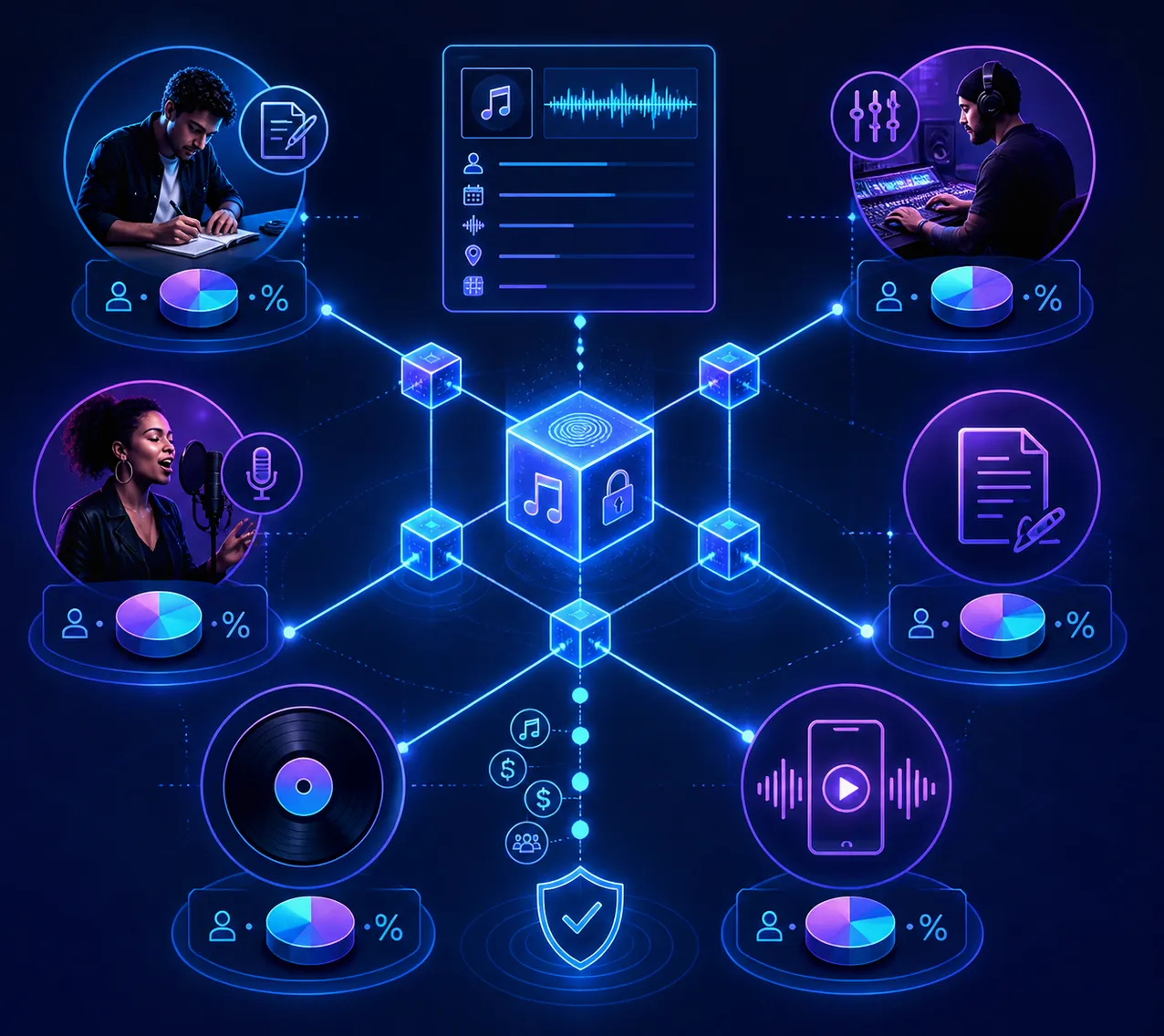
A single track may involve a vocalist, songwriter, producer, beat maker, session musician, publisher, record label, distributor, and multiple rights organisations. Each party can have a different claim. The master recording and the underlying musical composition are also separate assets, which creates another layer of complexity.
When metadata is incomplete or inconsistent, royalties can be held in suspense while platforms and rights holders try to identify the correct recipient. This is not a small administrative annoyance. It can affect an artist’s ability to budget, tour, pay collaborators, and decide whether a release is financially sustainable.
A blockchain-based registry could store time-stamped ownership claims, contributor splits, and licence references. Importantly, the chain would not magically prove that a false claim is true. It can preserve a record very well, but the input still needs trusted verification. In other words: accurate metadata remains the foundation.
Blockchain music royalties and transparent splits
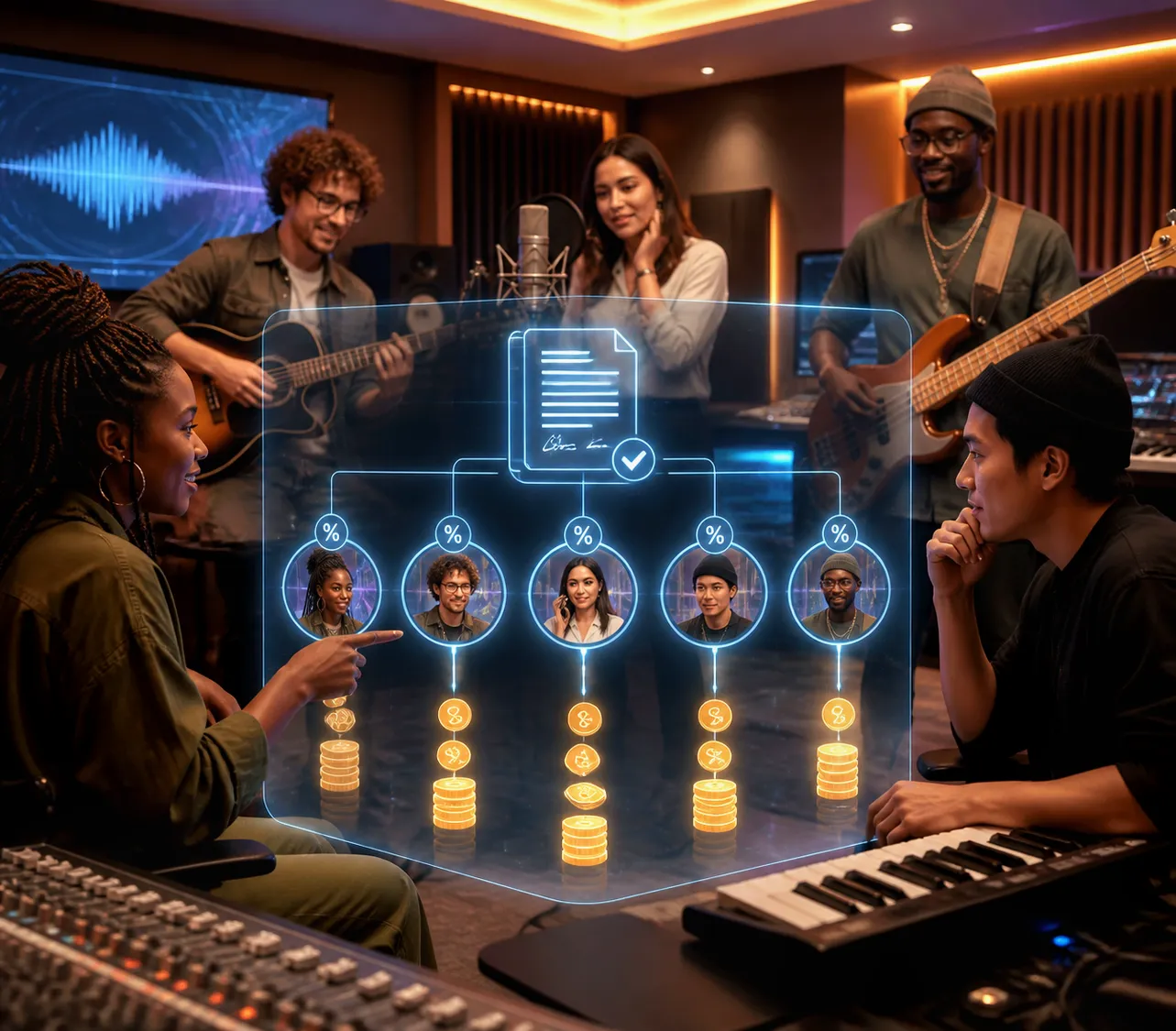
One of the strongest use cases for music blockchain technology is royalty accounting. Smart contracts can be designed to allocate revenue automatically according to pre-agreed splits. If a producer owns 20%, a songwriter owns 30%, and an artist owns 50%, an on-chain payment workflow can distribute funds based on those terms rather than relying on someone to calculate every payment manually.
This model is especially interesting for collaborations across borders. Traditional royalty payments can pass through several intermediaries and arrive months later. A programmable settlement system may reduce some of that friction, particularly for direct sales, fan memberships, limited digital releases, and licensing arrangements.
However, artists should read the fine print before adopting any platform. Smart contracts are software, and software can contain errors. They also cannot resolve vague agreements. Before tokenising a song or automating a split, collaborators should use a clear written agreement covering ownership, revenue sources, approval rights, and what happens if a dispute arises.
NFTs are not the same as music copyright
NFTs introduced many fans to the idea of digital scarcity. An artist can issue a limited-edition collectible connected to a song, backstage experience, visual, stem pack, or community benefit. That can be valuable as a fan-engagement tool, but purchasing an NFT does not automatically transfer copyright or publishing rights.
This distinction matters. A token may represent access, provenance, membership, or a licence with narrow terms. The actual legal rights depend on the agreement attached to it. Artists should state plainly what a buyer receives: personal listening rights, commercial-use permission, a revenue share, event access, or simply ownership of a collectible token.
For fans, the sensible approach is to treat NFT music projects like any other purchase: check the creator, read the terms, and avoid assuming future resale value. The useful part of the technology is not speculation; it is the ability to create verifiable digital relationships between artists and supporters.
Fan funding, token communities, and direct ownership models
Blockchain in the music industry can also support new funding paths. Artists may offer token-gated communities, early access to unreleased material, voting on creative choices, or limited digital merchandise. These tools can help creators build recurring relationships rather than depending entirely on streams that pay fractions of a cent per play.
Some projects explore fractional ownership or royalty participation. This area needs particular care. Offering revenue-linked tokens may trigger securities, consumer-protection, tax, or licensing rules depending on the jurisdiction. Artists should get qualified legal and financial advice rather than copying a token model from social media.
The best fan communities tend to focus on genuine utility: private listening sessions, concert presales, production breakdowns, Discord access, or physical merchandise. A token should enhance the relationship with the artist, not obscure a weak value proposition.
Using crypto tools responsibly as a music creator
Creators who want to receive crypto payments or experiment with Web3 releases need a reputable exchange and a clear risk plan. Create a Binance account with referral code CRYPTONEWER to access the platform’s advertised 20% fee discount and up to $10,000 in benefits, subject to Binance eligibility requirements and current promotion terms.
Crypto assets are volatile, so it is wise to separate operational funds from money needed for rent, recording sessions, payroll, or tax obligations. Learn basic wallet security, enable two-factor authentication, use unique passwords, and never share a seed phrase. If a musician receives payment in crypto, keeping detailed transaction records is also essential for accounting and tax reporting.
The limits of blockchain adoption in music
There are serious hurdles. Public blockchains may have transaction costs, confusing user experiences, and privacy concerns. Rights data can be commercially sensitive, and not every contract belongs on a public ledger. There is also no single global database that every label, publisher, streaming platform, and collecting society has agreed to use.
Interoperability is therefore more important than hype. A useful music rights system must work with existing identifiers and standards, including ISRC codes for recordings and ISWC codes for musical works. It must also make life easier for artists and administrators, not require every listener to understand wallets, gas fees, and private keys.
Where the technology is likely to matter first
The near-term future of blockchain music royalties is likely to be practical and mostly invisible. Think cleaner contributor credits at the moment of release, faster split payments for independent collaborations, auditable licence histories, and fan memberships that work across platforms. These are less flashy than million-dollar NFT headlines, but they solve real problems.
Artists considering blockchain should start with a specific question: What part of my music business is inefficient today? If the answer is split management, licensing records, direct-to-fan access, or payment transparency, blockchain may offer a useful tool. If the answer is simply “I want a token,” it is worth stepping back and defining the audience benefit first.
The durable opportunity is not turning every track into a tradeable asset. It is building a music ecosystem where creators can identify their work, document their rights, pay collaborators more clearly, and connect with listeners on terms they understand.
Related posts:
 How to Set TP/SL Orders on CoinEx: Smart Risk Control for Every Trade
 How to Set Leverage on OKX Futures: Powerful Step-by-Step Trading Guide
 What Is Hashing in Blockchain? Essential Guide to How It Secures Crypto Networks
 2026 Crypto Futures Trading Guide — Advanced, Actionable Strategies and Pro Tools