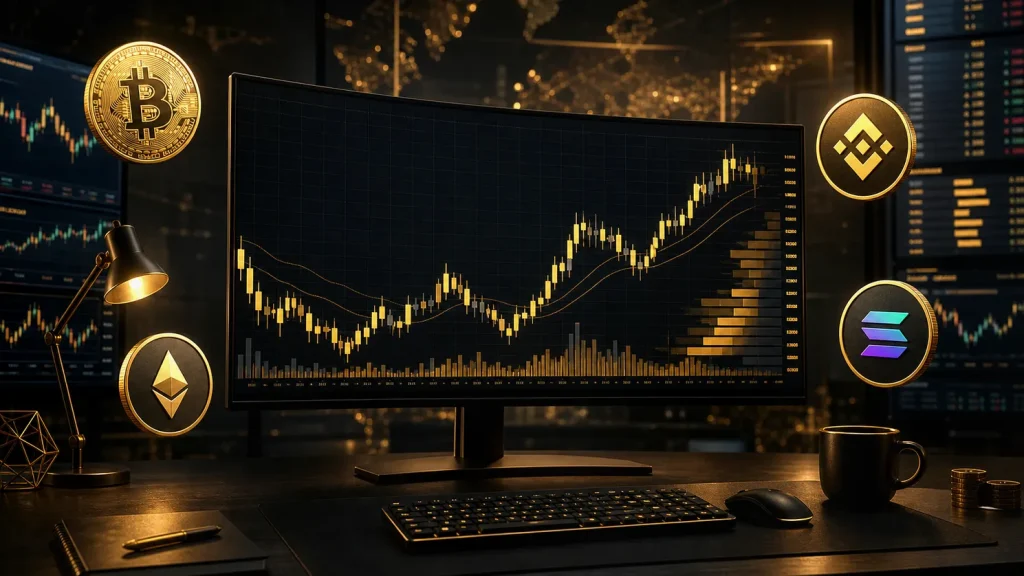
Finding the best coins to trade on Binance is less about chasing whichever token is trending for an hour and more about identifying liquid markets, dependable setups, and risk levels that fit your strategy. Binance offers deep order books and a wide list of spot and futures markets, but a large selection does not automatically make every coin a good trade.

- 20% fee cashback
- $8,000 bonus

- 50% trading fee discount
- 20% fee cashback
- $6,200 futures bonus

- 20% fee cashback
- $10,000 bonus

- 20% trading fee discount
- $100 signup bonus
- $10,000 futures bonus

- 20% fee cashback
- $60,000 futures bonus

- 20% trading fee discount
- $30,050 signup bonus
For traders who want to start with lower costs, open a Binance account with referral code CRYPTONEWER. Eligible new users can receive a 20% trading-fee discount and up to $10,000 in benefits, subject to Binance terms, campaign availability, and regional eligibility. Lower fees are especially meaningful for active traders, because frequent entries and exits can quietly reduce net returns.
What Makes a Coin Good for Trading on Binance?
The best Binance trading coins normally have three traits: strong liquidity, consistent volatility, and clear market interest. Liquidity helps traders enter and exit nearer to their intended price, while volatility creates opportunities for a price move. The balance matters: a token that barely moves may not offer enough opportunity, but a thinly traded meme coin can move so violently that stop-loss orders fill far away from the expected price.
Before choosing a pair, inspect the 24-hour trading volume, bid-ask spread, recent price range, token news, and the overall direction of Bitcoin. Use Binance’s spot market data and charting tools to compare pairs such as BTC/USDT, ETH/USDT, and SOL/USDT. For most people, USDT pairs are easier to track because profits and losses are measured against a relatively stable quote asset.
Risk reminder: Cryptocurrency trading is high risk. This is educational information, not investment advice. Never trade money needed for bills, debt payments, or emergencies.
1. Bitcoin (BTC): The Benchmark Coin for Active Traders
Bitcoin is often the first answer to “what are the best coins to trade on Binance?” for good reason. BTC/USDT typically has substantial liquidity, narrow spreads, and round-the-clock attention from institutions, funds, miners, and retail traders. Its price action also influences the wider crypto market, making BTC a valuable market indicator even when you trade altcoins.
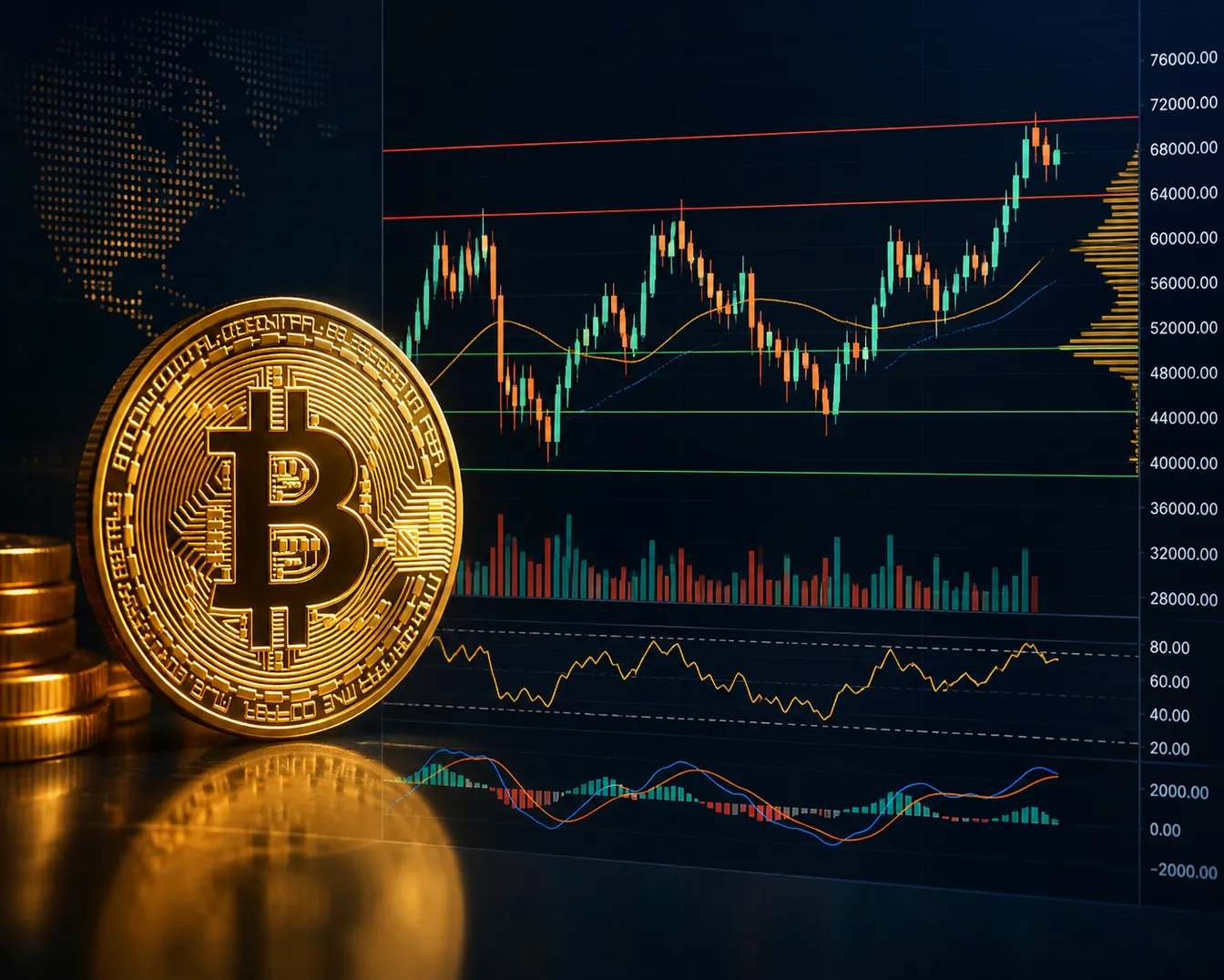
BTC is suitable for range trading, breakouts, swing trading, and trend-following approaches. A practical workflow is to establish the daily trend first, mark support and resistance on the 4-hour chart, then use a lower timeframe only to refine an entry. Avoid treating every small candle as a signal. A defined invalidation level below support—or above resistance for a short position where permitted—is more important than perfect timing.
2. Ethereum (ETH): Strong Liquidity With Ecosystem Catalysts
Ethereum is another core choice among the best crypto pairs to trade. ETH/USDT is widely watched and frequently responds to network upgrades, staking developments, decentralized finance activity, ETF-related headlines, and broader risk sentiment. In many market phases, ETH provides robust volume while moving differently enough from BTC to create separate setups.
One useful comparison is the ETH/BTC relationship. When ETH gains strength against BTC, it can signal increasing appetite for larger-cap altcoins; when it weakens, traders may be rotating toward Bitcoin. This is context—not a standalone buy or sell signal—but it can prevent trading ETH without understanding the larger market rotation.
3. BNB: A Binance Ecosystem Coin to Watch
BNB deserves attention from anyone specifically seeking Binance trading coins. Its relevance to the Binance ecosystem means news about exchange services, launch events, BNB Chain activity, and fee-related utility can affect sentiment. The BNB/USDT market is generally more established than many smaller altcoins, though it can still carry event-driven risk.
Traders should avoid assuming ecosystem relevance guarantees upside. Track volume around major price levels and wait for confirmation—for example, a breakout that closes above resistance with rising volume, followed by a controlled retest. That approach is usually safer than buying immediately after a large green candle.
4. Solana (SOL): Higher-Beta Liquidity and Faster Swings
Solana is frequently one of the best altcoins to trade on Binance for traders seeking larger intraday moves than BTC or ETH. SOL/USDT is closely linked to activity across the Solana ecosystem, including DeFi, NFT markets, consumer apps, and meme-token speculation. That attention can create excellent volume, but it can also produce sharp reversals.
Because SOL can travel quickly, position size matters more than prediction. Consider setting the stop level before calculating the amount to buy. If the distance between entry and stop is wide, reduce position size rather than moving the stop farther away simply to keep the same position. This basic risk-management rule helps protect a trading account during sudden volatility.
5. XRP: Event-Driven Trading Opportunities
XRP/USDT remains a popular market for traders looking for a liquid, headline-sensitive coin. XRP can react strongly to regulatory developments, partnership stories, exchange news, and sudden changes in market sentiment. Its chart may spend time consolidating and then make abrupt directional moves, which can suit breakout traders who are patient enough to wait.
For XRP and similar event-sensitive assets, check reputable news sources before holding a position overnight. A technical setup can be invalidated by a major headline in minutes. Use limit orders where appropriate, know the maximum loss you accept, and do not increase exposure solely because a trade moves against you.
6. Chainlink (LINK) and Other Infrastructure Tokens
Chainlink (LINK) is a notable infrastructure-focused asset with a recognizable role in blockchain data and oracle services. LINK/USDT may appeal to swing traders who want exposure beyond layer-1 coins while still using a relatively well-known market. It often responds to DeFi conditions, protocol integrations, and broader altcoin momentum.
Other large-cap infrastructure or utility coins can be tradeable, but the selection should be driven by actual liquidity instead of social-media popularity. A simple screening checklist includes:
- Look for meaningful and sustained volume rather than a one-hour spike.
- Check whether the spread is tight enough for your intended trade size.
- Identify scheduled unlocks, upgrades, listings, or macroeconomic events.
- Favor a defined chart setup over fear of missing out.
- Confirm that the trade offers a sensible reward relative to the amount at risk.
Spot Trading vs. Futures for Binance Traders
For beginners, spot trading is generally easier to understand: you buy an asset and own it in the account unless you sell it. Binance futures can provide long and short exposure with leverage, but leverage magnifies both gains and losses and can lead to liquidation. The most tradeable coin is not automatically the best futures coin for a new trader.
A sensible starting process is to trade spot with a small amount, maintain a written journal, and measure results across a meaningful number of trades. Record the entry reason, stop level, target, market condition, and emotional state. Patterns become easier to see when they are written down: perhaps breakouts work better for you than reversals, or perhaps trades taken during low-volume hours underperform.
Building a Watchlist of the Best Coins to Trade on Binance
A focused watchlist is usually better than tracking fifty charts. Start with BTC/USDT, ETH/USDT, BNB/USDT, SOL/USDT, XRP/USDT, and LINK/USDT, then narrow the list to the two or three charts showing the cleanest conditions. This keeps decisions deliberate and reduces impulsive trades.
Use multiple timeframes: the daily chart for market structure, the 4-hour chart for setup development, and the 1-hour or lower timeframe for execution. Mark prior highs and lows, major support and resistance zones, and high-volume breakout areas. If price is sitting in the middle of a broad range with no catalyst or structure, there may be no trade to take—and preserving capital is also a trading decision.
Fees, Order Types, and Trade Execution
Trading costs affect every strategy. A fast scalping approach that appears profitable before fees may be unprofitable after dozens of market orders. Review the exchange’s current fee schedule and consider whether limit orders, where they fit your plan, can improve execution. To access the promotional offer, register through Binance using code CRYPTONEWER for a 20% fee discount and up to $10,000 in benefits.
Market orders prioritize immediate execution but may experience slippage in fast conditions. Limit orders provide price control but may not fill. Stop-limit and stop-market orders each have different behavior during rapid moves, so learn them with small positions before relying on them in a volatile market. Good execution is not glamorous, but it is part of what separates a repeatable plan from an impulsive trade.
A Simple Risk Plan for BTC, ETH, SOL, and Altcoin Trades
A trading plan should specify more than the coin. Define the entry trigger, the point that proves the idea wrong, the target area, and the maximum account percentage at risk. Many disciplined traders keep risk per trade small enough that several losing trades do not materially damage the account. Avoid averaging down without a prewritten plan, and be cautious when multiple positions are highly correlated—for example, holding BTC, ETH, SOL, and several altcoins long at the same time.
The best coins to trade on Binance change with liquidity, market regime, and news flow. BTC and ETH can offer dependable depth; BNB, SOL, XRP, and LINK can provide alternative setups and higher volatility. The durable edge is not identifying a magic ticker. It is choosing liquid markets, waiting for structured opportunities, controlling costs, and protecting downside on every trade.
Related posts:
 What Is the PENGUIN (Nietzschean Penguin) Coin, and How to Buy This Viral Solana Meme Coin
 What is the MANTRA (MANTRA) Coin, and how to buy: Essential guide with step‑by‑step Binance walkthrough
 Secure OKX Account Sign-Up Process: Use CRYPTONEWER for 20% Fee Cashback
 OKX Copy Trading: Getting Started With Smarter Trader Selection