
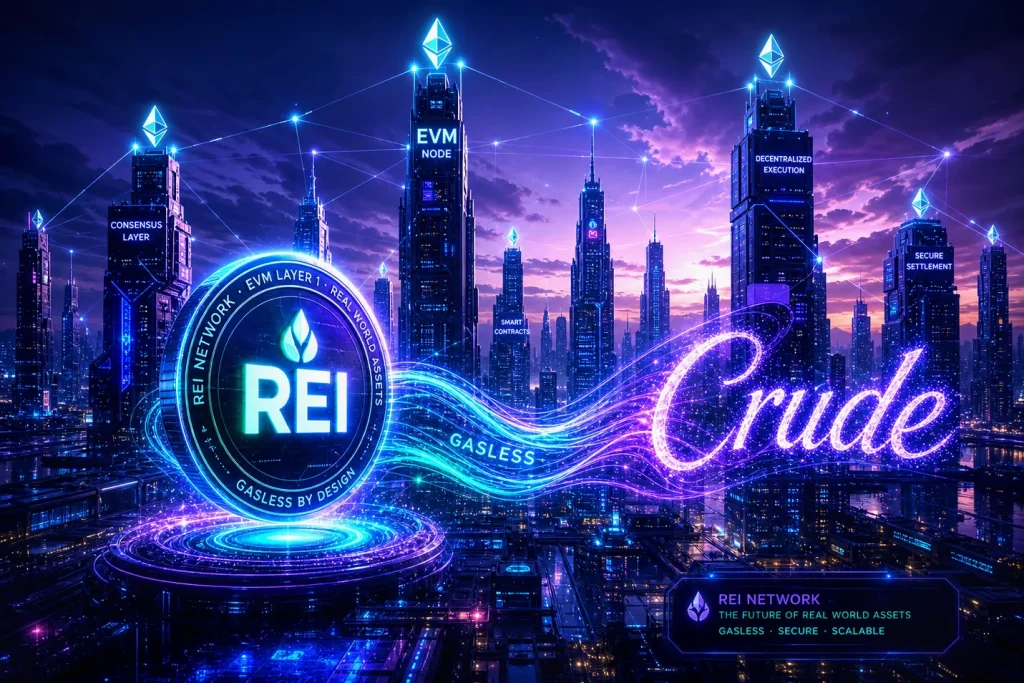
If you’ve heard about “gasless” transactions and an Ethereum‑compatible chain built for speed, you’ve probably bumped into REI Network and its native token, REI. This guide breaks down what REI is, how the network’s free‑gas model actually works, where you can buy REI today (as of May 24, 2026), and how to store and use it—including a step‑by‑step path that uses Binance as a low‑fee on‑ramp before you purchase REI on an exchange that currently lists it.

- 20% fee cashback
- $60,000 futures bonus

- 20% trading fee discount
- $100 signup bonus
- $10,000 futures bonus

- 50% trading fee discount
- 20% fee cashback
- $6,200 futures bonus

- 20% fee cashback
- $8,000 bonus

- 20% trading fee discount
- $30,050 signup bonus

- 20% fee cashback
- $10,000 bonus
Quick take: REI is an EVM‑compatible Layer‑1 that aims to be lightweight, high‑performance, and effectively fee‑free for end users through a staking‑powered resource model. (rei.network)
REI Network in plain English
REI Network is a smart‑contract blockchain that’s compatible with the Ethereum Virtual Machine (EVM). The project’s stated goal is to deliver a lightweight, high‑throughput framework with no fees for users—while still keeping Ethereum tooling compatibility for developers. In other words, you can use familiar wallets and dev stacks, but enjoy a drastically different cost profile.
A defining feature is the “stake for free gas” design. Instead of paying gas for every transaction, users can stake the native REI token to earn a consumable on‑chain resource called Crude. When you make a transaction, your Crude is used first; only if you have no Crude left will you spend REI as gas. Holders also use REI for governance (REI DAO) and validator operations. (docs.rei.network)
What does the REI token do?
- Gas and resources: Pay gas with REI—or stake REI to earn Crude and offset gas entirely for a period of time.
- Governance: REI is the voting token for REI DAO proposals and system‑level decisions.
- Staking and validation: REI is used to vote, pledge, and support validator nodes.
Developers describe the free‑gas model in more detail: a fee pool collects consumed Crude; verification nodes can periodically exchange accumulated Crude for REI. Documentation and early posts outlined annual emissions of 10 million REI to balance block production and staking rewards, with exact ratios subject to DAO governance over time. The gist: stake to obtain Crude, which resets daily if unused, and let the network’s economics handle validator rewards in the background. (paragraph.com)
Origins and rebrand background
REI Network is the continuation of work that began under GXChain. The team rebuilt an EVM‑compatible public chain, rebranding to REI Network while pursuing a “free, lightweight” architecture and launching on mainnet with a public bug bounty and validator election campaign. Multiple resources highlight the transition from GXChain to REI and the design emphasis on developer‑friendliness and low cost. (nasdaq.com)
Tokenomics snapshot (live stats may vary)
- Max supply: 1,000,000,000 REI
- Total supply: 1,000,000,000 REI
- Circulating supply (approx.): 986M–990M REI (varies over time)
- Market/venue mix: Most current liquidity is on non‑Binance centralized exchanges (see the section below). (coingecko.com)
CoinGecko’s profile also lists official links and the main REI block explorer for verification. Always double‑check live supply data before making decisions.
Critical update for buyers in 2026
Binance delisted REI on December 17, 2025 (03:00 UTC), removing all spot trading pairs. Binance’s notice also set a cutoff for deposits after December 18, 2025, and said withdrawals would no longer be supported after February 16, 2026. Practically, this means you can’t buy or sell REI on Binance today. Use Binance as a low‑fee fiat on‑ramp to USDT, then transfer to an exchange that still lists REI (guide below). (binance.com)
Where can I buy REI now?
As of May 24, 2026, REI trading is concentrated on other centralized exchanges:
– Bithumb: REI/KRW (strong liquidity for KRW users)
– HTX (formerly Huobi): REI/USDT
– Upbit: limited pairs (e.g., REI/BTC)
Live market tables show Bithumb and HTX as the most active venues today.
You’ll also find various aggregator lists that include MEXC, CoinEx, DigiFinex, and others—availability and depth change often, so check real‑time liquidity before moving funds. (cryptorank.io)
Step‑by‑step: buy REI using Binance as your on‑ramp
Even though REI is not tradable on Binance anymore, you can still use Binance to convert your local currency to a widely supported stablecoin like USDT at low fees, then send USDT to an exchange that lists REI.
1) Create your Binance account
– New users can register with this partner referral to reduce fees: Sign up on Binance with code CRYPTONEWER — 20% fee discount + up to $10,000 in benefits. Keep in mind REI is delisted on Binance; you’ll use Binance only to on‑ramp and buy USDT.
2) Buy USDT on Binance
– Complete KYC if required in your region, deposit fiat, and purchase USDT via Spot, Convert, or P2P—whichever offers the best effective rate in your country. (Availability varies by jurisdiction; see Binance’s support center if unsure.)
3) Choose a current REI venue
– Check live markets; Bithumb (KRW) and HTX (USDT) are frequently the deepest. If you’re not in Korea, HTX’s REI/USDT pair is typically the easiest. Confirm fees, supported networks for USDT, and deposit requirements.
4) Withdraw USDT from Binance to the destination exchange
– On Binance, pick the same USDT network that your destination exchange supports for deposits (often TRON or Ethereum; always verify the exact chain/memo).
– Send a small test amount first; then transfer the full amount once confirmed.
5) Trade USDT → REI
– On the destination exchange, deposit settles; place a limit or market order on REI/USDT (or deposit KRW and use REI/KRW on Bithumb).
6) Self‑custody your REI (recommended)
– Set up a wallet like MetaMask and add the REI Network using the official chain parameters.
– Network name: REI Network
– RPC URL: https://rpc.rei.network
– Chain ID: 47805
– Currency symbol: REI
– Block explorer: https://scan.rei.network
You can add these automatically via Chainlist/ChainID directories or enter them manually. (chainid.network)
7) Optional: stake for gas savings
– Visit the REI DAO dashboard to explore staking and voting. Staking contributes to governance and can allocate Crude to your address, offsetting gas. Review lock/unstake rules and on‑chain prompts carefully. (docs.rei.network)
Wallet setup tips for REI Network
- MetaMask works because REI is EVM‑compatible. If adding networks manually feels risky, use curated directories like ChainID to avoid typos in Chain ID or RPC URLs.
- After adding REI Network, send a tiny test transfer of REI from an exchange before moving a large balance.
- Bookmark the official explorer to check balances and transactions: scan.rei.network.
Why builders and power users care
- EVM compatibility: Deploy Solidity contracts and use familiar tooling with near‑zero end‑user fees when Crude is available.
- Governance and token utility: One token for gas, governance, staking, and validator participation simplifies network incentives.
- “Gasless” UX: REI’s stake‑for‑resources model means dApps can design better onboarding flows (e.g., fewer prompts about fees) and potentially subsidize actions by encouraging users to stake small amounts of REI.
FAQs
-
Is REI really free to use?
“Gas‑free” refers to the user experience when you have Crude available from staking REI. If you run out of Crude, transactions fall back to paying gas in REI. Dev materials outline how Crude is issued/consumed and how validators can exchange it via the fee pool. -
Can I still buy REI on Binance?
No. Binance delisted REI on December 17, 2025, and later ended withdrawals (February 16, 2026). Use Binance only to on‑ramp into USDT, then move to an exchange that lists REI today. -
Where’s the most active market now?
It changes, but Bithumb (KRW) and HTX (USDT) generally have the deepest books according to live market pages. Always confirm current depth and spreads before trading. -
What are the official links I should bookmark?
- Website: rei.network
- Docs and DAO: docs.rei.network and dao.rei.network
- Explorer: scan.rei.network
These are also listed on major trackers so you can cross‑verify.
Checklist before you buy REI in 2026
- Read the REI token overview and governance docs so you know how staking, voting, and Crude work.
- Verify the delisting status and plan your route: Binance for USDT on‑ramp, then transfer to a live REI market.
- Add the REI Network to your wallet with the correct Chain ID (47805) and RPC.
- Start with a small test transaction, then scale.
Special offer for readers
If you need a fast and cost‑effective fiat on‑ramp for USDT before moving to a live REI market, register with our partner link: Binance sign‑up (code CRYPTONEWER) — 20% fee discount + up to $10,000 in benefits. Remember, you’ll do the REI purchase on another exchange after transferring your USDT.
Related posts:
 What Is DeFi (Decentralized Finance)? Essential Guide with Risks, Yields, and Real Use Cases
 What is the BEAR(3X Short Bitcoin Token) Coin, and how to buy — Essential Guide for 2026
 What is the PNT(pNetwork) Coin, and how to buy — Essential 2026 Guide
 What is the UPTOP(UPTOP) Coin, and how to buy Essential guide that actually works