
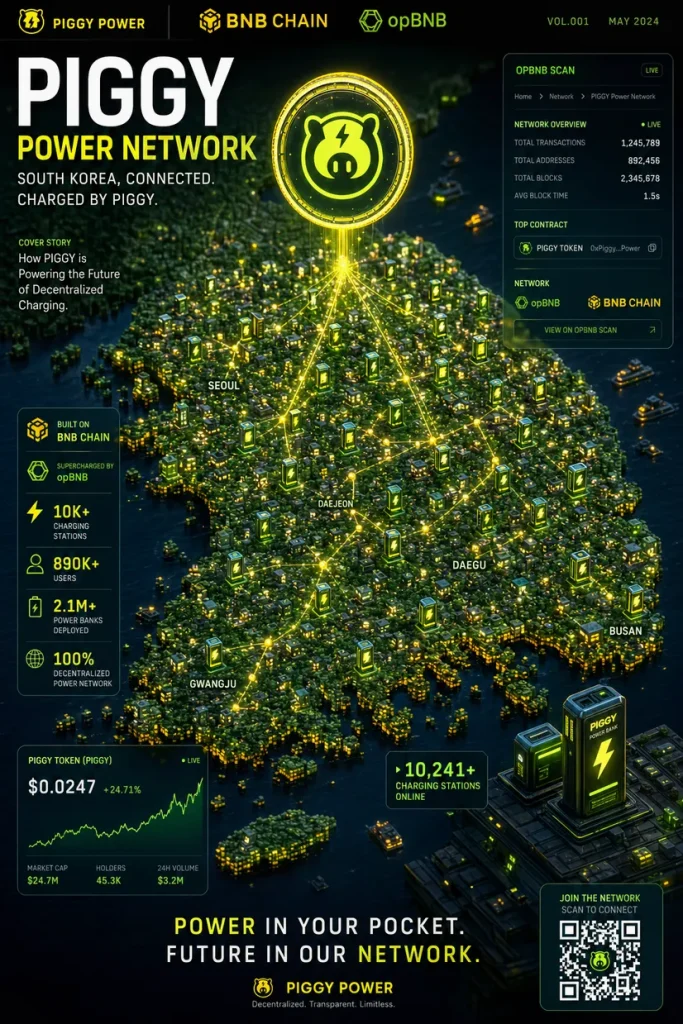
If you’ve seen “PIGGY” popping up on crypto price pages and Telegram chats and wondered what it actually does, this guide is for you. I’ll explain in plain English what Piggycell is, why people call it a DePIN + RWA project, and walk you through multiple safe ways to buy PIGGY today (April 26, 2026). I’ll also share tools to check the live price, contract address, and official resources so you don’t get tripped up by look‑alike tokens.

- 20% trading fee discount
- $100 signup bonus
- $10,000 futures bonus

- 20% fee cashback
- $10,000 bonus

- 20% fee cashback
- $8,000 bonus

- Bonus pack worth $100–$1,500 USDT
- Fee discount

- 20% fee cashback
- $60,000 futures bonus

- 20% trading fee discount
- $30,050 signup bonus

- 50% trading fee discount
- 20% fee cashback
- $6,200 futures bonus
—
TL;DR
- Piggycell (ticker: PIGGY) connects real phone‑charging infrastructure in South Korea to the blockchain and uses its token to reward usage and participation. (coinmarketcap.com)
- The PIGGY token has a max supply of 100,000,000 and is designed for payments, usage‑based rewards, staking, and governance. (piggycell.gitbook.io)
- You can buy PIGGY on several CEXs and BNB Chain DEXs; always verify the contract address 0x46345336e7c5c89bd15d557203040f2c1ab4dd18. (coingecko.com)
- Piggycell data and token activity anchor on opBNB for low fees and high throughput.
—
What is Piggycell (PIGGY)?
Piggycell is a decentralized physical infrastructure network (DePIN) focused on “micro‑energy” — the everyday act of renting and charging portable power banks. The project reports a nationwide network in South Korea, recording rental and return events on‑chain so usage becomes verifiable data, and tying token rewards to that real‑world activity. That makes PIGGY one of the rare tokens whose core incentive design is linked to measurable consumer actions rather than only speculative trading.
Piggycell’s token utility is intentionally broad: paying inside the app ecosystem, distributing usage‑indexed rewards (including Charge‑to‑Earn and Dominate‑to‑Earn), staking to unlock features, and activity‑weighted governance. In short, PIGGY works as the coordination layer for the network’s incentives and decisions.
—
Why people call Piggycell a DePIN + RWA play
- DePIN: The team couples physical assets (charging stations and power banks) with on‑chain logs. Each rental or return emits an event that can be aggregated into station‑ or zone‑level metrics. This is a classic DePIN pattern: real hardware, real telemetry, on‑chain proofs.
- RWA: Stations and zones can be represented by NFTs that claim a share of usage‑based rewards — a way to “tokenize” small infrastructure units and expose their usage to transparent accounting.
- Chain design: Event data and token actions are anchored on opBNB for speed and costs, with multichain readiness referenced in the official ecosystem docs.
—
Tokenomics at a glance
- Max supply: 100,000,000 PIGGY.
- Allocation framework (high level): Dominate‑to‑Earn, Charge‑to‑Earn, Challenges, Fundraising, Contributors & Development, Treasury, Team, Liquidity, Marketing — each with defined percentages and vesting logic.
- Utility categories: payments for charging and memberships, usage‑based rewards, staking for tiers, governance voting, reputation/access gating, and NFT interoperability with stations/zones.
All of the above is laid out in the project’s public documentation and on major listing pages. If you want the line‑by‑line percentages, they’re published in the GitBook’s Allocation page and summarized on the CMC profile.
—
Official resources and the one contract address to trust
- Official website and docs: piggycell.io and the GitBook are the canonical references for features and tokenomics. (piggycell.io)
- Contract (BNB Smart Chain): 0x46345336e7c5c89bd15d557203040f2c1ab4dd18. You can cross‑check this on CoinGecko and BscScan before you buy.
- Note on migrations: CMC records a 1:1 contract swap from older BSC/ICP contracts to the new deployment — another reason to verify the active address above.
—
Where can I buy PIGGY today?
As of April 26, 2026, PIGGY is tradable on multiple venues:
– DEX on BNB Chain: PancakeSwap Infinity CLMM (PIGGY/BSC‑USD), and Uniswap V3 (BSC).
– CEX: Gate, MEXC, XT, KCEX, BitKan, Azbit.
Always check the live markets list for current liquidity and pairs; CoinGecko aggregates them neatly.
Pro tip: you don’t need to guess the pair or chase social links. Start from CoinGecko’s PIGGY page and click through to the market you prefer; that flow also reduces the risk of landing on an impersonator token.
—
Step‑by‑step: Buy PIGGY using a CEX (fastest path)
This is the easiest route if you’re new to crypto.
1) Create a fiat on‑ramp and fund your account
– Open a top‑tier exchange account and complete KYC. If you don’t already have one, you can register on Binance with my referral — new users get a 20% spot fee discount plus up to $10,000 in benefits. Use code CRYPTONEWER or this link: Join Binance with code CRYPTONEWER.
2) Acquire USDT
– Deposit via card/bank or convert your local currency to USDT inside Binance.
3) Send USDT to a PIGGY‑listed exchange
– Pick a CEX listing PIGGY, like Gate or MEXC, and deposit your USDT there. Their PIGGY/USDT spot pages are public; you can view them even before creating an account. (gate.com)
4) Trade USDT → PIGGY
– On the chosen exchange, open the PIGGY/USDT market and place a limit or market order. Double‑check the ticker and project description match Piggycell before confirming.
5) Withdraw to self‑custody (recommended)
– For long‑term holding, move PIGGY to a wallet you control (e.g., MetaMask or Trust Wallet on BNB Smart Chain). Always withdraw to a BEP‑20 address compatible with BNB Chain.
—
Step‑by‑step: Buy PIGGY on a DEX (for on‑chain natives)
This route gives you full self‑custody from the start.
1) Set up a wallet on BNB Smart Chain
– Use MetaMask. If BNB Chain isn’t added yet, add the network RPC in Settings.
2) Fund your wallet with BNB (for gas) and a swap asset (BSC‑USD/USDT)
– The simplest path is buying BNB/USDT on Binance, withdrawing to your wallet’s BNB Chain address, then proceeding to swap. Remember the referral benefits if you’re a new user: Join Binance with code CRYPTONEWER.
3) Import the PIGGY token contract
– In MetaMask, click “Import tokens” and paste the official address: 0x46345336e7c5c89bd15d557203040f2c1ab4dd18. You can also use CoinGecko’s “Add to MetaMask” shortcut on the PIGGY page.
4) Choose a DEX and swap
– Open PancakeSwap (Infinity CLMM on BNB Chain) or Uniswap V3 (BSC) from CoinGecko’s Markets section to avoid spoofed sites. Select PIGGY using the contract address and swap your BSC‑USD/USDT for PIGGY. Start with modest slippage (e.g., 0.5–1.0%).
5) Verify receipt
– Check MetaMask for the updated PIGGY balance. If it’s not visible, ensure the token is imported correctly and that you used the exact contract.
—
How Piggycell actually works under the hood
- On‑chain event logging: Renting/returning a power bank creates verifiable events mapped to stations/zones. Those events inform incentives and dashboards.
- Program tracks: “Charge‑to‑Earn” for app users and “Dominate‑to‑Earn” for NFT holders are central to how token rewards circulate through real usage.
- Chain choice: Data and token actions are anchored on opBNB; the official site links an opBNB scanner entry in its Tools section.
—
Verifying tokenomics and supply
If you like to double‑check numbers before investing (good habit!), here’s where to look:
– Allocation and definitions: Piggycell GitBook (Tokenomics → Allocation). It lists the categories like Dominate‑to‑Earn, Charge‑to‑Earn, Challenges, etc., plus max supply of 100M.
– Cross‑reference: CoinMarketCap’s “About” section summarizes token utility, on‑chain design, and supply figures.
—
Live price, markets, contract, and security links
Bookmark these whenever you’re researching PIGGY:
– Live price + markets aggregator: CoinGecko’s PIGGY page (shows markets like Gate, MEXC, PancakeSwap Infinity CLMM, Uniswap V3 on BSC).
– Official contract on BNB Chain: BscScan token page (to verify holders, transfers, and proxy implementation). (bscscan.com)
– Project site and docs: piggycell.io and GitBook (ecosystem overview, tech stack, tokenomics).
—
Safety checklist before you buy
- Verify the token contract every single time: 0x46345336e7c5c89bd15d557203040f2c1ab4dd18. Don’t trust search boxes; paste it manually from a trusted listing or scan page.
- Start from an aggregator page (CoinGecko) and click through to the exact market to avoid fake pools/pairs.
- Beware of older articles/screenshots referencing pre‑swap contracts; CMC notes a 1:1 contract swap to the current address.
- Keep gas on BNB Chain (BNB) in your wallet for on‑chain actions.
- For larger purchases, try a small test transaction first.
—
Quick Q&A
- Is PIGGY on Binance? Not at the time of writing. The smoothest route is: buy BNB/USDT on Binance, then use a PIGGY‑listed CEX or swap on a BNB Chain DEX. Use this link for lower Binance fees if you’re new: Join Binance with code CRYPTONEWER. Markets evolve, so always check the live markets page before you act.
- Which network does PIGGY use? Trading and token contracts are on BNB Smart Chain, with event data anchored on opBNB for throughput and costs.
- Is there an ICP connection? Listings note historical ICP presence; CMC also references a 1:1 swap from old BSC/ICP contracts to the new contract that’s active today.
—
A note on fees and slippage
- CEX trades usually charge a taker/maker fee; using referral discounts helps. On Binance spot, new users via code CRYPTONEWER receive 20% off fees plus up to $10,000 in benefits: Join Binance with code CRYPTONEWER.
- For DEX swaps on BNB Chain, expect low network fees; start with 0.5–1.0% slippage unless liquidity is thin. Always confirm the minimum received before signing.
—
Final buying flows (copy/paste checklists)
CEX flow (Gate or MEXC):
– Open account → Deposit/convert to USDT → Navigate to PIGGY/USDT market → Double‑check it’s Piggycell → Place order → Withdraw to self‑custody if holding.
DEX flow (PancakeSwap or Uniswap V3 on BSC):
– Set up MetaMask on BNB Chain → Fund with BNB (gas) + USDT or BSC‑USD → Import PIGGY contract → Select verified pool → Swap → Verify balance.
—
Sponsored reminder
If you need a reliable fiat on‑ramp, this is the easiest place to start and it supports BNB/USDT for your PIGGY purchase path: Binance — use code CRYPTONEWER for 20% fee discount and up to $10,000 in benefits.
Related posts:
 Can Blockchain Improve Voting Systems? A No‑Nonsense Guide to Security, Privacy, and Trust
 What is the BOME (BOOK OF MEME) Coin, and How to Buy — An Actionable 2026 Guide
 Smart guide to What is the $RIF(Rifampicin) Coin, and how to buy on Binance
 Essential guide to What is the MAGMA (MAGMA) Coin and how to buy