
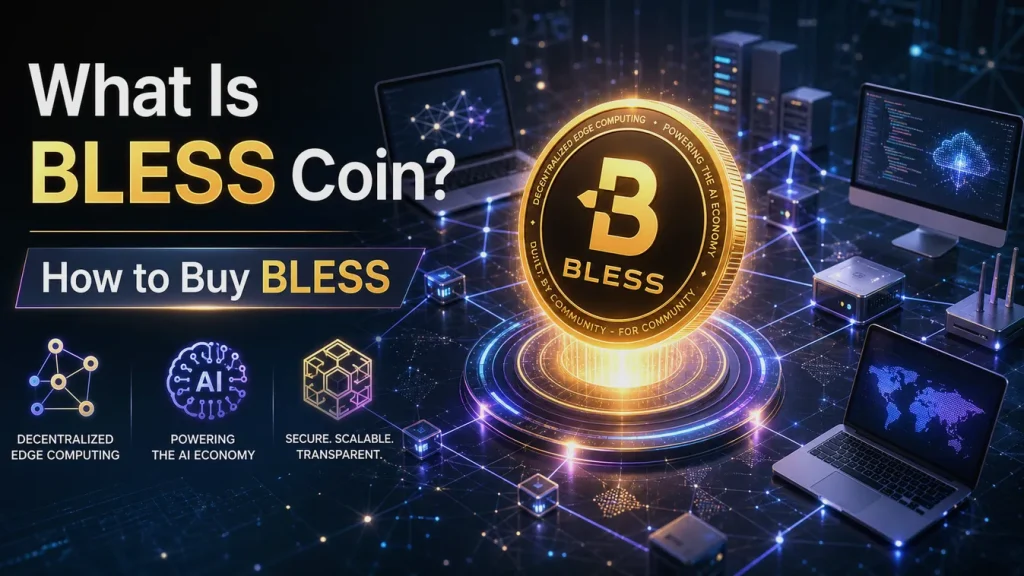
BLESS is the utility token associated with Bless Network, a decentralized physical infrastructure network (DePIN) designed to turn unused computing capacity on everyday devices into on-demand compute resources. In simple terms, Bless aims to let people contribute spare capacity from laptops, desktops, phones, and tablets, while applications can access distributed CPU and GPU resources closer to end users. That focus puts the project at the intersection of decentralized computing, AI infrastructure, edge computing, and crypto incentives. (bless.network)

- 20% fee cashback
- $60,000 futures bonus

- 20% trading fee discount
- $100 signup bonus
- $10,000 futures bonus

- 50% trading fee discount
- 20% fee cashback
- $6,200 futures bonus

- 20% fee cashback
- $10,000 bonus

- 20% fee cashback
- $8,000 bonus

- 20% trading fee discount
- $30,050 signup bonus
Important distinction: Crypto users should not confuse Bless Network’s BLESS token with the separate token called BLESS used by Blessnet. They are different projects with different networks and token structures. Always confirm the project name, trading venue, chain, and official token details before sending funds. Blessnet itself describes its BLESS as a multichain gas token with a fixed 1 billion-token supply, whereas Bless Network documentation describes a different shared-compute ecosystem. (docs.bless.net)
What Is Bless Network?
Bless Network is building a distributed computing marketplace rather than relying exclusively on centralized cloud data centers. Its stated use cases include workloads that benefit from compute power near users, such as AI, machine learning, advanced data tools, gaming, and other latency-sensitive applications. The model is straightforward: participants make idle compute resources available, while developers and services pay to use that capacity. (binance.com)
This is why the BLESS coin narrative is broader than speculation alone. If the network attracts real users, node operators, and application developers, the token is intended to sit inside the economic loop that coordinates rewards, payments, staking, and network participation. That does not guarantee token demand or price appreciation, but it explains the utility thesis behind BLESS.
What Does the BLESS Token Do?
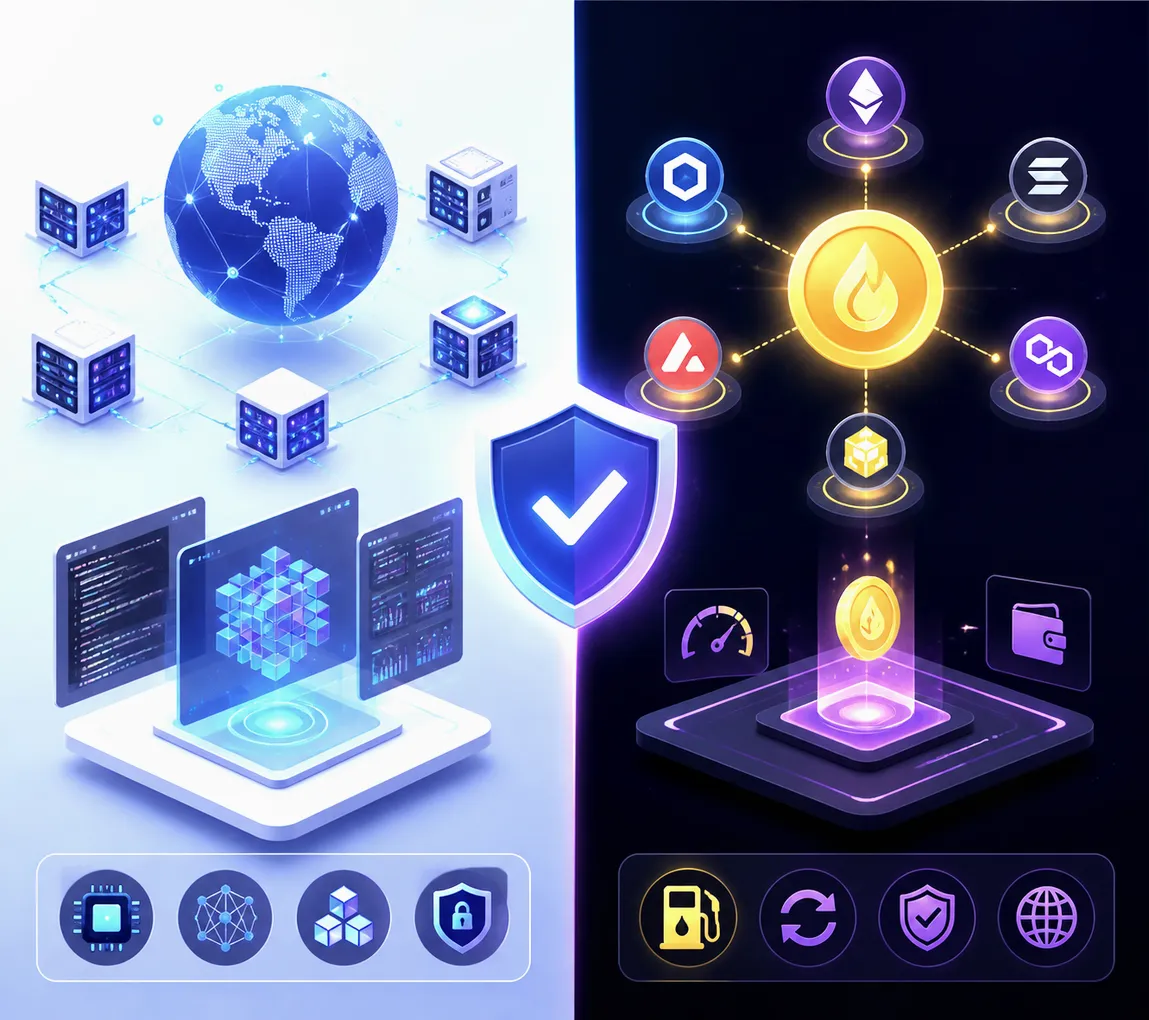
According to Bless Network’s materials, BLESS is a fungible utility token for the shared-compute ecosystem. It can be used to facilitate payments for compute services and to reward people who provide computational resources. The project’s white paper also describes staking as a mechanism connected to participation and network security. (bless.network)
The project describes several core BLESS token functions:
- Paying for decentralized compute: Application users can use BLESS to obtain computing resources from the network.
- Rewarding node operators: People who supply useful device capacity may earn rewards for helping power workloads.
- Staking and network participation: Network participants may stake tokens under the protocol’s rules, with potential penalties for failing assigned tasks or acting against network integrity.
- Ecosystem incentives: BLESS in circulation can support network development, operational costs, and incentives for node participation.
For investors researching what is BLESS crypto, the key question is therefore not only “Is the token trending?” It is whether the network can generate sustainable demand for distributed computing, reliably match workloads to available devices, and preserve a viable incentive balance between users, builders, and node operators.
BLESS Tokenomics: What to Watch
Bless Network’s MiCA white paper identifies allocations and vesting conditions that matter to any potential buyer. For example, the document describes a Team & Advisor allocation of 18% with a one-year cliff and five-year linear vesting, plus a Foundation allocation of 10% with a six-month cliff and five-year linear vesting. These schedules are important because token unlocks can increase the tradeable supply over time. (bless.network)
Rather than treating a fixed maximum supply as automatically bullish, review tokenomics with a practical checklist:
- Circulating versus unlocked supply: How many BLESS tokens can actually reach the market now and later?
- Vesting calendar: Are large team, investor, foundation, or incentive unlocks approaching?
- Network usage: Is there measurable demand for compute services and participation?
- Liquidity: Can you buy and sell a modest position without severe slippage?
- Custody and chain: Are you using the correct official asset and compatible wallet?
The value proposition of a DePIN token depends heavily on execution. A compelling AI-and-edge-compute story is not a substitute for checking token supply changes, market depth, security practices, and project delivery.
How to Buy BLESS on Binance
Binance announced that BLESS became available through Binance Alpha on September 23, 2025 at 09:00 UTC. It also launched the BLESSUSDT perpetual futures contract at 09:30 UTC that day, initially with leverage of up to 50x. Binance explicitly notes that a Binance Futures listing does not guarantee a regular Binance Spot listing, so do not assume that futures access means ordinary spot-market ownership. Availability can vary by region and Binance product access.
For eligible users who want to explore the Binance route, start by creating an account through Binance with referral code CRYPTONEWER. The promotion advertises a 20% fee discount and up to $10,000 in benefits; eligibility, reward amounts, local availability, and campaign terms can change, so review the details shown in your account before making a deposit.
Step 1: Open and secure your Binance account
Use the Binance registration link, complete identity verification if it is required in your jurisdiction, and activate security features immediately. At a minimum, use a unique password, authenticator-app two-factor authentication, anti-phishing protections, and withdrawal-address controls where available.
Step 2: Fund the account carefully
Depending on your country, funding options may include bank transfer, card purchase, or a crypto deposit such as USDT. Check all fees, payment limits, and the exact deposit network before transferring crypto. Sending funds on the wrong blockchain can lead to permanent loss.
Step 3: Find the correct BLESS access point
In the Binance app or web interface, search BLESS and verify what is actually available to you. Binance Alpha and Binance Futures are distinct products. If you are looking to acquire the asset rather than trade price exposure, do not automatically select a perpetual futures contract.
Use only the product and market displayed in your verified Binance account. Listings, regional restrictions, trading pairs, liquidity, and product rules may change after publication, so the live trading screen should be treated as the operational source of truth.
Step 4: Review the order before confirming
If a direct purchase option is available, consider a limit order rather than a market order in thin or volatile conditions. A limit order lets you set the highest price you are prepared to pay; a market order prioritizes execution and may fill at a worse price than expected when liquidity is limited.
Before confirming, double-check:
- Token ticker: BLESS
- Product type: Alpha, spot, swap, or futures
- Amount to spend and amount to receive
- Estimated fees and possible slippage
- Chain and wallet compatibility if withdrawing
Step 5: Treat futures as advanced trading, not a buying shortcut
The BLESSUSDT perpetual contract is a leveraged derivative, not the same thing as holding a token in a wallet. Leverage amplifies both gains and losses and can lead to rapid liquidation. Binance itself warns that Alpha assets may face elevated volatility, slippage, and blockchain-fee risks. For a beginner researching how to buy BLESS, leveraged futures are generally the wrong first step.
How to Verify You Are Buying the Real BLESS Token
Ticker symbols are not unique identifiers. Before using any decentralized exchange, bridge, wallet swap, or transfer page, navigate from the official Bless Network website and cross-check the token details with the project’s official documentation. Do not rely on a token address pasted into a social-media comment, a search-engine advertisement, or an unsolicited direct message.
A safer verification routine is:
- Start from the official Bless Network site or white paper.
- Check the token’s blockchain and official contract or mint information from project-controlled channels.
- Match the asset’s name, chain, decimals, and verified badge on the platform.
- Send a small test transaction when using a new wallet or network.
- Never share a seed phrase, private key, or verification code with anyone claiming to offer support.
Risks Before Buying BLESS Crypto
BLESS is connected to a young infrastructure project and can be highly volatile. The price may react sharply to token unlocks, exchange availability, adoption claims, broader crypto-market sentiment, technical updates, and liquidity conditions. There is also project risk: a decentralized compute network must compete with both traditional cloud providers and other DePIN platforms while delivering a secure, useful experience for developers and node operators.
It is also worth remembering that owning BLESS does not equal equity ownership in the project. Bless Network’s MiCA documentation says token holders do not have corporate ownership rights, dividend rights, or a claim against a legal entity merely by holding the token.
A sensible approach is to decide your maximum loss before placing an order, avoid money needed for living expenses, and keep position sizes appropriate for a speculative crypto asset. Researching how to buy BLESS is useful; understanding why you are buying it, where you will custody it, and when you would sell is even more important.
Related posts:
 What Is CPOOL (Clearpool) Coin? A Powerful Guide to How to Buy CPOOL
 What Is the AUD (Australian Dollar) Coin? A Smart Guide to Buying Crypto With AUD
 What Is DeFi (Decentralized Finance)? Essential Guide with Risks, Yields, and Real Use Cases
 Blockchain in Logistics and Shipping: Powerful Ways to Build Trust Across Global Trade