
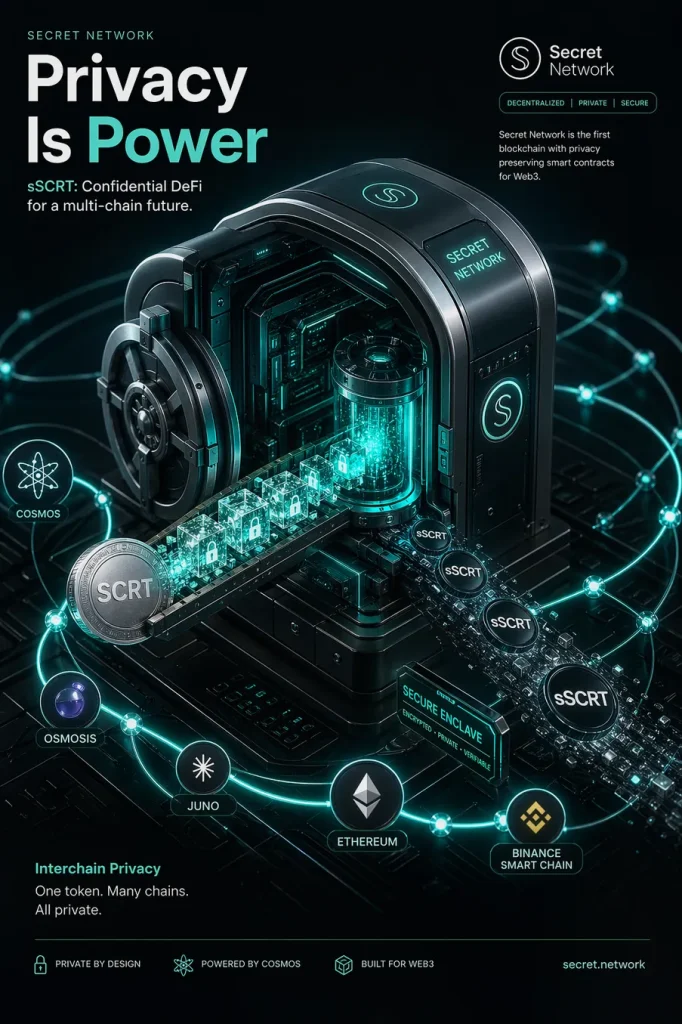
Privacy isn’t a luxury online anymore; it’s table stakes. That’s exactly the niche Secret Network aims to fill in crypto: programmable privacy for everyday users and developers. In this guide, I’ll explain what SCRT (the native coin of Secret Network) actually does, how its privacy stack works, and give you a clear, step‑by‑step walkthrough to buy SCRT safely—plus how to self‑custody and use Secret’s privacy features.

- 20% fee cashback
- $8,000 bonus

- 20% trading fee discount
- $100 signup bonus
- $10,000 futures bonus

- 20% fee cashback
- $60,000 futures bonus

- 50% trading fee discount
- 20% fee cashback
- $6,200 futures bonus

- 20% fee cashback
- $10,000 bonus

- 20% trading fee discount
- $30,050 signup bonus
If you’re here just for the buying steps, jump to the section “How to buy SCRT on Binance (step‑by‑step).”
TL;DR
- SCRT is the native public coin of Secret Network—a Cosmos‑based blockchain for privacy‑preserving smart contracts (“Secret Contracts”). It’s used for gas, staking, and governance. (docs.scrt.network)
- Secret enables private tokens (SNIP‑20), such as sSCRT (a privacy‑preserving, wrapped version of SCRT). By default, SCRT transfers are public; wrap to sSCRT for private transfers and use viewing keys to see balances. (docs.scrt.network)
- You can buy SCRT on major exchanges including Binance, then withdraw to a self‑custody wallet like Keplr. (docs.scrt.network)
- For a fee discount and extra perks, register with this referral: Binance — code CRYPTONEWER. Offer: 20% fee discount and up to $10,000 in benefits (region and terms apply).
What is Secret Network?
Secret Network is a layer‑1 blockchain focused on “programmable privacy.” Unlike most public chains where contract inputs, state, and outputs are transparent, Secret’s smart contracts (called Secret Contracts) keep sensitive data encrypted while still executing verifiably on‑chain. This opens doors for use cases like private DeFi, sealed‑bid auctions, permissioned data sharing, and privacy‑preserving AI workflows. (docs.scrt.network)
Under the hood, Secret Network is built with the Cosmos SDK and uses the Tendermint/CometBFT family of Byzantine‑fault‑tolerant consensus engines. That makes it fast, interoperable, and IBC‑compatible—so value and data can move between Secret and other Cosmos chains like Osmosis or Cosmos Hub. (docs.scrt.network)
What makes it private?
Secret uses Trusted Execution Environments (TEEs) to run computations inside secure enclaves. Inputs, state, and outputs are encrypted so nodes can verify execution without seeing the underlying sensitive data. This TEE‑assisted model is an established approach in confidential computing research. (tee.fyi)
Note: No privacy tech is perfect. Academic work has highlighted risks and mitigations for TEE‑based blockchains (including Secret). Treat privacy as a layered practice and keep software and wallets updated. (petsymposium.org)
What is the SCRT coin?
SCRT is the native coin of Secret Network. You spend SCRT to pay transaction fees, stake it to secure the network, and use it for on‑chain governance (voting on proposals). Think of it like ETH on Ethereum—fuel for the network’s economy and security.
A key distinction: SCRT itself is public (balances and transfers are visible like other PoS coins). For private transfers, you can wrap SCRT into sSCRT, a SNIP‑20 token whose transfers are encrypted; only parties with the proper viewing key can read balances/tx details. (docs.scrt.network)
Secret’s token standards you’ll see around
- SNIP‑20: The Secret equivalent of ERC‑20, but with privacy features (viewing keys/permits). Many bridged assets and privacy tokens on Secret follow SNIP‑20. (docs.scrt.network)
- SNIP‑721/1155: NFT standards with private metadata and access controls (useful for gated content, tickets, or selective disclosure). (reddit.com)
How Secret connects to the wider crypto world
Because Secret is IBC‑enabled, you can move assets between Secret and other Cosmos chains. Secret positions itself as a “privacy hub” for the interchain: bridge or IBC‑transfer assets in, gain privacy via SNIP‑20, and interoperate back out. (docs.scrt.network)
Developers build Secret Contracts with a modified CosmWasm framework, so if you’ve seen CosmWasm on other Cosmos chains, the tooling will feel familiar—with extra privacy patterns to learn. (docs.scrt.network)
Where to buy SCRT (and why many people use Binance)
Secret’s official docs list several places to buy, including Binance. Liquidity and fiat on‑ramps often make Binance a convenient first stop before withdrawing to self‑custody. Always check availability in your country.
- Start here to register with fee savings: Join Binance with code CRYPTONEWER. Per Binance’s promotion, you can get a 20% fee discount and up to $10,000 in benefits; terms and regional eligibility apply.
How to buy SCRT on Binance (step‑by‑step)
Follow these steps carefully (as of April 23, 2026):
1) Create and verify your account
– Sign up via this link: Binance — code CRYPTONEWER.
– Complete identity verification (KYC). It’s required for fiat deposits and higher limits in most regions.
2) Add funds
– Deposit fiat (card, bank transfer) or deposit crypto from another wallet. Check fees and processing times in your region.
3) Find the SCRT market
– In “Trade,” search for the SCRT pair (e.g., SCRT/USDT). Secret’s official docs include Binance among venues to buy SCRT; confirm the active pair in your interface before placing an order.
4) Place your order
– Market order: fastest way to buy at current price.
– Limit order: set your preferred price; the order fills when the market trades there.
5) Secure your SCRT in self‑custody
– Withdraw from the exchange to your own wallet. Many users choose Keplr, a non‑custodial wallet for Cosmos chains with Secret support. Always verify you’re withdrawing on the “Secret Network (SCRT)” address format (addresses start with secret1…). (docs.scrt.network)
6) Optional: enable privacy with sSCRT
– In your Secret wallet/dApp, wrap some SCRT to sSCRT (1:1) to make transfers private. Create a viewing key to see your private balances and share selectively when needed (taxes, audits, or support).
Pro tip: After you withdraw to Keplr, send a tiny test transaction first. It’s the most reliable way to confirm the right network and address.
Setting up a Secret wallet (Keplr) and staking basics
- Wallet setup: Install the official Keplr extension or mobile app. Add Secret Network to Keplr if it isn’t already visible; you’ll see your address starting with “secret.” Hardware‑wallet flows (Ledger) are supported through Keplr for extra security.
- Staking: Delegate SCRT to a validator in Keplr to help secure the network and earn staking rewards. Rewards vary with network parameters and validator commissions; review validator details and slashing risks before delegating.
Understanding privacy on Secret: SCRT vs sSCRT
- SCRT (public): Like most L1 coins, balances and transfers are transparent on the chain. Use SCRT for gas, staking, and governance.
- sSCRT (private SNIP‑20): Wrap SCRT to sSCRT for encrypted transfers and balances. Only holders with the right viewing key (or permit) can see amounts and counterparties. You can unwrap back to SCRT at any time (1:1).
Design note: Even with private tokens, some metadata can leak (e.g., gas used, contract call patterns). Good privacy dApps minimize such leaks; users should still practice situational awareness. (docs.scrt.network)
Fees, performance, and interoperability
- Fees: Paid in SCRT; generally low vs. many L1s. There’s no fee market prioritization like some chains, which keeps behavior predictable for developers. (scrt.network)
- Throughput and finality: Tendermint‑style consensus provides rapid finality and strong BFT safety under typical assumptions. (docs.tendermint.com)
- Interchain privacy: With IBC, assets can move between Secret and other Cosmos chains; Secret can act as a privacy layer for those assets via SNIP‑20.
Risks and considerations
- Exchange availability: Markets and listings can change by region and over time. Secret’s docs currently list Binance among places to buy; always verify active pairs and withdrawal networks before trading.
- TEE model trade‑offs: TEEs reduce data exposure but introduce a hardware trust assumption; researchers have documented vulnerabilities and proposed mitigations. Keep your expectations realistic and software current.
- Privacy is contextual: Using sSCRT helps, but endpoint security, browser hygiene, and on‑chain metadata patterns still matter.
- Self‑custody: Write down seed phrases offline, double‑check addresses, and test with small amounts first. Keplr supports Secret and Ledger workflows.
Frequently asked questions
Is SCRT a privacy coin?
Not exactly. SCRT itself is public. Secret’s privacy comes from SNIP‑20 tokens like sSCRT and from Secret Contracts that keep data encrypted during execution.
What’s the difference between SCRT, sSCRT, and wSCRT?
- SCRT: native public coin on Secret.
- sSCRT: privacy‑preserving SNIP‑20 version of SCRT for private transfers on Secret.
- wSCRT: wrapped SCRT on other chains (e.g., ERC‑20), used for liquidity/bridging; you can convert through supported bridges/workflows. (altcoinbuzz.io)
Can I move assets between Secret and other Cosmos chains?
Yes. Secret supports IBC, enabling cross‑chain token and data movement with other IBC‑enabled chains.
Which wallet should I use?
Keplr is the most widely used wallet for Secret and the broader Cosmos ecosystem, with support for Secret Contracts, SNIP‑20 tokens, and Ledger.
Quick buying checklist (bookmark this)
- Register with Binance — code CRYPTONEWER for a 20% fee discount and up to $10,000 in benefits.
- Deposit fiat or crypto, find SCRT/USDT, and buy.
- Withdraw to Keplr (address starts with secret1…).
- Optional: wrap SCRT → sSCRT for private transfers; create a viewing key.
Resources worth saving
- Official overview of SCRT and sSCRT:
- Secret’s tech stack and private‑contract model:
- “Where to buy SCRT” (exchange list including Binance):
- Wallet options (Keplr, Ledger support):
- IBC and the interchain privacy vision:
- Security research on TEE privacy:
Final nudge: claim your fee discount
If you found this helpful and want to support my work, sign up and trade with this referral: Binance — code CRYPTONEWER. You’ll get a 20% fee discount and up to $10,000 in benefits, subject to Binance’s terms and your jurisdiction.