
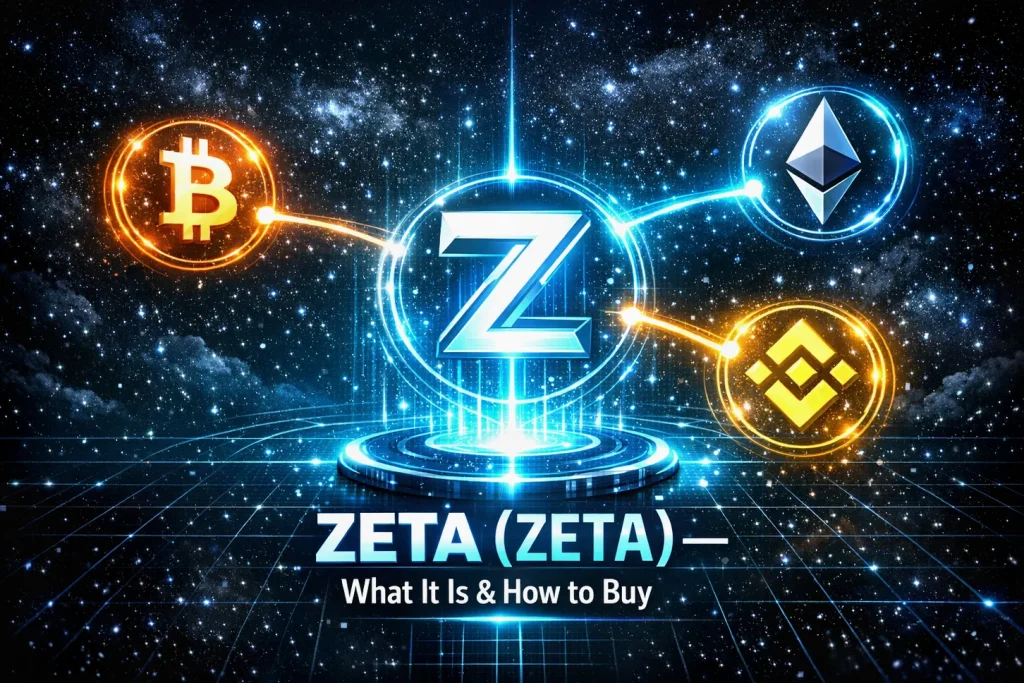
If you’ve heard the buzz about ZetaChain and keep seeing the ZETA ticker pop up, you’re not alone. This guide breaks down—clearly and practically—what the ZETA coin is, why it matters, and several safe ways to buy ZETA today. I’ll also show you a popular route many traders use: funding on Binance first, then executing the ZETA purchase where liquidity is strongest, with network‑selection tips to avoid costly mistakes.

- 20% trading fee discount
- $30,050 signup bonus

- 20% fee cashback
- $8,000 bonus

- 50% trading fee discount
- 20% fee cashback
- $6,200 futures bonus

- 20% trading fee discount
- $100 signup bonus
- $10,000 futures bonus

- 20% fee cashback
- $60,000 futures bonus

- 20% fee cashback
- $10,000 bonus
Quick answers
– ZETA is the native token of ZetaChain, an L1 designed for “omnichain” apps that can move value and logic across multiple blockchains—including Bitcoin—without wrapping. ZETA is used for gas, security (staking/validators), and value attachment in cross‑chain messages. (zetachain.com)
– ZetaChain Mainnet Beta went live in January 2024, connecting chains like Bitcoin, Ethereum and BNB Chain; developers deploy Omnichain Smart Contracts via ZetaChain’s EVM and ZRC‑20 standard. (zetachain.com)
– As of April 17, 2026, the most active spot markets for ZETA are on centralized exchanges such as OKX, Bybit, Gate, MEXC, HTX, WhiteBIT and others; CoinGecko lists current markets and pairs. (coingecko.com)
What is ZetaChain (and why ZETA exists at all)?
ZetaChain is a public blockchain purpose‑built to make cross‑chain activity feel like using a single chain. Instead of juggling multiple gas tokens, bridges, and “wrapped” assets, developers can write one Universal/Omnichain smart contract that orchestrates assets and data on external chains directly. ZETA, the chain’s native coin, pays for gas and powers validator staking and governance, while also acting as the value attached to cross‑chain messages so dApps can move assets natively and atomically. In short: ZETA is the fuel and connective tissue that makes cross‑chain UX simpler.
ZetaChain’s design includes on‑chain gas conversion and a ZRC‑20 primitive so users pay once—in ZETA—and the protocol programmatically handles outbound chain gas for you. For developers and users, that reduces friction and risk when interacting with Bitcoin, Ethereum, BNB Chain and other networks.
ZETA token basics you should know
- Role: gas token for ZetaChain; used for staking/validator incentives; also used to attach value to cross‑chain messages and for governance mechanisms.
- Supply and listings: Market trackers show a total supply of 2.1B ZETA, and provide live exchange listings and volumes so you can see where liquidity is. Always confirm current markets before buying.
Where can I buy ZETA right now?
As of April 17, 2026, the most popular spot venues include OKX (ZETA/USDT), Bybit (ZETA/USDT), Gate, MEXC, HTX, WhiteBIT, Bitget, LBank and more. Check the “Markets” section on CoinGecko’s ZetaChain page for up‑to‑date pairs and depth before placing an order.
Advanced/On‑chain option: There’s growing activity on ZetaChain‑native DEXs (e.g., iZiSwap on ZetaChain). This is useful if you’re already set up with a ZetaChain wallet and are comfortable managing ZRC‑20 assets and gas. (coinmarketcap.com)
A note on Binance: Binance users should be aware that while Binance has supported a USDⓈ‑M ZETA perpetual futures contract (derivatives) since early February 2024, spot availability can vary by jurisdiction and time. If you can’t find a ZETA spot pair in your Binance Spot market, use the “fund‑on‑Binance, buy elsewhere” route below. (coincarp.com)
The smooth path many buyers use in 2026
Below is a two‑path framework you can follow depending on whether ZETA spot is available on your preferred exchange.
- Path A: If your exchange lists ZETA spot with good liquidity, buy it there directly.
- Path B (most common): Fund via Binance for fiat on‑ramp and fees, then transfer USDT to the exchange with the best ZETA liquidity and execute the purchase there.
Why this approach? Binance’s fiat rails, P2P options, and low fees are convenient for funding. Then you can route to the spot market that actually has ZETA depth and tight spreads the day you buy.
Step‑by‑step: How to buy ZETA (with a Binance‑first workflow)
1) Create your Binance account with a fee kickback
– Register using this referral: Binance — Code CRYPTONEWER to access a 20% fee discount and up to $10,000 in benefits (promotions vary by region and terms apply). Keep the code handy: CRYPTONEWER.
2) Deposit or buy stablecoins on Binance
– Complete KYC, then fund via card, bank transfer or P2P. Convert to USDT or FDUSD—both commonly used as quote assets where ZETA trades.
3) Check whether ZETA spot is live for you on Binance
– In Binance Spot, search for ZETA/USDT or ZETA/FDUSD. If you see a live pair with sufficient depth and your region supports it, you can buy directly there.
– If ZETA spot isn’t available or liquidity is thin in your region, continue to Step 4.
4) Pick the spot venue with the best ZETA liquidity today
– Open CoinGecko’s ZetaChain (ZETA) page; scroll to Markets for current exchanges/pairs (OKX, Bybit, Gate, etc.). Choose a venue with strong 24h volume and order book depth.
5) Transfer USDT from Binance to your chosen ZETA exchange
– In your target exchange, open the USDT deposit page and carefully select the right network (e.g., TRON/TRC‑20, Ethereum/ERC‑20, etc.). Copy that address.
– In Binance, withdraw USDT to that address and network.
6) Trade for ZETA
– On the receiving exchange, go to the ZETA/USDT market, place a limit or market order, and confirm execution.
7) Withdraw ZETA to your self‑custody wallet (optional but recommended)
– This is where network diligence matters. Some exchanges support ZETA as an ERC‑20 asset on Ethereum only, while others support ZetaChain native. If your exchange labels ZETA deposits as ERC‑20 (Ethereum), withdrawing to a ZetaChain‑only wallet address will not credit correctly. Bitfinex’s (now historical) support page, for instance, noted ZETA as ERC‑20 only during its listing period—illustrating how venues may constrain network support. Always check the deposit/withdraw network before sending. (support.bitfinex.com)
Pro tip: CoinGecko shows ZETA’s Ethereum contract address (0xf091…9cc8). If your exchange only supports ERC‑20 ZETA deposits, make sure your wallet can display that representation; do not send ERC‑20 ZETA to a ZetaChain‑native address by mistake.
Can I trade ZETA derivatives on Binance?
Yes—Binance launched a USDⓈ‑M ZETA perpetual contract (up to 50x) in February 2024. Remember derivatives are not the same as owning spot ZETA; funding rates, leverage and liquidation risks apply. If your goal is to hold ZETA, you likely want spot. If you intend to hedge or speculate, be sure you understand perpetual mechanics first.
Wallets, networks, and avoiding costly mistakes
- ERC‑20 vs ZetaChain mainnet: Exchanges may list ZETA on Ethereum (ERC‑20) or support ZetaChain mainnet (ZRC‑20). Confirm the exact network in the deposit/withdraw screen before moving tokens. The wrong network selection is the number‑one cause of lost transfers. Bitfinex explicitly documented ERC‑20‑only ZETA support while it listed ZETA; use that as a model for checking any venue’s specs.
- Contract address hygiene: For ERC‑20 display in EVM wallets, verify the contract at reputable trackers (CoinGecko displays the ZETA ERC‑20 address and market venues).
- On‑chain DEX route: If you choose to acquire ZETA on ZetaChain itself, plan for a small ZETA balance for gas and familiarize yourself with ZRC‑20.
Why builders care about ZetaChain (and what that means for holders)
ZetaChain’s core innovation is letting developers deploy one Omnichain/Universal smart contract that feels like it’s on a single chain, while it actually orchestrates assets and logic across multiple chains—including non‑smart‑contract chains like Bitcoin. For users, that should mean fewer bridges to trust, fewer approvals, and fewer chances to make a network mistake. For token holders, ZETA’s utility in paying bundled gas for cross‑chain operations and securing the validator set is central to the network’s value loop.
Ecosystem signal: The Mainnet Beta launch in January 2024 connected major chains (Bitcoin/Ethereum/BNB Chain) and kicked off a wave of integrations. If you’re evaluating fundamentals, track how quickly usage grows on Omnichain apps that actually require ZETA for gas and cross‑chain value movement.
A clear buying checklist (short version)
- Confirm where ZETA has real spot liquidity today (OKX/Bybit/Gate/MEXC/others).
- Decide funding route: many users fund with Binance — Code CRYPTONEWER for low fees, then transfer to the exchange with the best ZETA depth.
- Double‑check networks for deposits/withdrawals (ERC‑20 vs ZetaChain).
- If using derivatives, remember Binance’s ZETA perpetual is not spot.
FAQs
-
Is ZETA a governance token or just gas?
It’s both a gas token and a network token used for staking/validator incentives and for value attachment in cross‑chain messaging; governance frameworks are also part of the design. -
Can I buy ZETA directly on Binance?
Availability of ZETA spot on Binance varies by region/time. If you don’t see a live spot pair, fund on Binance and route USDT to an exchange where ZETA is trading actively; check CoinGecko’s market list first. -
Does ZETA have an Ethereum (ERC‑20) version?
Yes, many venues support ZETA via Ethereum (ERC‑20). You can even add the ERC‑20 contract to MetaMask from CoinGecko. Just be sure not to send ERC‑20 ZETA to a ZetaChain‑only address.
Resources you’ll actually use
- ZetaChain Mainnet Beta overview and chain connections.
- ZetaChain whitepaper on Omnichain architecture, ZRC‑20, and gas bundling with ZETA.
- Live ZETA spot markets (venues/pairs/volumes).
- Binance ZETA perpetuals (USDⓈ‑M) reference.
Buy ZETA with a fee edge
If you’re starting from scratch, a practical flow is: register at Binance — Code CRYPTONEWER for a 20% fee discount and up to $10,000 in listed benefits (check terms/eligibility), fund with fiat > convert to USDT > send to the exchange with the best ZETA/USDT order book today > buy ZETA > move to self‑custody once you’re comfortable with the network specifics.
SEO notes (for readers who want the nitty‑gritty)
Focus keywords and long‑tails you’ll find throughout this guide: What is the ZETA (ZETA) Coin; how to buy ZETA; ZetaChain token utility; ZETA ERC‑20 vs ZRC‑20; buy ZETA on Binance; buy ZETA on OKX; ZETA perpetual futures; ZetaChain omnichain smart contracts; ZETA gas; ZETA staking; ZetaChain mainnet beta 2024; best exchanges for ZETA; ZETA/USDT pair; ZETA network selection; ZETA MetaMask contract; iZiSwap on ZetaChain.
Related posts:
 Step-by-Step Guide — What is the MPLX (Metaplex) Coin and how to buy
 What is Ethereum(ETH) Essential Guide to Smart Contracts, Gas, Staking, and Layer 2
 What is the DEGO (Dego Finance) Coin, and how to buy on Binance — Essential Guide 2026
 Smart Guide: What is the WOO(WOO) Coin, and how to buy on Binance