

What is the CC (CC) Coin, and how to buy it? The first—and most important—answer is that the ticker CC is not unique. Several crypto assets use “CC,” so searching a ticker and pressing buy without checking the contract address can lead to the wrong token. For the CC asset shown on Binance’s current “How to Buy CC” page, market-data listings identify it as Carbon Copy, a small-cap token operating on BNB Smart Chain. CoinMarketCap reports a maximum supply of 550 million CC, a self-reported circulating supply of 36.77 million, and limited market depth; these figures can change, but they illustrate why this is a higher-risk, less-liquid purchase than major cryptocurrencies. (coinmarketcap.com)

- 20% fee cashback
- $8,000 bonus

- 20% trading fee discount
- $100 signup bonus
- $10,000 futures bonus

- 20% trading fee discount
- $30,050 signup bonus

- 20% fee cashback
- $10,000 bonus

- 50% trading fee discount
- 20% fee cashback
- $6,200 futures bonus

- 20% fee cashback
- $60,000 futures bonus
What is CC Coin?
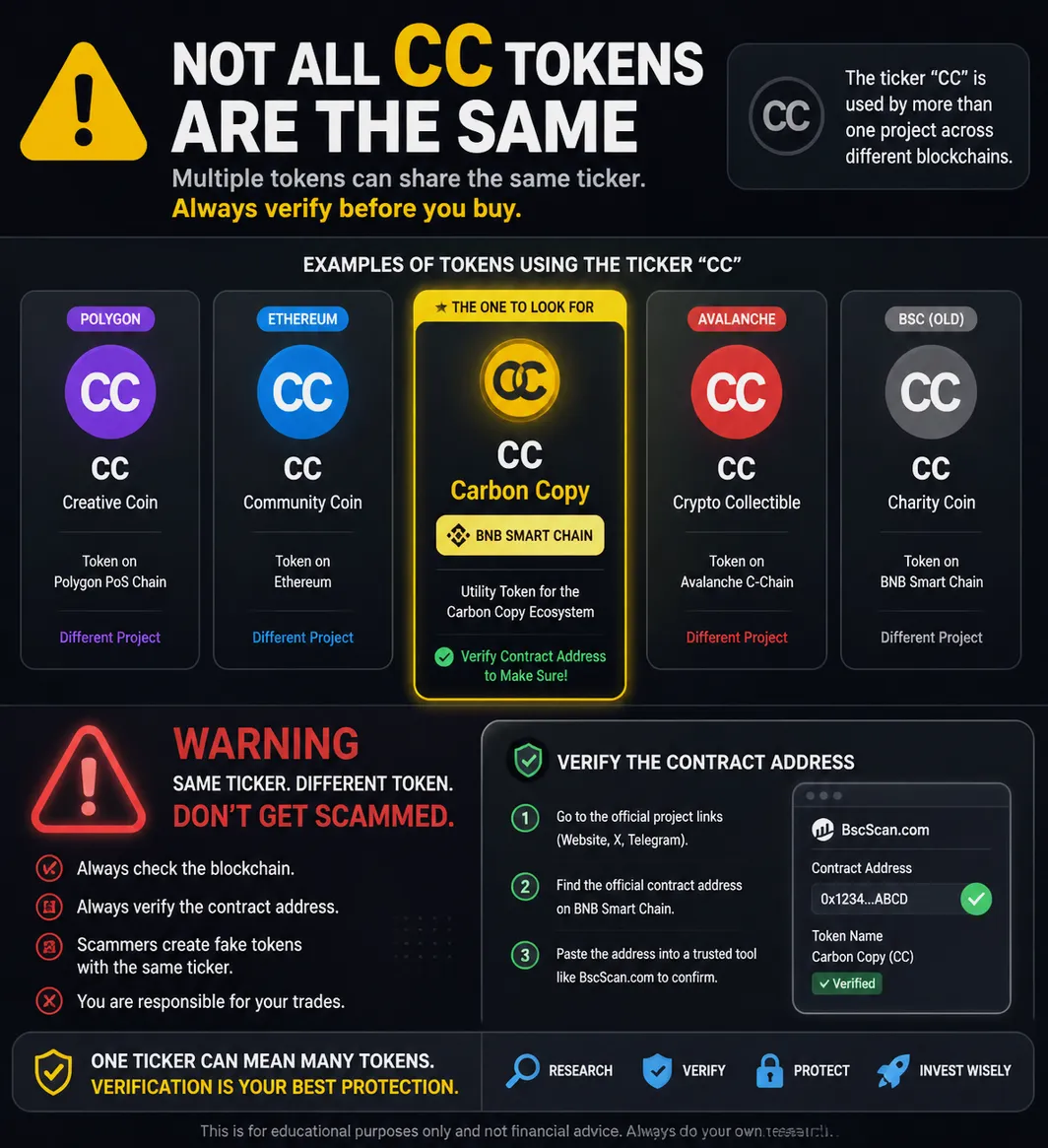
CC, or Carbon Copy, is a BEP-20 token associated with decentralized trading and liquidity activity on BNB Smart Chain. Its public market profile references a USDT–CC liquidity pool on PancakeSwap. That does not automatically establish a deep market, an audited protocol, or a guaranteed use case. It only tells prospective buyers that swaps may be routed through decentralized liquidity rather than through a traditional order-book market.
The naming issue deserves emphasis. CC (Carbon Copy) is different from Canton Coin, which also uses the ticker CC. Canton Coin is described as a utility token for fees and incentives on the Canton Network’s Global Synchronizer. They are distinct assets with different networks, token economics, and trading venues. Never rely on a ticker, logo, search-ad result, or social-media post alone when buying crypto. (coinmarketcap.com)
Is CC (CC) Listed on Binance?
At the time this guide was prepared, CC is not listed for Spot trading on the Binance Exchange. Binance’s own purchase guide instead directs eligible users to use Binance Wallet to swap a supported asset—such as USDT, USDC, or ETH where available—for the correct CC token using decentralized-exchange liquidity. Availability, routes, supported networks, and regional access can change, so check the live interface before funding a trade. (binance.com)
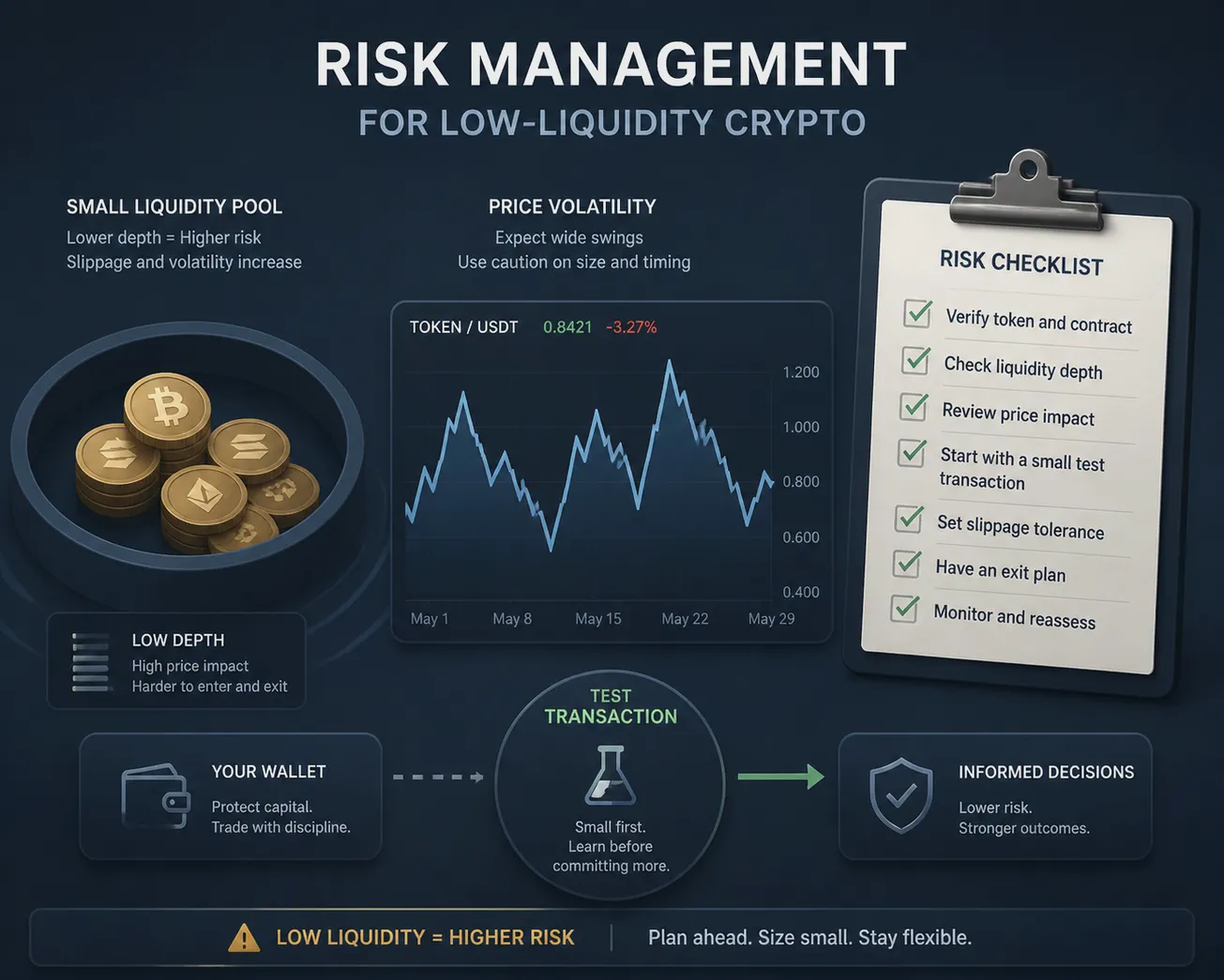
That distinction matters: a wallet swap is an on-chain transaction, not a standard Binance Spot order. Prices may move while the trade is pending, and the total cost can include blockchain gas, liquidity-provider fees, slippage, and price impact. Low liquidity can make a seemingly small order expensive or difficult to reverse.
How to Buy CC Coin Through Binance Wallet
1. Open and secure a Binance account
Start by creating an account through Binance with referral code CRYPTONEWER. The promotion information for this referral states a 20% trading-fee discount and up to $10,000 in benefits; availability, reward amounts, verification requirements, and regional eligibility are subject to Binance’s live terms.
Complete any required identity verification, use a unique password, and enable two-factor authentication before sending money or crypto. Binance’s support resources cover account registration, verification, deposits, withdrawals, and wallet features. (binance.com)
2. Create Binance Wallet
In the Binance App, open Wallet and choose Web3 Wallet or Binance Wallet, then create and back up the wallet. Treat recovery credentials as the keys to the assets: never share a seed phrase, cloud backup password, or transaction-approval prompt with anyone.
3. Fund the wallet with a swap asset
Because CC is not a Binance Spot asset, you generally need a supported asset first. Depending on the active route, that may be USDT, USDC, ETH, or BNB. Transfer the asset to Binance Wallet on the exact network requested by the swap screen. Also retain the chain’s native token for gas—for example, BNB for a BNB Smart Chain transaction. Binance specifically notes that the available input assets and network depend on the live liquidity route.
4. Search for CC—but verify before swapping
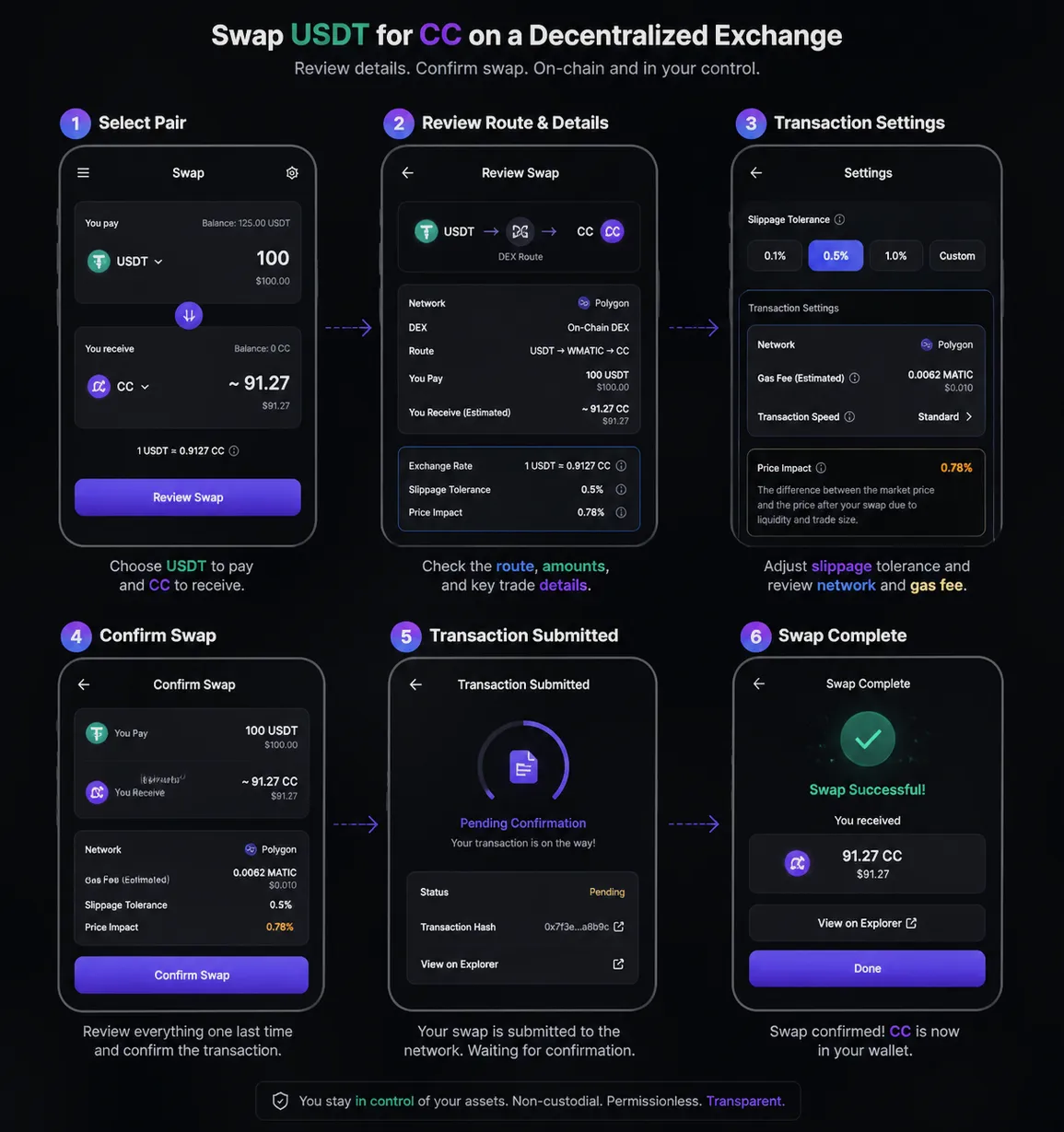
Open Trade → Swap, select the asset you are spending, then search for CC. Before you enter an amount, verify all of the following:
- The network matches the official project’s stated network.
- The contract address matches an official project source, not merely a community post or similarly named token.
- The displayed token is the intended Carbon Copy CC, not Canton Coin or another CC-branded asset.
- The swap route shows reasonable liquidity, price impact, and slippage.
- You can identify the token’s project documentation, ownership structure, and risk disclosures.
Binance warns that CC exists on more than one blockchain and explicitly advises users not to choose a token based on ticker or name alone.
5. Review the trade like an on-chain transaction
Enter a small test amount rather than committing your full intended purchase immediately. Review the estimated CC received, exchange rate, network fee, price impact, and slippage tolerance. If the amount received changes dramatically or the interface flags thin liquidity, stop and reassess.
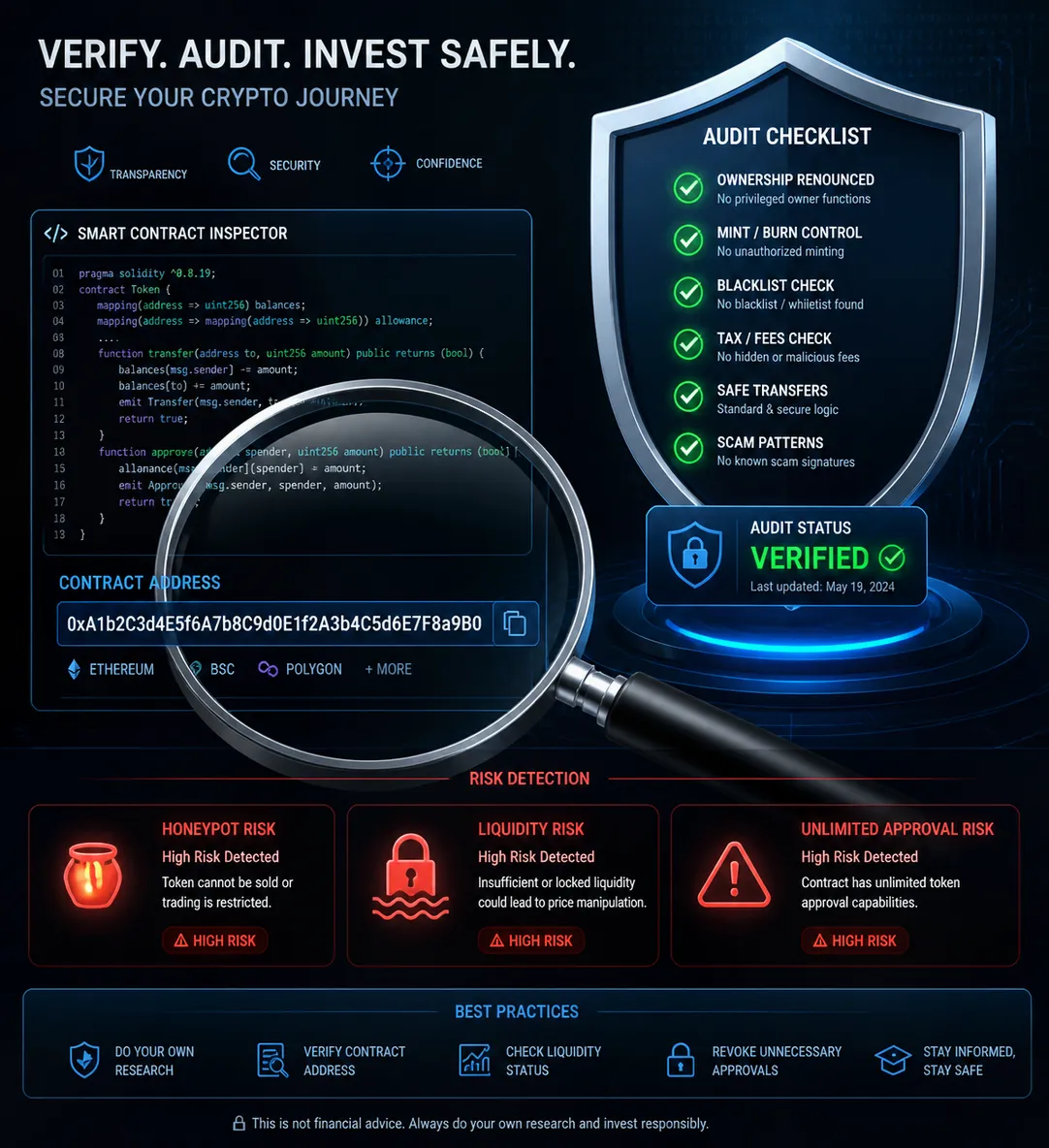
A decentralized swap may require a token approval before the trade. Approvals permit a smart contract to spend a specified token amount. Binance recommends avoiding unlimited approvals where possible, checking permissions regularly, and revoking approvals that are no longer needed. (binance.com)
6. Use token-risk tools before and after buying
In Binance Wallet, inspect the token’s Audit or risk information when it is available. The tool can flag concerns such as blacklist functionality, modifiable taxes, trading suspension, honeypot behavior, liquidity risks, or suspected scams. It is useful screening—not a guarantee that a token is safe or that it can always be sold. (binance.com)
After the swap, confirm that the CC balance appears in the wallet and record the transaction hash. If you later transfer or sell the token, check the recipient address and network character by character. Sending a BEP-20 token over an incompatible network can result in permanent loss.
CC Coin Risks to Understand Before Buying
CC is a micro-cap cryptocurrency with limited liquidity indicators, so it can experience large percentage moves from relatively modest trades. A low quoted price does not mean it is “cheap”; supply, liquidity, market capitalization, sell restrictions, and the ability to exit a position matter far more than the price of one token.
Be especially cautious of these red flags:
- Promises of fixed profits, guaranteed listings, or “insider” signals.
- A contract address supplied only through direct messages or comments.
- Abnormally high slippage, buy/sell tax, or price impact.
- A swap that requires granting unlimited token approval without a clear reason.
- Thin or disappearing liquidity that makes selling impractical.
For anyone researching how to buy CC coin, the sensible approach is verification first, a small test transaction second, and only then a decision on whether the risk fits your own budget. Crypto assets can lose substantial value, and on-chain transactions are usually irreversible.
CC (CC) Coin Buying Checklist
Before confirming a CC purchase, check that you can answer “yes” to each item:
- I know whether I am buying Carbon Copy CC rather than another token sharing the CC ticker.
- I independently confirmed the official contract address and network.
- I understand that CC is not currently available on Binance Spot and that I am using an on-chain wallet swap instead.
- I have enough native gas token for the selected network.
- I reviewed slippage, price impact, token permissions, and the ability to sell.
- I am only using money I can afford to lose.