

What are smart contracts and how do they work? Smart contracts are programs stored on a blockchain that automatically carry out agreed rules when predefined conditions are met. Instead of relying solely on a bank, broker, escrow agent, or platform operator to verify an agreement, the network verifies the transaction and records its result on a shared ledger.

- 20% trading fee discount
- $100 signup bonus
- $10,000 futures bonus

- 50% trading fee discount
- 20% fee cashback
- $6,200 futures bonus

- 20% fee cashback
- $10,000 bonus

- 20% fee cashback
- $8,000 bonus

- 20% fee cashback
- $60,000 futures bonus

- 20% trading fee discount
- $30,050 signup bonus
They are called “contracts,” but that name can be misleading. A smart contract is first and foremost code. It can power an exchange, distribute digital collectibles, issue a token, manage collateral, or release funds after a verifiable event. Whether it is legally enforceable as a contract depends on the jurisdiction, the wording around it, and the real-world arrangement.
Smart contracts in plain English
Think of a smart contract like a vending machine with transparent rules:
- A buyer chooses an item and pays the required amount.
- The machine checks whether payment is sufficient and whether the item is available.
- If both conditions are true, it releases the item.
- If a condition fails, it does not complete the action.
A blockchain smart contract applies that logic to digital assets and blockchain data. For example: if a wallet deposits collateral, then it may borrow a specified asset; if a loan is repaid, then the collateral can be released. The rules are executed by the blockchain rather than by one company’s internal server.
How do smart contracts work on a blockchain?
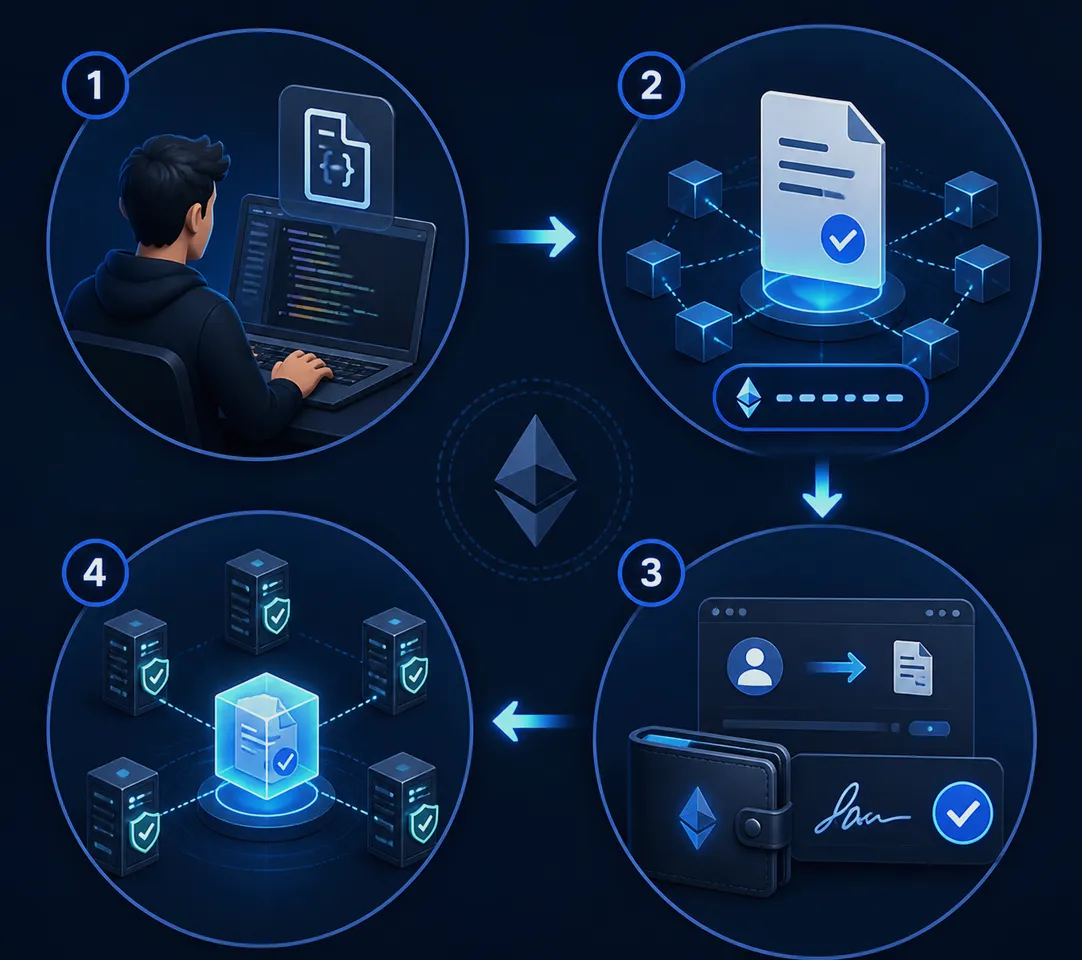
Most smart contracts follow a lifecycle: developers write the code, deploy it to a compatible blockchain, and users interact with it through wallet transactions or an app interface. On networks such as Ethereum, code is generally executed across many independent nodes. Those nodes must arrive at the same result under the network’s consensus rules.
Here is the process in more detail:
1. Developers define rules and functions
A developer writes functions that specify what the contract can do. A token contract, for instance, may include functions for transferring balances, approving spending permissions, minting new supply, or burning tokens. The contract also contains state: persistent information such as balances, ownership records, vote counts, or deposited collateral.
On Ethereum-compatible chains, developers commonly use Solidity. Other networks use different languages and execution environments. The critical point is that the program is deployed to the chain, where its code and state can be inspected—assuming the developer publishes or verifies the source code.
2. The contract is deployed to an address
Deployment creates a contract address. This address is not a person’s wallet; it is an on-chain location associated with the program. After deployment, users and other contracts can call its public functions.
Many contracts are designed to be immutable, meaning their core code cannot simply be edited afterward. Some use upgrade mechanisms, such as proxy patterns and administrator permissions. That flexibility can be useful for fixing bugs, but it also means users should understand who controls upgrades and what powers they have.
3. A user sends a transaction
To use a contract, a person signs a transaction in a crypto wallet. The transaction might call swap, stake, claim, vote, or withdraw. It includes the requested function, its parameters, and sometimes cryptocurrency value.
The user normally pays a network fee—often called gas—for the computational work and blockchain space consumed. The fee goes to the network’s validators or block producers, not automatically to the smart contract developer.
4. Network validators execute and verify it
Nodes execute the same transaction against the current blockchain state. If the contract rules say the caller has enough funds, the deadline has not passed, and all required conditions are satisfied, the state change is accepted. The transaction is then included in a block and becomes part of the blockchain’s history.
This is why smart contracts can be described as deterministic: given the same inputs and state, the code should produce the same output. A contract cannot safely pull arbitrary information from a normal website during execution, because every node would need to see the same trusted data at the same time.
Why smart contract oracles matter
A smart contract can directly read data already available on its own blockchain, such as token balances or prior transactions. It cannot inherently know the price of gold, tomorrow’s weather, a football score, or whether a package arrived. For that, it needs an oracle: a system that delivers external information on-chain.
Oracles are essential for many real-world smart contract use cases, including insurance payouts, price-based lending, and prediction markets. They also introduce risk. If the oracle reports bad, delayed, manipulated, or unavailable data, the contract may execute exactly as coded—but produce an undesirable result. “Trustless” does not mean every input is automatically trustworthy.
Common smart contract use cases
Smart contracts underpin a large part of the blockchain ecosystem:
- Decentralized finance (DeFi): Automated token swaps, lending pools, stablecoins, staking, and derivatives use smart contract logic to manage rules and balances.
- NFTs and digital ownership: A contract can track token ownership, transfer rules, creator royalties where supported, and collection supply.
- Decentralized autonomous organizations (DAOs): Members can use token-based smart contracts to submit proposals and vote on treasury decisions.
- Token creation: Projects can deploy fungible tokens with predefined supply policies and transfer mechanics.
- Escrow and payments: Funds can be released after an on-chain milestone, approval, or multi-signature authorization.
- Gaming: In-game items, crafting systems, and marketplace ownership can be represented by smart contracts.
For someone exploring these applications, an exchange account may provide a convenient route to purchase supported crypto assets before moving them to a self-custody wallet. Binance currently promotes a 20% fee discount and up to $10,000 in benefits for eligible new users who register with referral code CRYPTONEWER. Review the applicable terms, regional availability, and risk disclosures before relying on any offer: Register on Binance with CRYPTONEWER.
Benefits of smart contracts
The strongest benefit is rule-based automation. A contract can run continuously, apply the same criteria to every eligible participant, and settle digital transactions without waiting for a manual back-office process. Public blockchains can also offer a high degree of transparency: users can inspect transaction records and, in many cases, the verified contract code.
Smart contracts may reduce settlement friction in cross-border digital transactions. They can be composable too: one application can interact with another contract, allowing developers to build new services from existing on-chain components. This composability is a major reason DeFi products can evolve quickly.
Still, automation is not the same thing as wisdom. A smart contract removes some intermediaries, but participants must now evaluate code, wallet security, governance, price feeds, and the blockchain network itself.
Smart contract risks to understand before using one
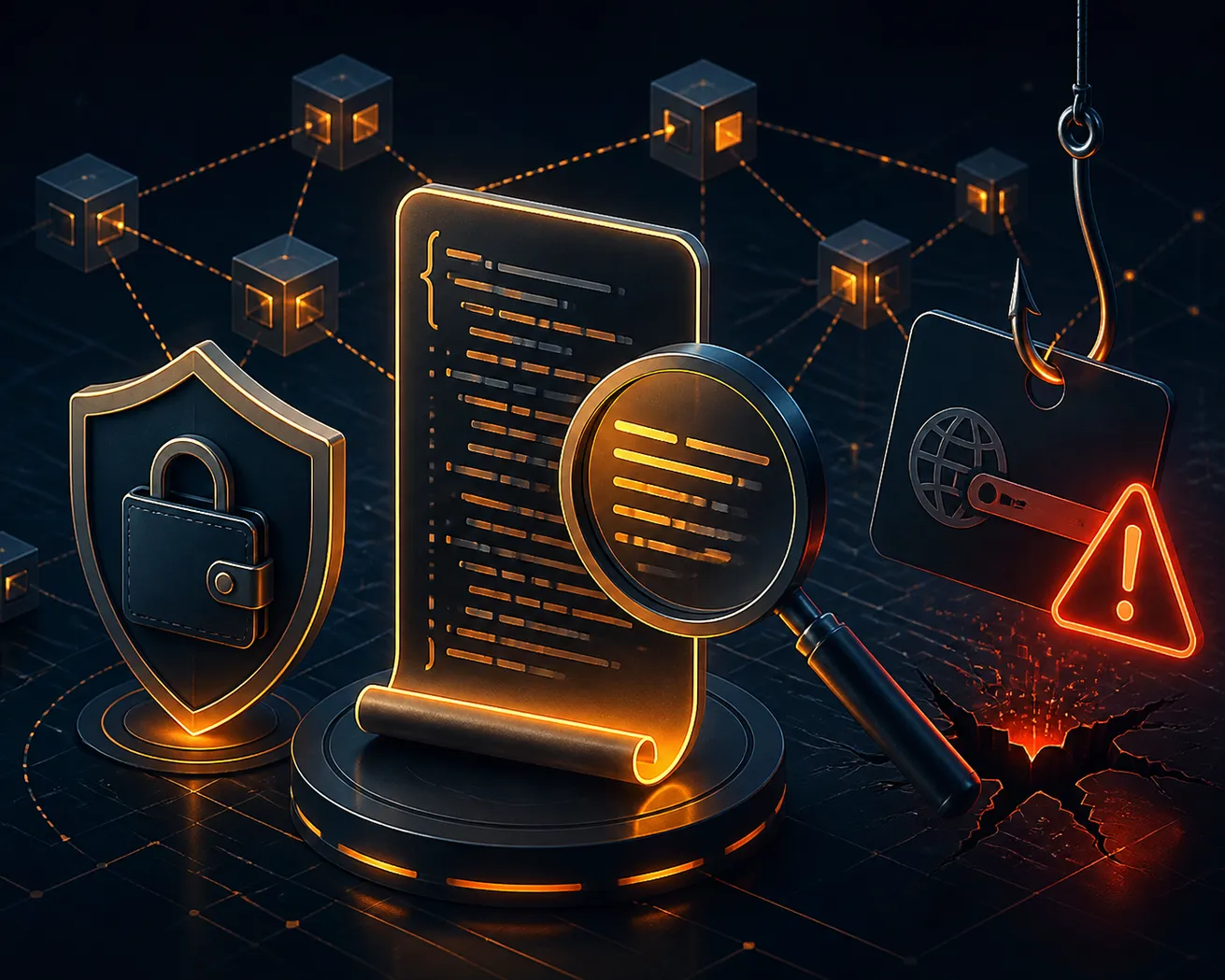
Smart contract transactions are often irreversible. If you send assets to the wrong address, approve an unsafe contract, or interact with a malicious website, there may be no customer-support desk able to undo the action. Audits can reduce risk, but they do not guarantee that code is secure or economically resilient.
Watch for these specific issues:
- Code vulnerabilities: Reentrancy, access-control failures, arithmetic mistakes, and flawed business logic can put funds at risk.
- Admin-key risk: A project may retain the ability to pause, upgrade, mint, or redirect assets. Read the permissions, not just the marketing.
- Oracle and liquidity risk: Price feeds and thin markets can be manipulated or fail during volatility.
- Approval risk: Token approvals may let a contract spend assets from your wallet. Grant only what is needed, and revoke unused permissions.
- Phishing: A familiar logo does not prove a website is legitimate. Verify URLs, contract addresses, and wallet prompts independently.
Before connecting a wallet, start with a small amount, confirm the official contract address through reliable project documentation, and read what the wallet is asking you to sign. A request to grant unlimited token access deserves particular caution.
Smart contracts versus traditional contracts
A traditional contract is an agreement expressed in legal language and interpreted through law, negotiation, and courts. A smart contract is executable software that performs programmed operations when its conditions are met. The two can work together: a legal agreement may reference code, while code automates a limited part of the agreement.
The key distinction is interpretation. Human agreements handle ambiguity, exceptional circumstances, and intent. Code is literal. If a developer writes a condition incorrectly, the blockchain may faithfully enforce the incorrect condition. That is why careful design, independent review, testing, and clear user communication matter so much in blockchain smart contracts.
A practical checklist for interacting with smart contracts
- Identify the network and official app URL. Fake front ends are common.
- Check the contract address using the project’s official channels and a block explorer.
- Review contract permissions, especially owner controls, upgradeability, and token approvals.
- Use a separate wallet or limited funds when trying an unfamiliar application.
- Simulate or read the transaction before signing; do not approve prompts you do not understand.
- Keep recovery phrases offline. No legitimate protocol needs your seed phrase.
- Track fees and tax obligations in your own jurisdiction, particularly when swapping, earning, or selling crypto assets.
Smart contracts make digital agreements programmable, but their real value depends on transparent rules, sound code, reliable inputs, and informed users. Understanding those moving parts is the best foundation for using decentralized applications responsibly.
Related posts:
 Binance Earn Explained: Powerful Ways to Put Idle Crypto to Work
 Common Blockchain Security Threats: Powerful Ways to Protect Your Crypto
 What is Bitcoin(BTC) — Essential Breakdown for Curious Minds and First‑Time Buyers
 Actionable Guide to Carbon Credits and Blockchain Integration: On‑Chain MRV, Markets, and Compliance