
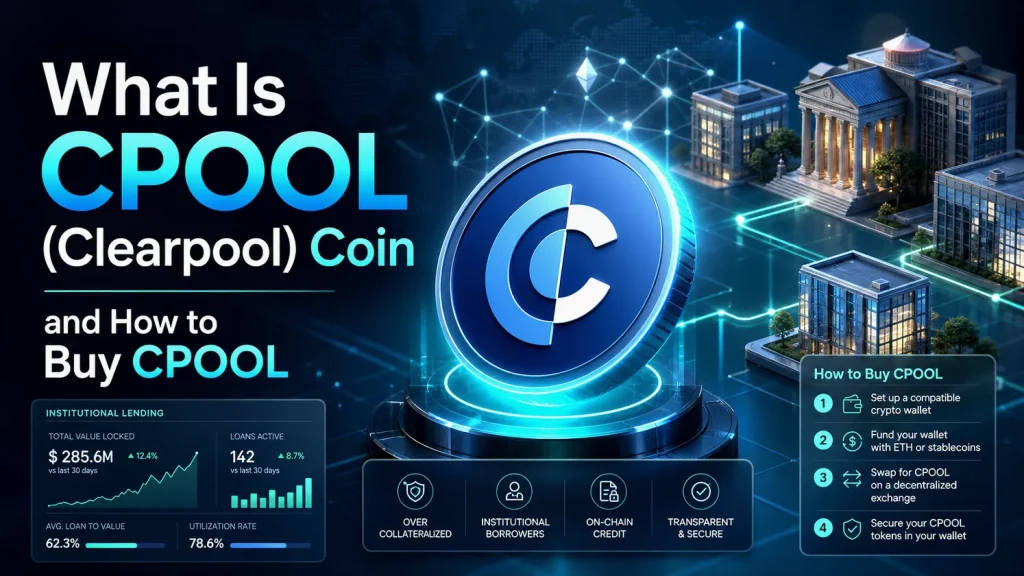
Focus keyword: What is CPOOL Coin, and how to buy CPOOL

- 20% fee cashback
- $60,000 futures bonus

- 20% trading fee discount
- $100 signup bonus
- $10,000 futures bonus

- 50% trading fee discount
- 20% fee cashback
- $6,200 futures bonus

- 20% trading fee discount
- $30,050 signup bonus

- 20% fee cashback
- $8,000 bonus

- 20% fee cashback
- $10,000 bonus
CPOOL is the native utility and governance token of Clearpool, an on-chain credit marketplace built around institutional borrowing and lending. Although people often call it the Clearpool coin, CPOOL is technically a token rather than a standalone blockchain coin. It began as an ERC-20 token on Ethereum and is also represented on several supported networks, including Solana, Polygon, Mantle, Optimism, and Polygon zkEVM. The initial total supply was set at 1 billion CPOOL. (docs.clearpool.finance)
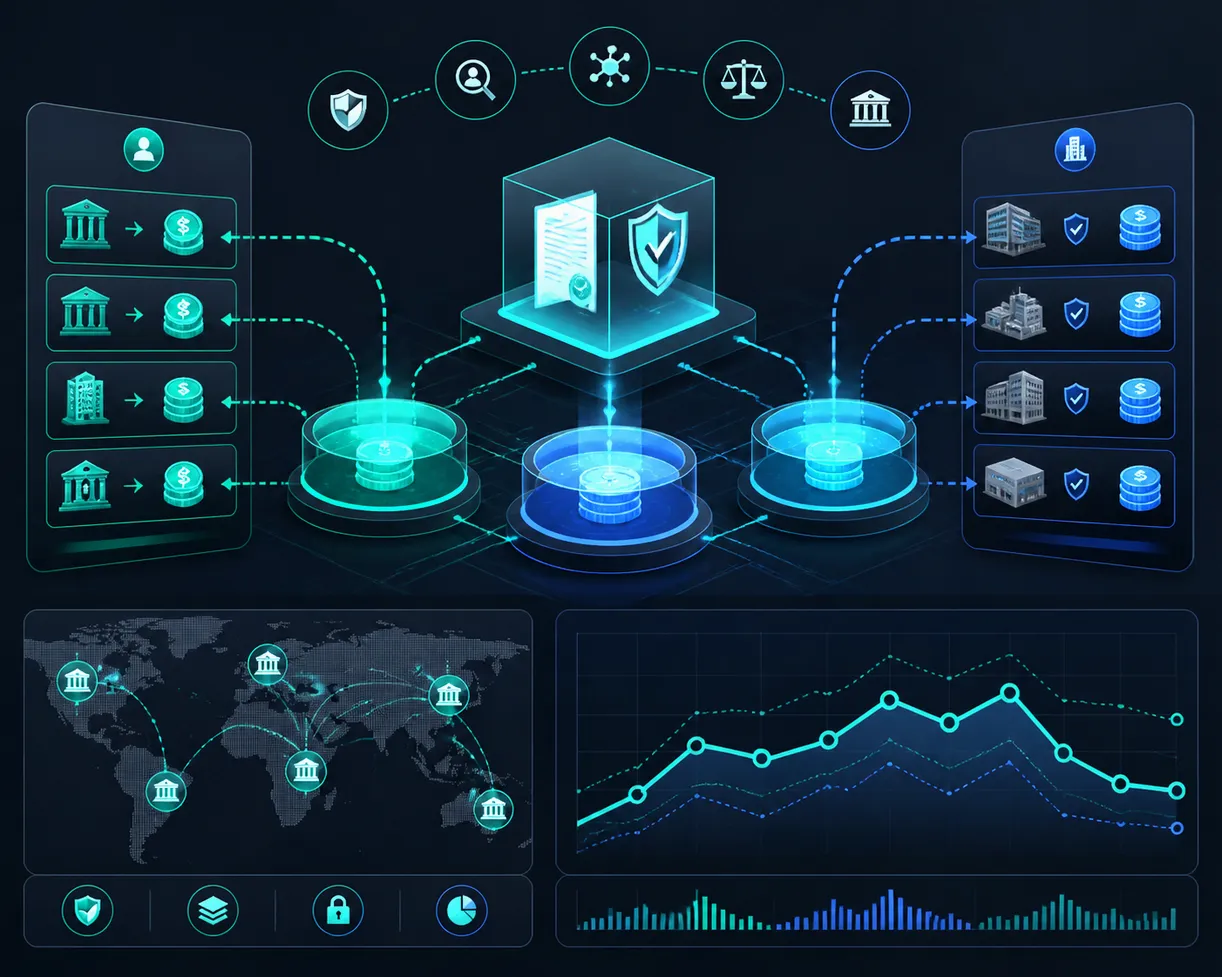
Clearpool’s central idea is straightforward: it connects capital providers with approved institutional borrowers through smart-contract-based credit pools. The protocol’s product range includes permissionless Dynamic pools, permissioned Clearpool Prime pools, fintech credit vaults, treasury-oriented products, and revolving lines of credit. In practical terms, this places Clearpool in the on-chain private-credit and real-world-asset-adjacent corner of DeFi—not in the same category as a meme token or a general-purpose Layer 1 network. (docs.clearpool.finance)
How Clearpool Works
Clearpool is designed for credit markets where borrowers seek short-term liquidity and lenders seek yield. Its Dynamic Pools allow users to supply liquidity to whitelisted institutional borrowers, while interest rates adjust with pool utilization. Clearpool Prime is a more permissioned product for KYC/KYB-approved institutional participants, with fixed loan terms and interest rates agreed when pools are created. Clearpool states that Prime lending is unsecured, meaning lenders must understand that borrower-credit and repayment risk are core parts of the model. (docs.clearpool.finance)
That structure is important for anyone researching the Clearpool token. CPOOL’s value proposition is tied less to transaction fees on a base blockchain and more to its role in the protocol’s incentives, staking, and governance mechanics.
What Is CPOOL Used For?
CPOOL has several stated functions inside the Clearpool ecosystem:
- Delegated staking: holders can stake CPOOL with protocol oracles and may earn rewards while supporting Clearpool’s interest-rate infrastructure.
- Governance participation: oracle voting weights are connected to CPOOL staked or delegated to those oracles. The protocol uses oracle input to help determine interest-rate model parameters.
- Borrower staking: borrowers need to meet a CPOOL staking requirement before launching certain pools or vaults.
- Liquidity-provider incentives: lenders may receive CPOOL rewards in addition to interest paid in USDC.
- Protocol buybacks: Clearpool documentation says 50% of revenue generated by permissionless and permissioned liquidity pools is allocated to periodic open-market CPOOL buybacks, with tokens directed to rewards or removed from circulation through burning. (docs.clearpool.finance)
These utilities do not guarantee that CPOOL will appreciate. Token demand, liquidity, emissions, unlocks, the pace of protocol use, borrower performance, market conditions, and crypto-wide risk sentiment can all influence price.
CPOOL Tokenomics at a Glance
Clearpool’s official documentation lists an initial total supply of 1,000,000,000 CPOOL. The allocation schedule includes rewards, reserve, team, liquidity, ecosystem, partnerships, investment rounds, and other treasury-related categories. Because vesting and treasury releases can affect available supply, investors should review the latest supply information and unlock conditions rather than relying only on the initial supply figure. (docs.clearpool.finance)
When moving CPOOL between wallets, always verify the network and token contract. For example, the official Ethereum CPOOL contract is 0x66761fa41377003622aee3c7675fc7b5c1c2fac5. Never copy a contract address from an unverified social-media post, an ad, or a lookalike website.
How to Buy CPOOL on Binance
At the time of checking, Binance’s own Clearpool purchase page says CPOOL is available through Binance Alpha and, where supported, the Swap feature in the Binance app. It also explicitly says CPOOL is not listed for regular Binance CEX spot trading and that Alpha tokens cannot be withdrawn from Binance. Availability can vary by jurisdiction and product eligibility, so check the live trading screen in your account before depositing funds. (binance.com)
Step 1: Create and verify a Binance account
You can start with Binance using referral code CRYPTONEWER. The promotion offers a 20% fee discount and up to $10,000 in benefits, subject to Binance’s applicable campaign terms, eligibility rules, verification requirements, location restrictions, and expiration conditions.
After registering, complete identity verification if it is required in your region. Binance states that verification is used to unlock access and support platform security and compliance requirements.
Step 2: Fund your account
Fund the account with a supported asset, often a stablecoin or another crypto asset that can be used in Alpha or Swap. Depending on your country and account options, you may first purchase crypto through an available payment method and then exchange it for CPOOL. Binance notes that direct card purchases of CPOOL are not available through the standard CEX route because CPOOL is an Alpha asset rather than a normal exchange listing.
Step 3: Find Clearpool in Binance Alpha
On the Binance website or app:
- Open Markets.
- Select the Alpha tab.
- Search for Clearpool or CPOOL.
- Open the token page and select Trade.
- Enter the amount you want to exchange.
- Read the Alpha trading disclaimer, review the quote, fees, and expected token amount, then confirm.
Binance indicates that completed Alpha purchases appear in Assets → Alpha. Because Alpha products can involve greater volatility, price slippage, and product-specific limitations, avoid treating the displayed quote as a guaranteed final execution price until the order is confirmed.
Step 4: Consider the storage limitation before buying
This detail matters: Binance’s CPOOL page says Alpha tokens cannot be withdrawn from Binance. If self-custody is essential to your strategy, do not buy first and investigate later. Confirm whether the exact route you are using supports withdrawals, what network is involved, and whether you are purchasing an Alpha balance versus a transferable on-chain token.
Can You Buy CPOOL Through a Decentralized Exchange?
CPOOL exists across multiple networks, so decentralized-exchange options may be available depending on the chain. However, a DEX purchase requires extra care: you need the correct network, a compatible self-custody wallet, native gas tokens, and the official contract address for that specific network. You should also check liquidity depth, price impact, approvals, and slippage before signing any swap.
A safer process is to begin at Clearpool’s official documentation, identify the correct chain and contract, then navigate to a trusted trading venue yourself. Do not approve unlimited token spending unless you understand the permission, and revoke unused approvals when appropriate.
Risks to Understand Before Buying Clearpool
CPOOL is a high-risk crypto asset. A responsible purchase decision should consider more than a chart or social-media momentum.
- Market risk: CPOOL can move sharply in either direction, especially during broader crypto volatility.
- Protocol and smart-contract risk: Clearpool relies on software, oracles, integrations, and on-chain pool mechanics.
- Credit risk: Clearpool’s lending model involves institutional borrower repayment risk. Its documentation includes processes for handling defaults in some credit-vault structures, but those mechanisms do not eliminate the possibility of losses or delayed recoveries. (docs.clearpool.finance)
- Liquidity and venue risk: Trading conditions, geographic access, spreads, and withdrawal rules can differ widely between platforms.
- Token-supply risk: Emissions, vesting releases, incentives, and treasury movements can affect circulating supply and market dynamics.
For that reason, only use capital you can afford to lose, consider making a small test purchase first, and keep records of every transaction for tax and portfolio-management purposes. This article is educational content, not investment, legal, or tax advice.
Related posts:
 Best Coins to Trade on Binance: Powerful Picks and Practical 2025 Trading Framework
 EDGEN (LayerEdge) Coin Explained: Smart Ways to Buy and Verify the Token
 What Is the QI (BENQI) Coin, and How to Buy It: A Clear, Powerful Guide
 What Is the AUD (Australian Dollar) Coin? A Smart Guide to Buying Crypto With AUD