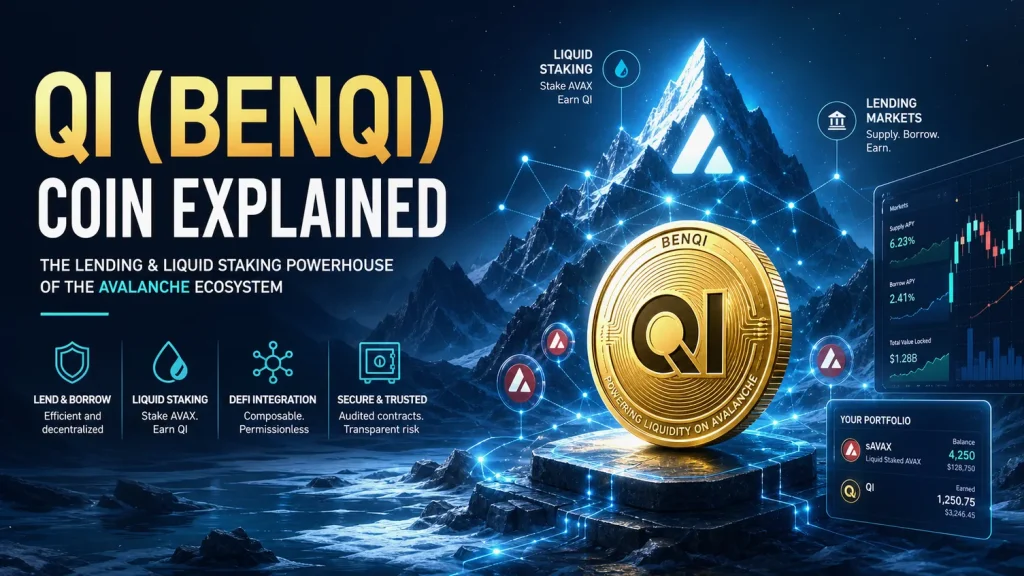
Focus keyword: What is the QI (BENQI) Coin, and how to buy? QI is the native token of BENQI, a decentralized-finance ecosystem built on the Avalanche network. Rather than being a standalone payment coin, the BENQI token is designed around participation in Avalanche DeFi—particularly lending, borrowing, liquid staking, validator support, and protocol governance.

- 20% fee cashback
- $10,000 bonus

- 50% trading fee discount
- 20% fee cashback
- $6,200 futures bonus

- 20% fee cashback
- $60,000 futures bonus

- 20% trading fee discount
- $100 signup bonus
- $10,000 futures bonus

- Bonus pack worth $100–$1,500 USDT
- Fee discount

- 20% fee cashback
- $8,000 bonus

- 20% trading fee discount
- $30,050 signup bonus
For anyone researching the QI coin before buying, the key point is simple: its value proposition is connected to whether BENQI’s products are used, how Avalanche develops, and how the protocol’s incentives and governance evolve. That makes QI a utility-and-governance asset with meaningful upside potential—but also the volatility and smart-contract risks common to smaller DeFi tokens.
What does BENQI do?
BENQI operates a suite of DeFi products on Avalanche. Its platform includes lending and borrowing markets, plus liquid staking. In the liquid-staking flow, users stake AVAX and receive sAVAX, a liquid, yield-bearing token that can potentially be used elsewhere in DeFi rather than leaving the underlying AVAX completely idle. BENQI also positions its infrastructure around helping bootstrap Avalanche validators. (benqi.fi)
This matters because a DeFi protocol needs more than a tradable token. It needs practical reasons for people to supply assets, borrow assets, stake AVAX, or take part in ecosystem governance. BENQI’s products are intended to create those on-chain use cases.
What is the QI token used for?
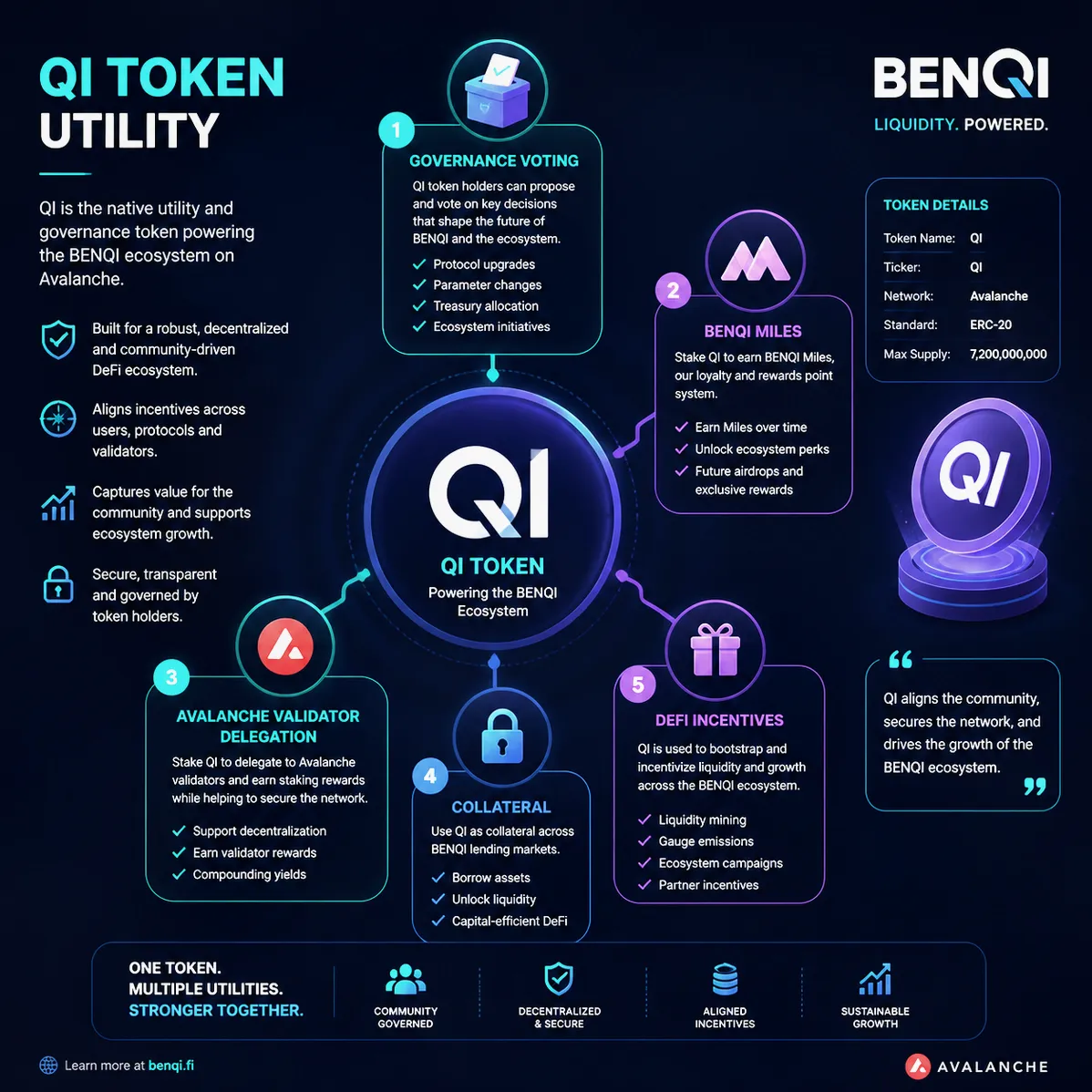
QI is native to Avalanche and sits at the center of BENQI’s economic and governance design. Users can stake QI to accrue BENQI Miles—previously called veQI—which can be used in governance and node voting. In node voting, holders can direct voting support toward particular Avalanche validators, influencing delegation decisions from BENQI’s liquid-staking pool. (docs.benqi.fi)
A detail worth understanding before you buy QI: BENQI’s documentation says Miles accumulate over time while QI remains staked, but unstaking any amount resets the holder’s accumulated Miles balance to zero. That mechanism favors longer-term participation rather than rapid in-and-out staking.
QI can also be used in the broader BENQI ecosystem for functions such as collateral and service discounts, including certain validator-launching arrangements. However, token utilities, incentive programs, and governance processes can change through protocol decisions, so check the current BENQI documentation before committing funds.
QI tokenomics: supply and distribution

The documented maximum and total supply of QI is 7.2 billion tokens. BENQI’s token-distribution materials allocate 45%—or 3.24 billion QI—to community and liquidity incentives, while other allocations covered contributors, the foundation, exchange liquidity, seed and private rounds, and public-sale rounds. (docs.benqi.fi)
Tokenomics should not be treated as a price forecast. Still, it is useful context: incentive emissions, community rewards, liquidity, and the number of tokens actively circulating can all affect market supply and trader behavior. Before buying, review the current circulating supply, trading liquidity, unlock status, and volume rather than relying on an old all-time-high chart or social-media claims.
How to buy QI (BENQI) on Binance
One accessible route for users in supported jurisdictions is Binance. Binance’s current QI purchase guide lists several potential methods, including card purchases, bank-transfer-funded balances, Binance Convert, and Spot trading; the actual options and trading pairs depend on your country and account eligibility. (binance.com)
Step 1: Create and secure your account
Start by registering through Binance with referral code CRYPTONEWER. The promotion associated with this referral advertises a 20% fee discount and up to $10,000 in benefits; review the offer terms, eligibility rules, verification requirements, and availability in your region before relying on any promotional amount.
After registering, use a unique password and enable two-factor authentication. Complete identity verification if it is required for the funding or trading method you intend to use. Binance states that verification is needed to buy QI through its platform.
Step 2: Fund your Binance account
Choose the funding method shown as available to you. Depending on location, this may include debit or credit card, bank transfer, P2P, or an existing crypto balance. Card purchases can be convenient, while funding first and using Spot may provide more order control. Always inspect the final quote and all payment-provider charges before confirming.
Step 3: Buy QI with Convert or Spot
For a straightforward purchase, open Trade → Convert & Block Trade, choose the crypto or stablecoin you hold in the “From” field, select BENQI (QI) in the “To” field, review the quote, and confirm before it expires.
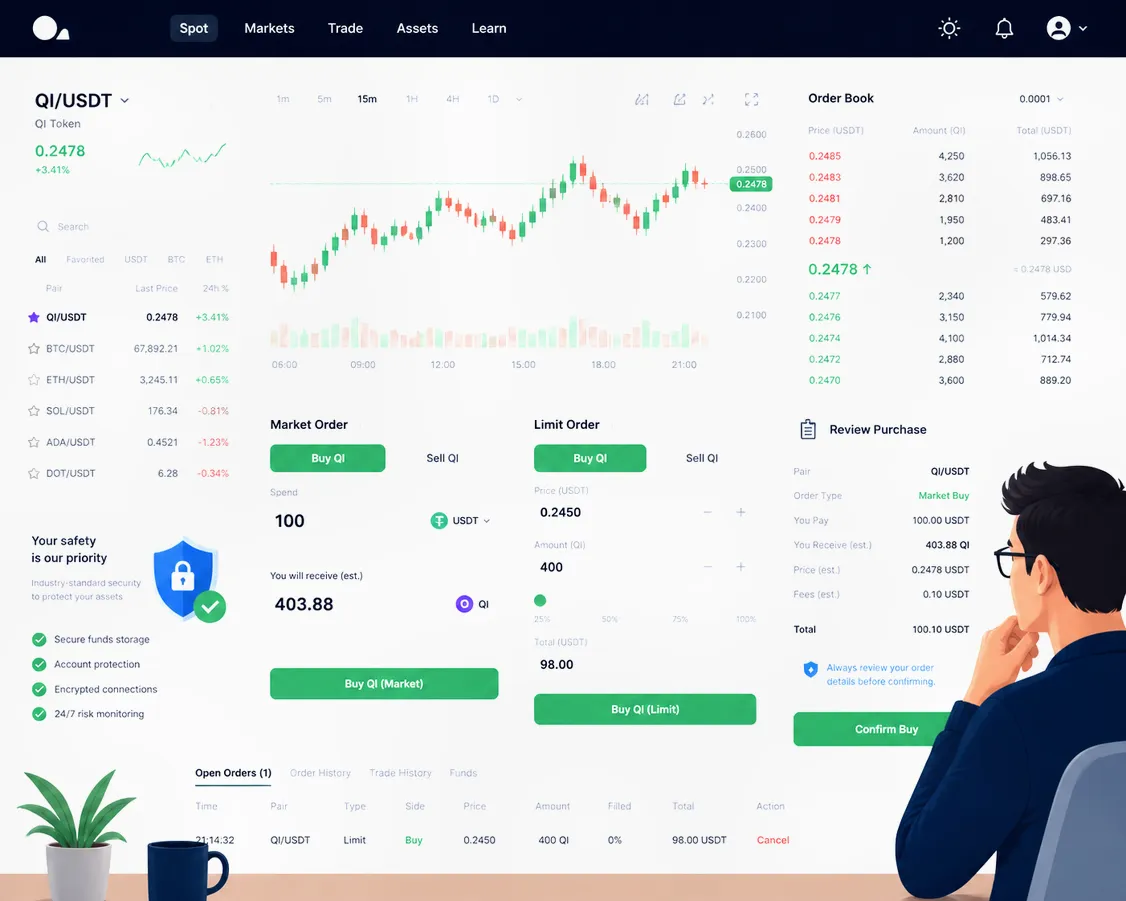
For more control, open Trade → Spot, search for QI, then select an available pair such as QI/USDT, where supported. A market order buys immediately at the best available market price, but the executed price can move in volatile conditions. A limit order lets you set a maximum buy price; it will execute only if the market reaches that price. Binance notes that available pairs vary by region and that QI can be purchased in fractional amounts, subject to the platform’s minimum-order rules.
Step 4: Decide where to keep your QI
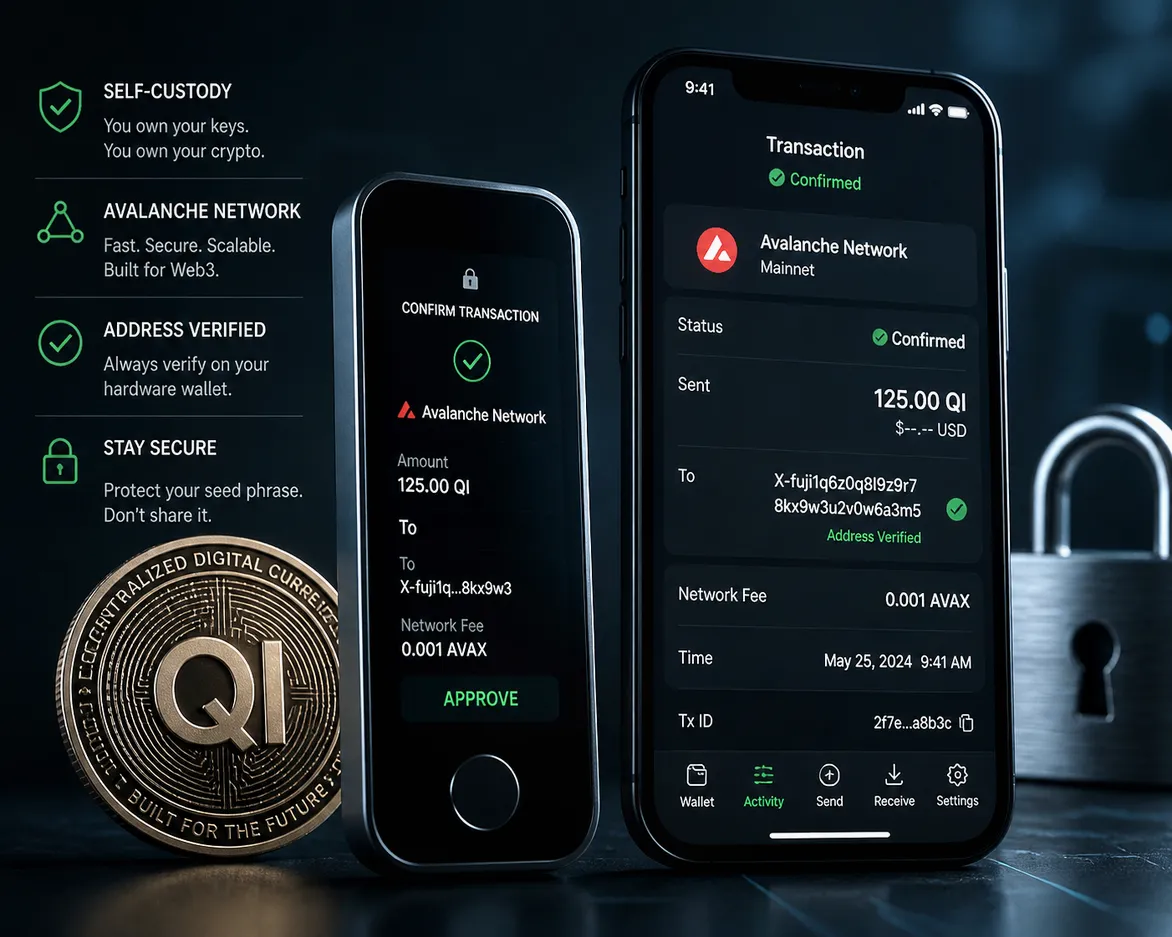
After purchase, QI will appear in your Binance account. You can keep it in the exchange wallet for convenience or withdraw to a self-custody wallet that supports the correct Avalanche network and QI token. If you withdraw, verify the network, recipient address, and withdrawal fee carefully—crypto transfers are generally irreversible. Binance explicitly advises users to confirm the destination address and network when moving assets to self-custody.
Risks to weigh before buying BENQI
Buying QI is not the same as depositing cash in a bank account. QI’s market price can change sharply, exchange liquidity can vary, and the token is exposed to broader Avalanche, DeFi, regulatory, and smart-contract risks. Using BENQI’s lending or liquid-staking products introduces additional protocol and operational considerations beyond simply holding the token.
A practical approach is to decide your position size before you purchase, avoid using money needed for essential expenses, and learn the difference between holding QI, staking QI, supplying assets to lending markets, and staking AVAX for sAVAX. Read the transaction screen every time, start with a small test withdrawal if using a new wallet, and keep your recovery phrase offline and private.
A smarter QI buying checklist
- Confirm that you are selecting QI / BENQI, not another token with a similar ticker.
- Check your country’s Binance product availability before depositing funds.
- Compare the card, Convert, and Spot routes for total cost and execution control.
- Use Binance registration with code CRYPTONEWER if you want to access the advertised referral promotion.
- Review QI’s role in BENQI governance and Avalanche validator voting—not just short-term price movement.
- Never send QI to an address without verifying the Avalanche network and wallet compatibility.
This article is educational information, not investment, legal, or tax advice. Cryptocurrency prices are highly volatile, and you may lose some or all of the funds you use to buy QI.