
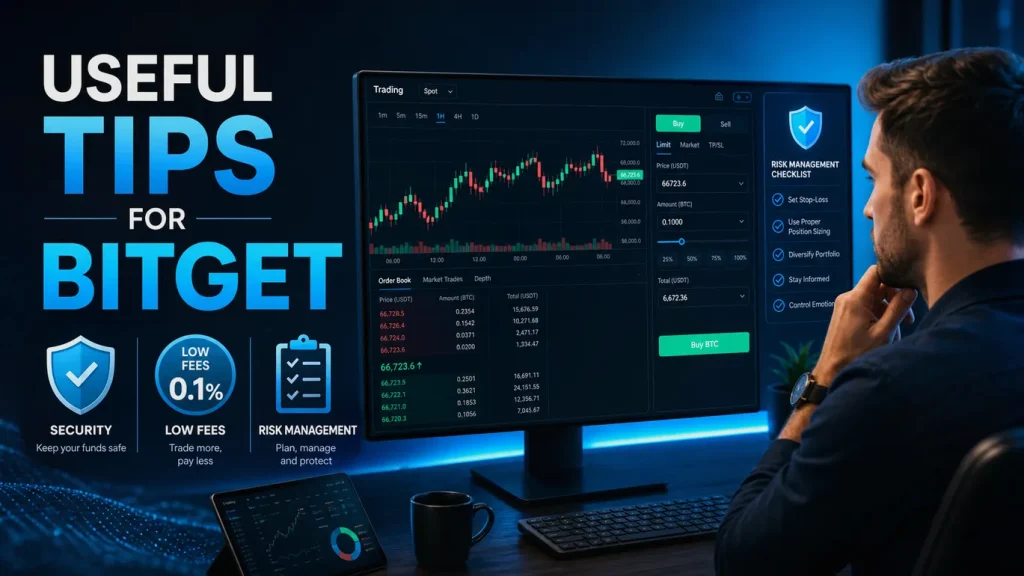
Bitget can be a practical exchange for spot traders, futures users, and anyone who wants to manage crypto positions from one dashboard. These useful tips for Bitget focus on the things that make a measurable difference in everyday trading: account security, fee planning, order execution, risk control, and tracking promotions. They are especially relevant for newer users who want a calmer way to learn the platform without treating every trade as an all-or-nothing decision.

- 20% fee cashback
- $60,000 futures bonus

- 20% trading fee discount
- $100 signup bonus
- $10,000 futures bonus

- 20% fee cashback
- $8,000 bonus

- 20% fee cashback
- $10,000 bonus

- 20% trading fee discount
- $30,050 signup bonus

- 50% trading fee discount
- 20% fee cashback
- $6,200 futures bonus
Start with the right account-security setup
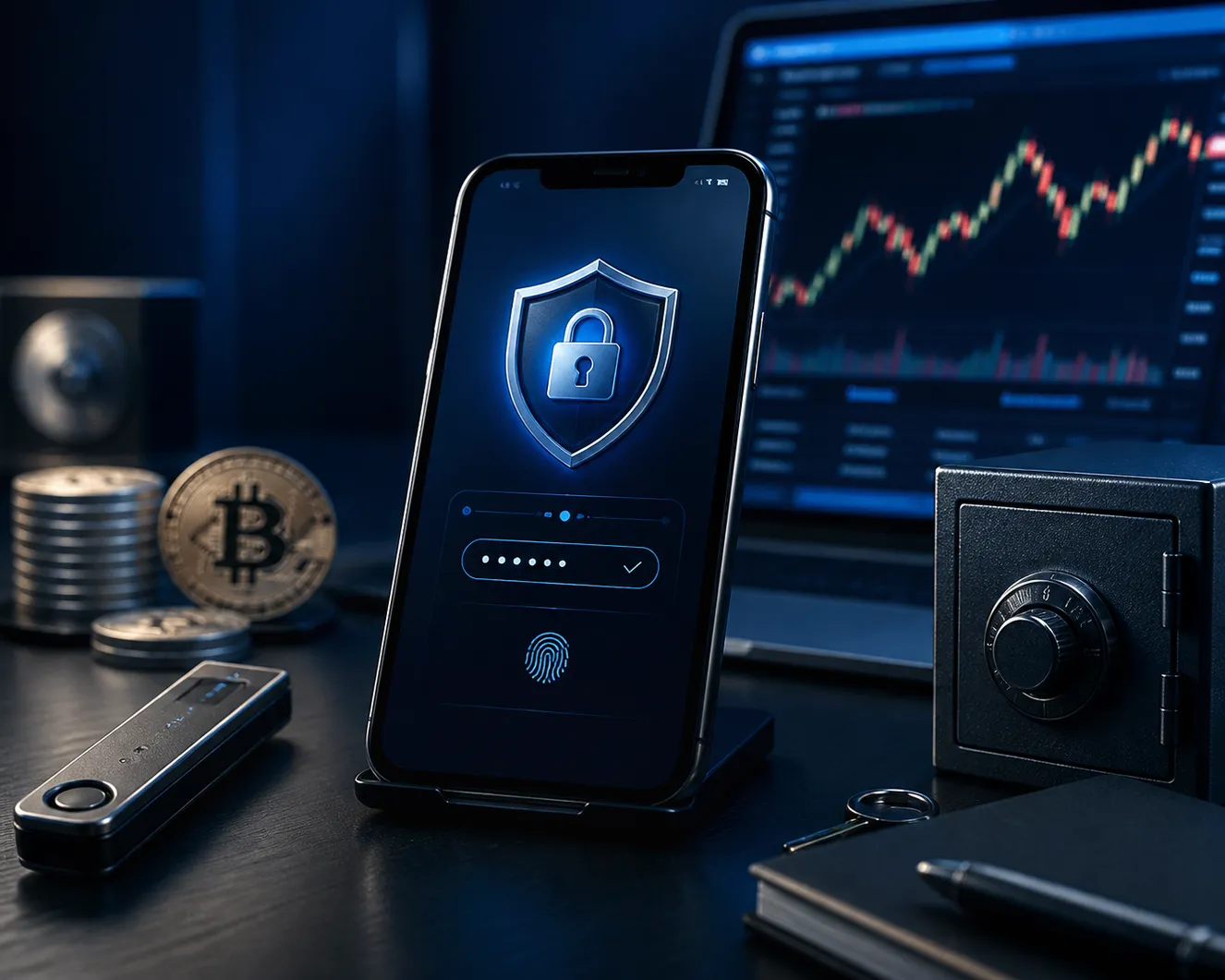
Before depositing funds, protect the account as if it were a wallet holding a meaningful balance—because it may become one. Use a unique, long password generated by a password manager and turn on two-factor authentication with an authenticator app rather than SMS where possible. Also review the anti-phishing code, withdrawal-address whitelist, device-management page, and login alerts.
A simple routine helps: whenever you log in from a new browser or phone, verify that the domain is legitimate, then check active devices afterward. Never follow exchange links sent through unsolicited direct messages. Bookmark the official trading page instead. Security is not an exciting Bitget trading tip, but it is the one that protects every future decision you make.
Register through a fee-focused referral offer
Trading costs can quietly eat into a strategy, particularly for frequent futures traders or users who make many small adjustments. If you have not yet opened an account, you can register using the Bitget referral offer with code cryptonew0. The offer includes a 50% trading fee discount, 20% fee cashback, and up to a $6,200 futures bonus, subject to the platform’s applicable campaign rules and eligibility requirements.
When signing up, confirm that the referral code cryptonew0 appears before completing registration. Afterward, open the rewards or promotions area in your account to see which tasks, deadlines, trading-volume conditions, or verification requirements apply. A bonus should be treated as a benefit to understand—not a reason to increase leverage or force a trade.
Learn the difference between market, limit, and trigger orders
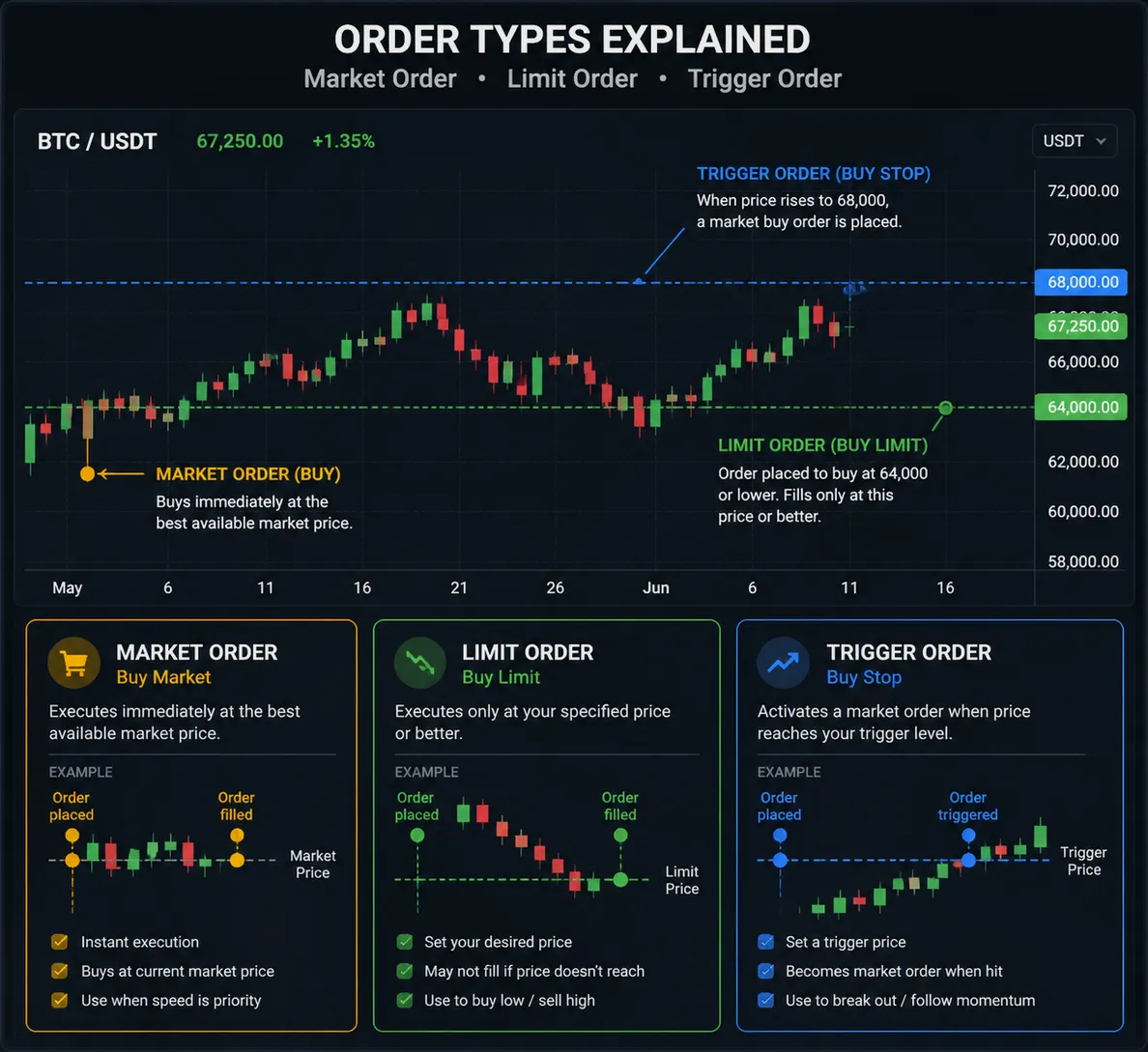
One of the most useful tips for Bitget is to avoid using market orders by default. A market order prioritizes immediate execution, but in a fast-moving or thin market, the filled price can differ from the number you saw on screen. This difference is called slippage.
A limit order gives you more price control. For example, if BTC is trading at $65,000 but your plan is to buy only near $64,300, place a limit buy and let the market come to you. It may not fill, but that is often preferable to abandoning your entry rules.
Use trigger orders for planned breakouts, downside protection, or predefined profit-taking. For a futures position, set the stop-loss and take-profit levels as soon as the position is opened whenever possible. The key is to decide the invalidation point before emotion enters the trade.
A trade without a stop is not automatically a long-term investment; it is often simply a position without a defined risk limit.
Understand futures leverage before increasing it
Leverage is among the most misunderstood tools in crypto trading. It does not improve the quality of an idea. It magnifies the financial effect of price movement, including losses, fees, and liquidation risk. A 1% move against a highly leveraged position can have a much larger impact on your margin than many traders expect.
For beginners, lower leverage and smaller position sizes offer more room to learn how funding, liquidation prices, and volatility work. Check whether you are using isolated margin or cross margin:
- Isolated margin limits the margin assigned to one position.
- Cross margin can use available account balance to support positions, which may expose more funds when a trade moves against you.
Before clicking confirm, review the estimated liquidation price, order size, margin, and stop-loss placement. If the liquidation price is uncomfortably close to your entry, the trade is probably too large for the volatility of that asset.
Watch fees, funding, and spread—not only the chart
A chart can look perfect while the economics of the trade remain unattractive. Spot and futures markets have different fee structures, and perpetual futures can also involve periodic funding payments. Depending on the funding rate and which side of the contract you hold, you may pay or receive funding.
For short-term positions, also inspect the bid-ask spread and order-book depth. An asset with a large percentage move may be tempting, but wide spreads can make entering and exiting expensive. This is one reason major, liquid pairs are often easier for beginners to trade than newly listed or low-volume tokens.
The Bitget fee-discount registration page can reduce stated trading costs through the available referral benefits, but reduced fees do not remove spread, funding, or market risk. Build all of those costs into your plan.
Use a trading journal to find repeatable setups
A journal turns random activity into feedback. It does not need to be complicated. Record the asset, direction, timeframe, entry, stop, target, leverage, reason for the trade, and result. Add a screenshot before and after execution if you trade technical setups.
After 20 to 30 trades, look for patterns. Are your best trades made during a specific market session? Do you repeatedly move stops too early? Are losses larger after chasing rapid pumps? These answers are more valuable than copying someone else’s entries.
A useful journal note might look like this:
text

Pair: ETH/USDT perpetual

Setup: Retest of prior breakout level

Risk: 0.5% of account value

Entry: 3,180 | Stop: 3,135 | Target: 3,315

Rule: No averaging down; take partial profit at first target

Review: Entry followed plan, but target was too ambitious for low-volume conditions.
Set position size from risk, not excitement
Instead of choosing a position size based on how confident you feel, start with the amount you are willing to lose if the stop-loss is reached. Many disciplined traders set a small fixed percentage of account equity as risk per trade. The exact number is personal, but consistency matters more than selecting an aggressive figure.
The basic process is straightforward:
- Decide the maximum loss for the trade.
- Define the entry and stop-loss price.
- Calculate the distance between entry and stop.
- Adjust the position size so a stop-out matches the maximum loss.
This approach is useful on Bitget spot markets as well as futures markets. It prevents a tight stop from being paired with an oversized position and helps keep a single unexpected move from dominating the entire account.
Explore copy trading carefully
Bitget’s copy-trading features can be useful for observing how selected lead traders manage entries, drawdowns, and frequency. However, copied performance is not guaranteed performance. A trader may have a good recent record while taking risks that are unsuitable for your account.
Before following anyone, examine more than headline return. Check trading history, maximum drawdown, number of followers, average holding duration, win-rate context, and whether the strategy relies on high leverage or martingale-style averaging. Set an allocation cap that you can afford to lose, and avoid treating copy trading as a hands-off savings product.
Keep funds organized across spot, futures, and earn products
Separate capital by purpose. For example, keep a defined amount for active futures trading, another amount for spot holdings, and reserve funds outside high-risk trading allocations. This makes it easier to understand actual performance and stops a losing futures position from consuming money intended for longer-term holdings.
If you use any earn, staking, or promotional product, read the asset terms carefully. Check lock-up periods, redemption timing, variable rates, token exposure, and any limits on withdrawals. Yield is not the same as guaranteed profit, especially when the value of the underlying crypto asset can change sharply.
Build a pre-trade checklist
The best Bitget tips are easy to repeat under pressure. Save this short checklist near your trading screen:
- Is this a planned setup or a reaction to a sudden price move?
- What is the entry, stop-loss, and target?
- How much of the account is at risk if the stop is hit?
- What leverage, margin mode, and order type am I using?
- Are funding rate, spread, and liquidity acceptable?
- Have I set alerts rather than staring at every candle?
- Is there relevant news, an unlock, or a major macro event ahead?
Taking thirty seconds to answer these questions can prevent hours of emotional trading. Pair that process with the available Bitget fee benefits using referral code cryptonew0, maintain realistic risk limits, and review results regularly so that each trade contributes to a clearer system rather than a larger pile of guesses.
Related posts:
 What Is the ANOME (Anome) Coin and How to Buy It: Smart Guide for New Buyers
 Bitget Trading Bot Setup Tutorial: Step-by-Step Guide for Grid, DCA, and Futures Bots
 NFTs and the Future of Digital Art — Breakthrough Trends, Tools, and Opportunities
 Binance news today essential updates and market insights for crypto traders