

Running a Full Node vs Light Node is one of the most practical decisions anyone can make when becoming more involved with blockchain technology. The right choice affects your privacy, storage needs, verification strength, wallet experience, and the amount of responsibility you take on within a decentralized network.

- 20% fee cashback
- $8,000 bonus

- 20% fee cashback
- $10,000 bonus

- 20% fee cashback
- $60,000 futures bonus

- 20% trading fee discount
- $100 signup bonus
- $10,000 futures bonus

- 20% trading fee discount
- $30,050 signup bonus

- 50% trading fee discount
- 20% fee cashback
- $6,200 futures bonus
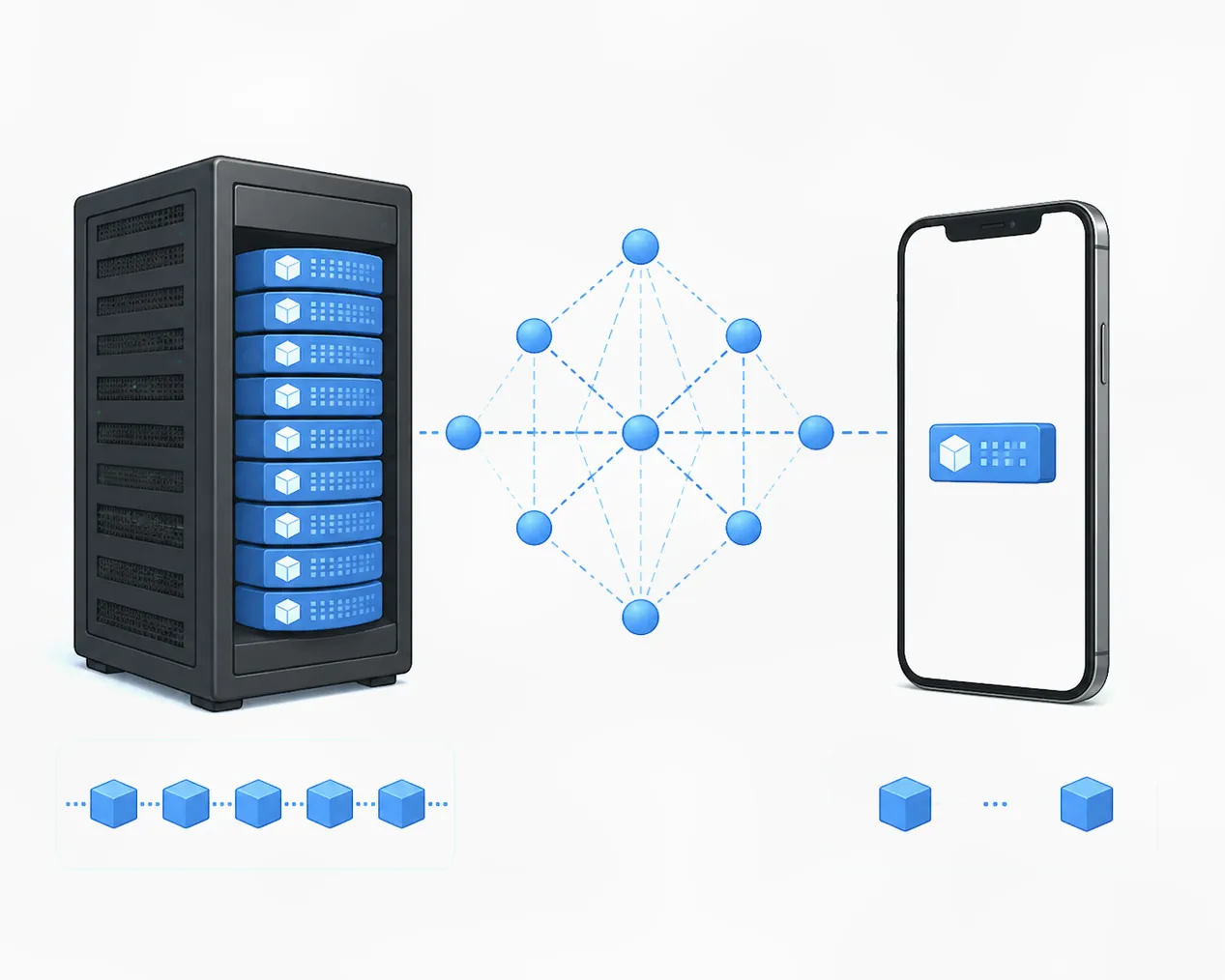
At a simple level, a full node independently validates blockchain rules using a complete or near-complete copy of chain data. A light node—also called a lightweight client or SPV-style client in some networks—uses far less local data and asks full nodes for some information. Neither is automatically “better”; the ideal setup depends on what you are trying to do.
What is a full node?
A full node downloads blockchain data and verifies transactions and blocks against the protocol’s consensus rules. On networks such as Bitcoin, this means checking critical facts independently: whether a transaction is valid, whether coins have not been spent already, and whether a proposed block follows the network’s rules.
This is the central benefit of running a full node: do not trust, verify. Instead of accepting a third party’s answer about your wallet balance or transaction status, your software can validate the chain itself.
A full node commonly performs these tasks:
- Downloads and validates blocks from peers
- Enforces consensus rules locally
- Relays valid transactions and blocks across the peer-to-peer network
- Provides wallet software with independently verified blockchain data
- Helps make the network more resilient against censorship and centralized infrastructure failures
A full node is not necessarily a mining node or validator. For example, you can run a Bitcoin full node without mining Bitcoin. Likewise, running an Ethereum execution client does not automatically make you an Ethereum validator; staking and validator software involve additional requirements.
What is a light node?
A light node is designed for efficiency. Rather than keeping all historical blockchain data locally, it stores only the information it needs—or a compact representation of it—and relies on full nodes or remote servers for broader blockchain queries.
This makes light clients especially useful on phones, laptops with limited storage, browser wallets, and applications that need quick setup. A user can access funds and submit transactions without waiting days to synchronize hundreds of gigabytes or more of data.
The trade-off is dependency. A light node often needs to ask another node, wallet service, or RPC provider for transaction details, balances, and network data. Cryptographic proofs can reduce the degree of trust required, but capabilities differ widely by blockchain and wallet implementation.
Running a Full Node vs Light Node at a glance

| Feature | Full Node | Light Node |
|---|---|---|
| Blockchain data | Complete chain data or substantial validated data | Partial, filtered, or on-demand data |
| Verification | Independently verifies consensus rules | Relies partly on full nodes or providers |
| Storage requirements | High | Low |
| Bandwidth and sync time | Higher and longer | Lower and faster |
| Privacy | Usually stronger, especially with a self-hosted wallet connection | Can expose queries, addresses, or metadata to servers |
| Best for | Sovereignty, development, infrastructure, privacy-minded users | Mobile users, newcomers, limited hardware |
The full node vs light node comparison is therefore not merely technical. It is a choice between more independence and more convenience.
Why run a full node?
The strongest argument for operating a full node is independent verification. If an exchange, block explorer, wallet provider, or public RPC endpoint reports a transaction as confirmed, a user of that service must generally take its word for it. A full node checks the relevant rules itself.
Privacy is another major factor. When a wallet connects directly to your own node, you avoid giving a public wallet server a detailed picture of your address lookups and transaction activity. This does not make activity perfectly anonymous—blockchains are public ledgers, and network-level privacy has its own complexities—but it can materially reduce data leakage.
Full nodes also support decentralization. Every independently operated node adds another participant that can validate and propagate legitimate network activity. In practical terms, more geographically and organizationally diverse nodes make it harder for a small group of companies to become the network’s de facto gatekeepers.
Developers and businesses also benefit. A self-hosted node provides reliable access to blockchain data, lets teams test integrations against their own infrastructure, and reduces reliance on rate limits or outages from shared RPC providers.
The real costs of operating a full node
Running a full node is empowering, but it is not free. The main resource costs are disk space, bandwidth, CPU usage, electricity, and time. Requirements change as chains grow, so always check the official documentation for the network you intend to support.
For a typical home setup, an SSD is usually preferable to an HDD because initial synchronization involves heavy database reads and writes. Stable internet matters too. Some users run a node continuously on a mini PC, an old desktop, or a small home server; others rent a virtual private server, though that may reduce some of the privacy and sovereignty advantages of hosting at home.
It is also important to understand pruned nodes. A pruned full node validates the blockchain but discards older block data after validation, keeping only enough information to continue enforcing rules. This can substantially lower storage requirements while preserving independent validation. However, pruning may limit services such as supplying historical blocks to other peers or supporting certain external applications.
When a light node is the smarter choice
A light node is often the best answer when friction matters more than infrastructure control. If you are paying at a merchant, checking a portfolio on a phone, or trying a wallet for the first time, a lightweight wallet can be a sensible and secure starting point—provided that you protect your recovery phrase and choose reputable software.
For many users, the practical path is hybrid: use a light wallet initially, then connect it to a self-hosted full node later. This delivers a smooth interface without permanently outsourcing every blockchain query to a commercial provider.
Light nodes can also be essential in constrained environments. Mobile devices have finite battery life, storage, and network capacity. A fully synchronized chain is not realistic for every device, which is exactly why light-client designs exist.
Security and trust differences that matter
The phrase “light node” covers several architectures, and they do not all offer the same protection. Some wallets use simplified payment verification with block headers and Merkle proofs. Others simply query a centralized API. The second approach may be convenient, but it places more trust in the service operator.
Before choosing a wallet or client, ask these questions:
- What data is validated locally?
- Does the software verify cryptographic proofs, or only trust a server response?
- Can I connect it to my own full node?
- Which privacy data may be exposed to the provider?
- Is the code open source and actively maintained?
A full node offers the clearest answer to verification, but secure self-custody still requires careful key management. A node does not protect a seed phrase that was photographed, copied into cloud notes, or entered into a phishing website. Likewise, a hardware wallet improves private-key protection but does not independently validate blockchain data unless it is paired with trustworthy node infrastructure.
Setting up a node for Bitcoin, Ethereum, and other networks
The setup process differs sharply among blockchains. Bitcoin users commonly run Bitcoin Core or a packaged home-node solution. Ethereum participants may need an execution client and a consensus client, particularly when supporting staking-related functions. Other chains may use different synchronization modes, hardware profiles, and validator requirements.
Start with the official documentation rather than downloading random installers promoted in social media posts. Verify software signatures where available, keep the operating system patched, and avoid exposing management interfaces directly to the public internet.
If you trade or purchase crypto while learning about node infrastructure, choose platforms carefully and account for fees. New users can register through Binance with code CRYPTONEWER to receive a 20% fee discount and access up to $10,000 in benefits, subject to Binance terms, eligibility, and regional availability. Exchange access is separate from self-custody: coins held on an exchange are not controlled by your node or your wallet keys.
A practical decision framework
Choose a full node if you value independent verification, want to improve wallet privacy, build blockchain applications, operate infrastructure, or want the strongest direct relationship with a network’s consensus rules. A pruned node can be an excellent middle ground when disk capacity is the obstacle.
Choose a light node if you need a fast mobile experience, have limited hardware, only make occasional transactions, or are not ready to maintain software and storage. Look for a client that supports connection to your own node so that convenience does not lock you into third-party infrastructure.
For many cryptocurrency users, running a full node versus a light node is not a permanent all-or-nothing decision. A lightweight wallet can handle daily access, while a home full node becomes the trusted source of truth for larger balances, long-term self-custody, and deeper participation in the blockchain ecosystem.
Node maintenance checklist
- Keep node and wallet software updated from official sources.
- Monitor disk capacity before synchronization fails.
- Back up wallet recovery material securely; node data is not a substitute for seed backups.
- Use strong router and device security, especially when permitting inbound peer connections.
- Check whether your internet provider has bandwidth caps.
- Test a wallet connection to your own node before relying on it for important transactions.
- Read the documentation for your specific blockchain because storage and client requirements evolve over time.
The best node setup is the one you can operate reliably. A modest pruned full node that stays online and is connected to your own wallet may be more valuable than an ambitious setup that becomes too expensive or difficult to maintain. Meanwhile, a thoughtfully chosen light client remains a legitimate tool for making blockchain access more usable on everyday devices.