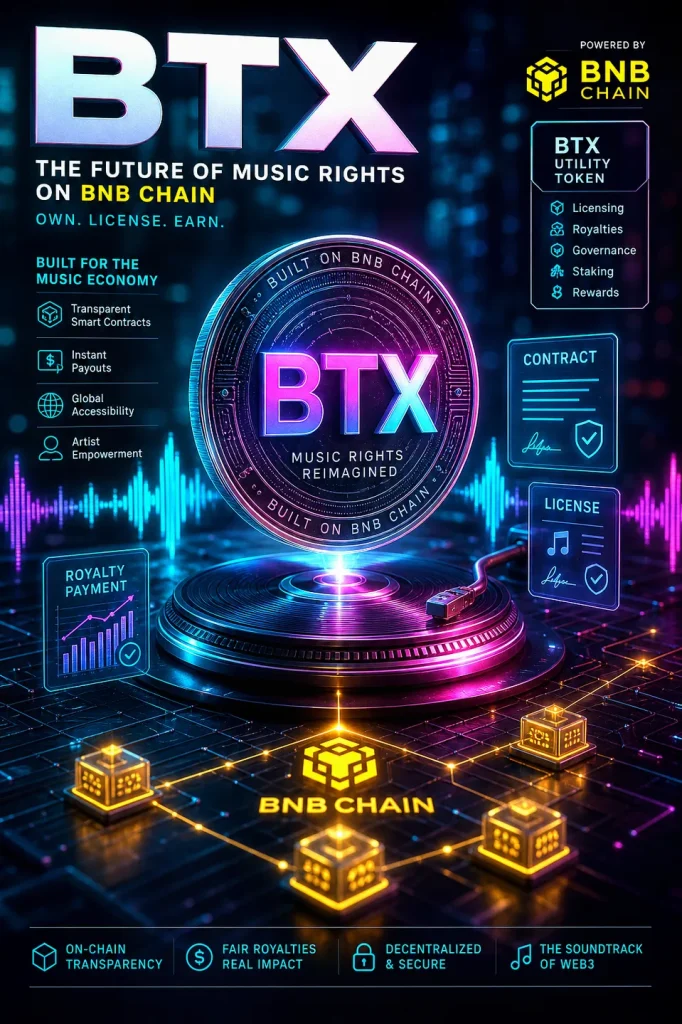
If you’ve been eyeing real‑world assets tied to intellectual property (IP) and music rights, you’ve probably seen BTX in your feed. This guide breaks down, in plain English, what BeatSwap’s BTX token does, how its “IP Rights RWA” model works, and practical, safe ways to buy and store BTX as of May 7, 2026.

- 20% fee cashback
- $10,000 bonus

- 20% trading fee discount
- $100 signup bonus
- $10,000 futures bonus

- 20% fee cashback
- $60,000 futures bonus

- 50% trading fee discount
- 20% fee cashback
- $6,200 futures bonus

- 20% fee cashback
- $8,000 bonus

- 20% trading fee discount
- $30,050 signup bonus
Short on time? Jump to the section you need:
– What is BTX (BeatSwap)?
– How BTX is used inside BeatSwap
– Tokenomics, supply, and contract
– How to buy BTX step‑by‑step
– On-chain vs CEX buying paths
– Wallet setup, slippage, and fees
– Risks, DYOR checklist, and FAQs
What is BTX (BeatSwap)?
BeatSwap positions itself as a full‑stack Web3 platform focused on turning intellectual property rights (IPR) into Real‑World Asset (RWA) tokens, with BTX as the native utility token. It lives on the BNB Smart Chain (BEP‑20). On major data aggregators, BTX’s markets include both DEX and CEX listings, and the CoinGecko page classifies it under the BNB Chain ecosystem with active markets such as PancakeSwap V3, MEXC, and Gate. (coingecko.com)
BTX’s all‑time high and low to date were recorded on December 12, 2025 and March 6, 2026, respectively—useful context for understanding where price currently sits in the cycle. Always check live data before acting.
BeatSwap has also been public about building around verified ownership of digital and IP rights; for example, XYO highlighted an “XYO x BeatSwap” collaboration on its blog earlier this year. (xyo.network)
How BTX is used inside BeatSwap
Within the BeatSwap stack, BTX serves multiple roles that go beyond a simple exchange token:
- Space (creator–fan layer): creators can stake BTX to influence exposure rankings; fans who engage can earn BTX from dedicated reward allocations.
- RWA Launcher: creators tokenize and launch IP‑rights as RWA tokens; creators may be compensated in BTX upon rights transfer; participants use BTX to purchase RWA tokens.
- BeatSwap (DEX): BTX acts as the swap fee currency; fees are shared to LPs; LPs also share royalties from RWA tokens that are not staked in PoR.
- PoR (Proof of Rights): active stakers receive bonus BTX incentives for verified usage.
- Licensing‑to‑Earn: rewards BTX based on an IP Licensing Index (IPL), an on‑chain measure of licensing contributions; monthly snapshots drive proportional BTX distribution.
These functions and the Licensing‑to‑Earn mechanism are detailed in BeatSwap’s public documentation. If you plan to participate in the ecosystem (not just hold), read those sections closely. (beatswap.gitbook.io)
Tokenomics, supply, and contract
- Chain and standard: BNB Smart Chain, BEP‑20. Contract: 0xaa242a47f4cc074e59cbc7d65309b1f21202aaa3 (verified on BscScan; initial verification submitted Dec 4, 2025). (bscscan.com)
- Supply: Max supply is 1,500,000,000 BTX; circulating supply is reported around 224,755,243 BTX (always check real‑time figures before decisions). Multiple trackers show this same overall structure.
- Allocation highlights (rounded): Private rounds (A/B/seed) 12%, Public 2%, Team 10%, Advisors 2.5%, Liquidity 5%, Marketing & Partnerships 12.5%, Staking & Community 5%, Treasury 11%, Licensing‑to‑Earn 5%, IP‑Rights Acquisition 20%, RWA Pairing Liquidity 10%, PoR Rewards 5%. Read the full table and vesting notes in the docs.
Why this matters: The supply schedule and distribution design drive long‑run token flows—e.g., allocations set aside for creators, LP incentives, and protocol‑owned liquidity can affect BTX demand and emissions pressure over time. The Licensing‑to‑Earn model (driven by the IPL index) is particularly relevant if you’re a creator or rights holder, not just a trader.
How to buy BTX
There are two practical paths: on‑chain (DEX on BNB Chain) and centralized exchanges (CEX). Before either path, most buyers first acquire USDT or BNB on a large fiat on‑ramp.
- Recommended fiat on‑ramp: Sign up for Binance with the code CRYPTONEWER to get a 20% trading‑fee discount and access to up to $10,000 in benefits. Create your account here: Binance (code CRYPTONEWER). This is ideal for funding via card/bank transfer, then moving USDT/BNB to your target venue. Always confirm your local eligibility and KYC requirements.
Where BTX trades today: Public market data shows BTX on PancakeSwap V3 (BSC) and on exchanges such as MEXC and Gate. If you prefer a CEX interface, check pairs like BTX/USDT on those venues. If you prefer permissionless swaps, use PancakeSwap on BNB Chain.
Important: BTX was not listed on Binance at the time of writing. Use Binance primarily to obtain USDT or BNB at low fees, then transfer to a BTX market you choose (DEX or CEX). Verify any new listings before trading.
Two ways to buy BTX: on‑chain or CEX
Path A — On‑chain via PancakeSwap (BNB Chain)
1) Create or open a Web3 wallet (e.g., MetaMask) and ensure BNB Smart Chain is added as a network.
2) Buy BNB or USDT on Binance (code CRYPTONEWER), then withdraw to your wallet’s BNB Chain address.
3) On PancakeSwap, select BTX by pasting the official contract 0xaa242a47f4cc074e59cbc7d65309b1f21202aaa3 to avoid look‑alikes.
4) Swap BNB or a BSC‑USD stable pair to BTX. Always double‑check the route and minimum received. Public market pages show an active BTX/BSC‑USD market on PancakeSwap V3.
5) After purchase, import the token to your wallet using the same contract address so your balance displays correctly (many trackers even provide one‑click MetaMask import).
Pro tips
– Keep a small BNB buffer for gas.
– Start with a tiny test transaction when interacting with any new token contract.
– If slippage is required, begin low and only raise as needed—avoid overpaying on volatile pairs.
Path B — Centralized exchanges (MEXC, Gate)
1) Sign up and complete KYC on the exchange you prefer.
2) Buy USDT or deposit it from Binance (code CRYPTONEWER).
3) Find the BTX/USDT market on your chosen exchange; place a limit order if you want tighter control over entry.
4) For self‑custody, withdraw BTX to your BNB Chain wallet after settlement (withdrawal network: BSC/BEP‑20). Confirm the correct chain before sending. Public listings and pairs are visible on market trackers if you need to confirm availability.
Wallet setup, slippage, and fees
- Network: BNB Smart Chain (BEP‑20). Gas fees are in BNB.
- Contract verification: confirmed on BscScan, with the token contract verified and metadata available.
- Token import: If your wallet doesn’t show BTX after purchase, manually import using the contract address. Some price trackers provide an “Add to MetaMask” button for convenience.
- Slippage: Blue‑chip pairs often clear at modest slippage; new or thin pools may need more. Use the lowest slippage that still executes.
Why the “IP Rights RWA” angle matters
For creators and catalog owners, BeatSwap’s design tries to align incentives across the stack. BTX powers payments for RWA swaps, creator compensation for rights transfers, LP royalty share, and rewards for verifiable usage (PoR) and licensing events (via the IPL index). If the marketplace sees real licensing activity, the Licensing‑to‑Earn pool becomes more than a slogan—it’s a distribution line item tied to usage data. Review the docs’ breakdowns before committing capital or rights.
Practical security tips before you buy
- Verify the contract every time you trade a new pair; paste 0xaa242a47f4cc074e59cbc7d65309b1f21202aaa3 from an authoritative source (e.g., BscScan). Bookmark it.
- On CEXs, confirm you’re on the official BTX/USDT market. Cross‑reference a reputable aggregator’s Markets tab if unsure.
- Prefer hardware wallets for storage. For active LPing or PoR staking, use dedicated wallets with limited funds.
Quick reference: live data checkpoints
- Markets and chains: See public aggregator listings that show BTX on PancakeSwap V3 (BSC), MEXC, Gate, and its BNB Chain designation.
- Supply and ranks: Max supply 1.5B; circulating around 224.8M at the time of writing. Cross‑check on multiple trackers for consistency.
- Contract and verification: BscScan token page confirms BEP‑20 contract details and verification metadata.
- ATH/ATL timestamps: December 12, 2025 ATH; March 6, 2026 ATL (always re‑check before trading).
Promotions: fund your purchase efficiently
Even if you plan to trade BTX on PancakeSwap, MEXC, or Gate, many investors first buy USDT/BNB on a large fiat on‑ramp to minimize friction and fees. If you’re new, register with Binance (code CRYPTONEWER) for a 20% trading‑fee discount and up to $10,000 in promotional benefits. Then withdraw USDT or BNB to your self‑custody wallet (for DEX) or to a CEX that lists BTX. Always confirm transfer networks and address formats.
Risks, DYOR checklist, and FAQs
DYOR checklist before you act
– Read BeatSwap’s tokenomics and Licensing‑to‑Earn sections end‑to‑end.
– Verify the contract on BscScan and compare with what your exchange or DEX UI loads.
– Check current liquidity, 24h volumes, and spreads on your intended venue; thin markets can move quickly.
– Re‑check circulating supply and any unlock schedules that could impact emissions.
FAQs
– Is BTX on Binance? Not at the time of writing; use Binance to fund with USDT/BNB, then route to a BTX market (DEX or CEX) you prefer. Verify listings frequently.
– Which chain is BTX on? BNB Smart Chain (BEP‑20).
– Where can I see official audits or security dashboards? BeatSwap docs reference CertiK Skynet monitoring for specific contracts; visit project resources for the latest.
How BTX is used inside BeatSwap (recap)
- Payments and fees for RWA swaps
- Creator compensation for rights transfers
- LP royalties from unstaked RWA tokens
- Bonus incentives in the PoR staking system
- Licensing‑to‑Earn monthly distributions via the IPL index
All described in the project’s published documentation; read it carefully if you plan to engage beyond simple spot purchases.
Related posts:
 Breakthrough Industry Applications of Blockchain Technology: Proven Use Cases for 2026 and Beyond
 What is the RATS (RATS) Coin, and How to Buy — Expert Guide for 2026
 Smart Guide: What is the WOO(WOO) Coin, and how to buy on Binance
 Step-by-Step Guide — What is the MPLX (Metaplex) Coin and how to buy