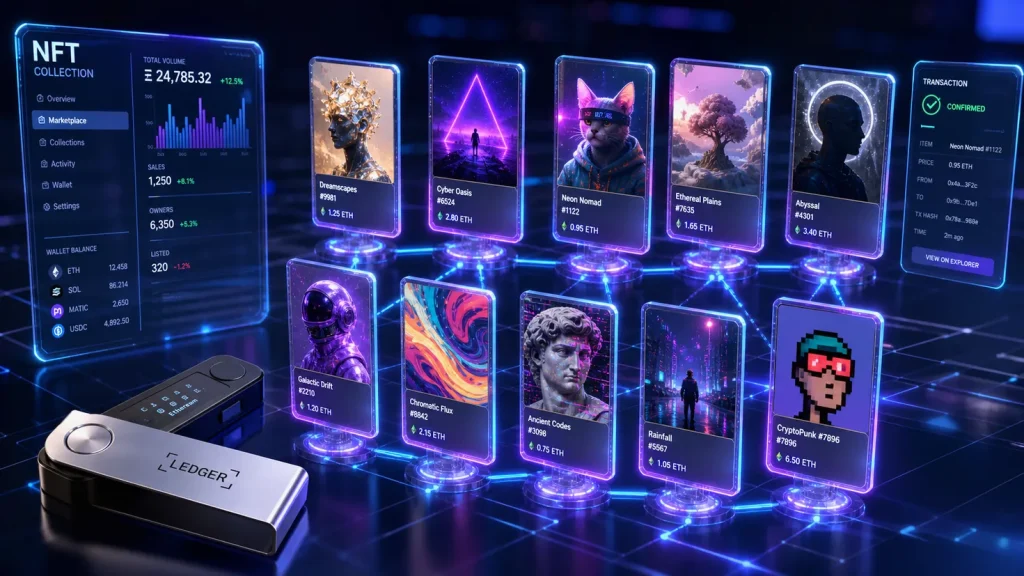
If you’ve asked yourself “What Are NFTs (Non-Fungible Tokens)?”, you’re not alone. In just a few years, NFTs have gone from niche crypto experiments to a global movement spanning digital art, gaming, music, ticketing, identity, and even real-world assets. This practical guide breaks down how NFTs work, why they matter, and how to get started safely—without the hype.

- 20% trading fee discount
- $100 signup bonus
- $10,000 futures bonus

- 20% fee cashback
- $60,000 futures bonus

- 20% fee cashback
- $10,000 bonus

- 20% fee cashback
- $8,000 bonus

- 50% trading fee discount
- 20% fee cashback
- $6,200 futures bonus

- 20% trading fee discount
- $30,050 signup bonus
- Quick takeaways
- NFTs are unique digital tokens on a blockchain that prove ownership and authenticity.
- They’re not just for art; NFTs power game items, collectibles, access passes, identity, and more.
- Storage, royalties, and marketplaces differ across chains; know where your NFT’s data actually lives.
- Security, legal rights, and liquidity are key considerations before you buy or mint.
NFT Meaning in Plain English
An NFT, or non-fungible token, is a unique digital asset recorded on a blockchain. “Fungible” means interchangeable (like dollars or Bitcoin). “Non-fungible” means one-of-a-kind. Each NFT has a unique identifier and metadata that set it apart from every other token.
- Think of an NFT as a digital certificate of authenticity and ownership.
- The asset it represents can be digital (art, music, 3D models, in-game items) or tied to a physical object.
- Ownership is public and verifiable on-chain, which makes fakes easier to spot than in the offline world.
When people ask “What Are NFTs (Non-Fungible Tokens)?”, they’re really asking how blockchains create scarcity and provenance for things that are otherwise infinitely copyable online. The answer is that the token—not the image file—is what you own. The image or media can be copied, but the blockchain-stamped proof of ownership cannot.
How Do NFTs Work under the Hood
Most NFTs live on smart contract platforms. The contract manages minting, transfers, royalties, and metadata pointers. Here’s the typical lifecycle:
- Creation (Minting)
- A creator prepares metadata (title, description, traits) and links it to media (image, audio, video).
- The NFT is minted through a smart contract, assigning a unique token ID.
- Storage
- The metadata and media can be stored on-chain or off-chain (e.g., IPFS, Arweave). On-chain is more permanent but pricier; IPFS/Arweave are decentralized content networks.
- Ownership & Transfers
- The blockchain keeps a transparent trail of who minted it and who owns it now.
- Royalties (where supported)
- Some standards let creators set a royalty percentage on secondary sales. Enforcement varies by marketplace.
Standards you’ll see:
– Ethereum: ERC-721 (one-of-one) and ERC-1155 (semi-fungible/multi-edition). EIP-2981 proposes a common royalty interface.
– Solana: Metaplex standards and compressed NFTs for massive scale.
– Polygon, Tezos, Flow, BNB Chain: Popular for lower fees and specific communities or brand partnerships.
– Bitcoin: Ordinals/Inscriptions store content directly on-chain via the Bitcoin blockchain.
Layer-2 networks like Arbitrum, Optimism, Base, and zkSync help reduce gas costs while keeping Ethereum-level security assumptions.
Where NFTs Store Their Data—And Why It Matters
- On-chain NFTs: Metadata and sometimes the art are in the smart contract. Highest permanence, potentially higher costs.
- IPFS: A content-addressed storage network (files referenced by cryptographic hash). Use pins or services that guarantee persistence.
- Arweave: Long-term storage with economic incentives to persist data for decades.
Tip: Check an NFT’s metadata URL. If it’s a simple HTTPS link to a private server, the content can change or vanish. For high-value or long-term holdings, prefer on-chain or decentralized storage.
What Are NFTs Used For Beyond Art
- Digital Art and Collectibles: PFPs, 1/1 art, generative collections.
- Gaming: Ownable in-game items, skins, land, and characters that can move across titles or marketplaces.
- Music and Media: Fan drops, limited editions, on-chain splits for collaborators.
- Ticketing and Access: Proof-of-attendance tokens, event passes, token-gated communities.
- Domains and Identity: ENS and similar services map usernames to wallet addresses; soulbound tokens anchor credentials and reputations.
- Phygital and RWAs: NFTs linked to real-world assets (sneakers with NFC chips, luxury goods authentication, property records).
- Memberships and Subscriptions: NFTs as renewable passes or dynamic badges that update over time.
Dynamic NFTs are an emerging category—tokens that update their traits based on real-world events or on-chain activity. Expect more composability, where NFTs interact with DeFi (NFT-Fi), lending, and fractionalization.
Valuing NFTs without Guesswork
Common signals for NFT valuation:
– Floor Price: Lowest listing price within a collection—useful but can be thinly traded.
– Volume and Liquidity: How often do items sell, and how many active buyers exist?
– Rarity and Traits: Scarce attributes may boost desirability.
– Provenance: Notable creators, previous owners, or exhibition history.
– Community Health: Long-term roadmap, communication, and real utility.
Red flags:
– Wash Trading: Artificial volume between related wallets.
– Manipulated Floors: Thin listings used to stage pump-and-dumps.
– Centralized Metadata: Risk of changed or missing media.
Creator Royalties Explained
Royalties aim to pay creators on secondary sales. But enforcement differs:
– On-chain royalty standards broadcast intent, not a guarantee.
– Some marketplaces made royalties optional to attract traders.
– Private deals can bypass royalties entirely.
If royalties matter to you, favor platforms and contracts that attempt enforcement and communities that honor creator splits.
Security 101 for NFT Collectors
- Use a hardware wallet for high-value NFTs; keep your seed phrase offline.
- Separate wallets: one for minting/risk, one for storage.
- Revoke approvals after using new contracts; regularly check token allowances.
- Watch for phishing: fake airdrops, lookalike URLs, urgent DMs.
- Verify contract addresses; don’t sign blind transactions.
Tools: approval checkers, reputable wallet extensions, password managers, and multisig for shared assets.
Legal and Tax Basics
- IP Rights: Owning an NFT rarely grants full copyright. Read the license (CC0, commercial rights, personal display only, etc.).
- Securities Concerns: Promises of profit, revenue shares, or fractional schemes can raise regulatory flags.
- Taxes: Many regions treat NFT sales as taxable events (capital gains or income). Keep records of cost basis, gas, and sale proceeds.
Consult a qualified professional for your jurisdiction.
Environmental Impact After the Merge
Ethereum’s move to Proof-of-Stake cut energy use by over 99%. Other chains were already low-energy. The narrative has shifted, but it’s still worth understanding how your chain of choice operates.
Getting Started with NFTs Step by Step
- Choose a Chain and Wallet
- Ethereum for blue-chip art and liquidity; Solana for speed and fees; Polygon for brand drops; Bitcoin for Ordinals.
- Set up a wallet (e.g., hardware wallet for security). Fund it with the chain’s native token for gas.
- Research and Join Communities
- Follow creators, read Discord server rules, and verify mint sites.
- Start Small
- Try lower-cost mints or existing collections with active communities.
- Verify Storage and Rights
- Check metadata, storage method, and license terms before buying.
- Track Portfolio and Risks
- Use analytics to monitor floor price, listings, and holder distribution.
Buying Crypto to Mint or Trade NFTs
You often need crypto for gas fees or for bidding on marketplaces. If you’re looking for an exchange that’s simple and affordable, consider this option with a bonus perk:
- Fee discount and a $1,500 bonus chance when you register via this link: Sign up on CoinEx with code mhz7w
- Prefer linking the code itself? Use referral code mhz7w when creating your account.
After purchasing your crypto, transfer it to your self-custody wallet for minting or marketplace purchases. Always triple-check the destination address and network.
Advanced Topics for NFT Power Users
- ERC-6551 Token-Bound Accounts: Turn NFTs into wallets that can hold other assets.
- Account Abstraction (ERC-4337): Smarter, safer wallet UX with sponsored gas and programmable recovery.
- NFT-Fi: Lending and borrowing with NFTs as collateral, liquidity via AMM pools, and rental protocols.
- Cross-Chain Bridges: Move NFTs or wrap them across ecosystems. Research security assumptions and bridge risks.
- Composable Art and On-Chain Generativity: Art that evolves and interacts with other contracts.
Frequently Asked Questions about NFTs
- What Are NFTs (Non-Fungible Tokens)?
- Unique blockchain tokens that prove authenticity and ownership of a digital or tokenized asset.
- Can I just screenshot an NFT?
- You can copy the image, not the token. Only the owner holds the on-chain certificate recognized by the market.
- Do I need crypto to buy NFTs?
- Usually yes, but some platforms support credit cards by handling crypto behind the scenes.
- Are NFTs safe?
- The tech is robust, but user security matters. Use hardware wallets, revoke approvals, and avoid suspicious links.
- How do I know if an NFT is legit?
- Verify the contract address, check the creator’s verified socials, confirm metadata storage, and review provenance.
- What’s the difference between ERC-721 and ERC-1155?
- ERC-721 is for unique tokens; ERC-1155 supports both unique and multi-edition items in one contract.
Handy Resources to Go Deeper
- Ethereum NFT Standards: ERC-721, ERC-1155, EIP-2981 Royalties
- Storage Networks: IPFS, Arweave
- Security: OpenSea Safety Best Practices
Whether you’re exploring NFT meaning for the first time or leveling up as a collector, understanding how non-fungible tokens function—their standards, storage, security, and markets—will help you navigate the space with confidence.