

Blockchain for Environmental Sustainability is moving beyond a buzzword into a practical set of tools for tracing emissions, validating renewable energy claims, and improving accountability in climate finance. The core idea is straightforward: when environmental data is hard to alter, easy to audit, and shared among approved participants, organizations can spend less time reconciling records and more time reducing real-world impact.

- 20% trading fee discount
- $100 signup bonus
- $10,000 futures bonus

- 50% trading fee discount
- 20% fee cashback
- $6,200 futures bonus

- 20% fee cashback
- $8,000 bonus

- 20% fee cashback
- $10,000 bonus

- 20% trading fee discount
- $30,050 signup bonus

- Bonus pack worth $100–$1,500 USDT
- Fee discount

- 20% fee cashback
- $60,000 futures bonus
That does not mean every blockchain is automatically green. Networks consume energy differently, environmental datasets can still be inaccurate at the point of collection, and a token alone does not remove a tonne of carbon from the atmosphere. Sustainable blockchain technology is valuable when it solves a defined reporting or verification problem better than a conventional database.
Why environmental reporting needs better infrastructure
Environmental projects often involve a long chain of participants: landowners, sensor providers, auditors, project developers, registries, buyers, regulators, and local communities. Each party may maintain separate files, timelines, and approval processes. That fragmentation creates delays and leaves room for duplicate claims, inconsistent records, or unclear ownership.
A blockchain ledger can create a shared, time-stamped history of important events. Depending on the design, records may be public for anyone to inspect or permissioned so only authorized institutions can access sensitive information. The value is not simply that data is stored “on-chain”; it is that the system can preserve provenance—where a record came from, who validated it, and when it changed.
Blockchain carbon credits and stronger market integrity
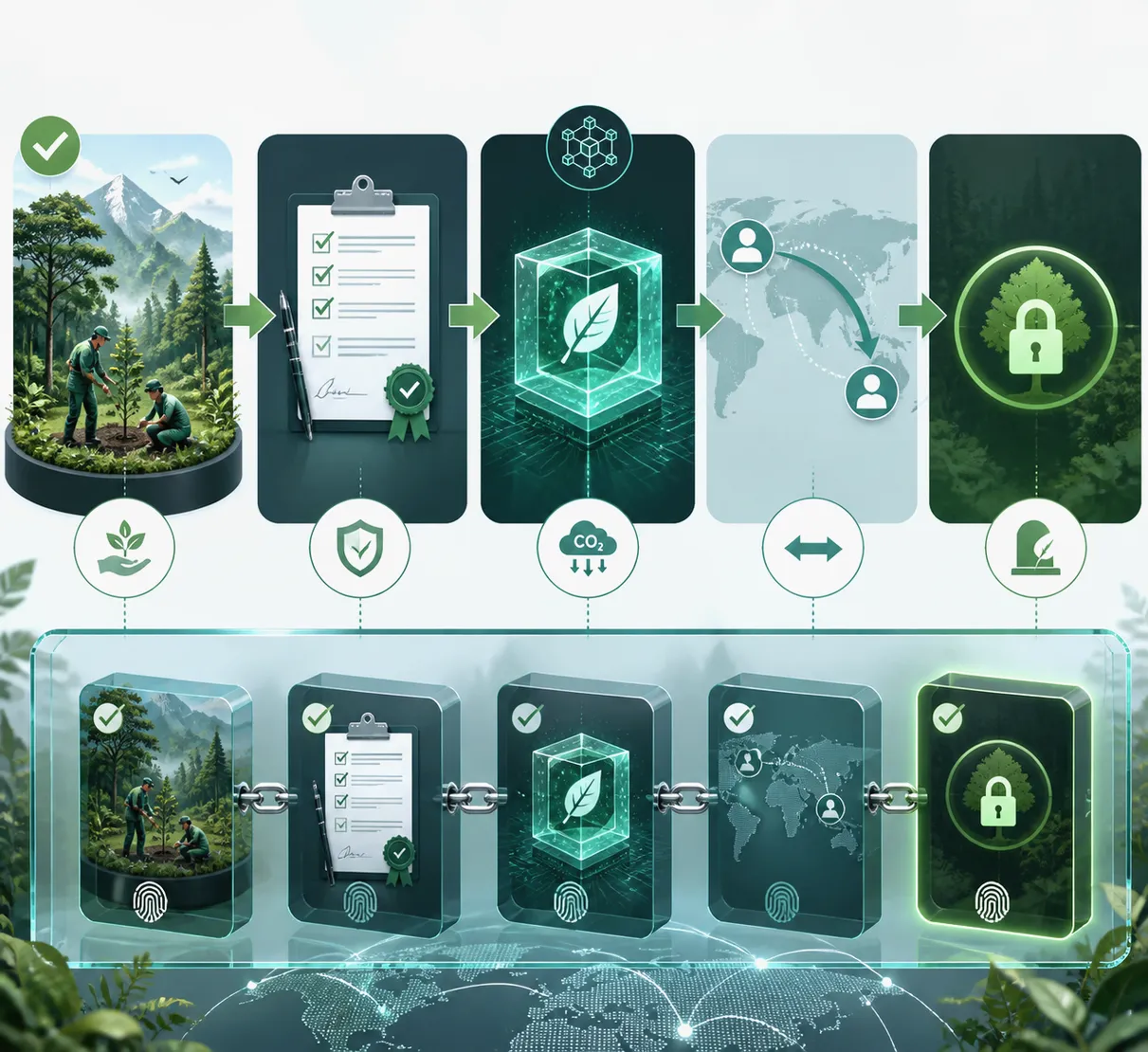
One of the most discussed use cases is blockchain carbon credits. Carbon markets need credible measurement, reporting, and verification. A digital ledger can track a credit from issuance through transfers to retirement, helping buyers verify whether a specific unit has already been used to support an emissions claim.
For example, a registry might assign every verified credit a unique digital identifier. When a company retires that credit, the retirement event can be permanently recorded alongside information such as the project type, vintage year, methodology, and verification documentation. This does not replace independent validation, but it can make the audit trail easier to review.
The most important rule is quality before tokenization. If the underlying reforestation project has weak monitoring or inflated assumptions, putting its data on a blockchain does not fix the problem. Robust methodologies, third-party assurance, biodiversity safeguards, and transparent project governance still matter more than the technology layer.
Renewable energy certificates and real-time tracking
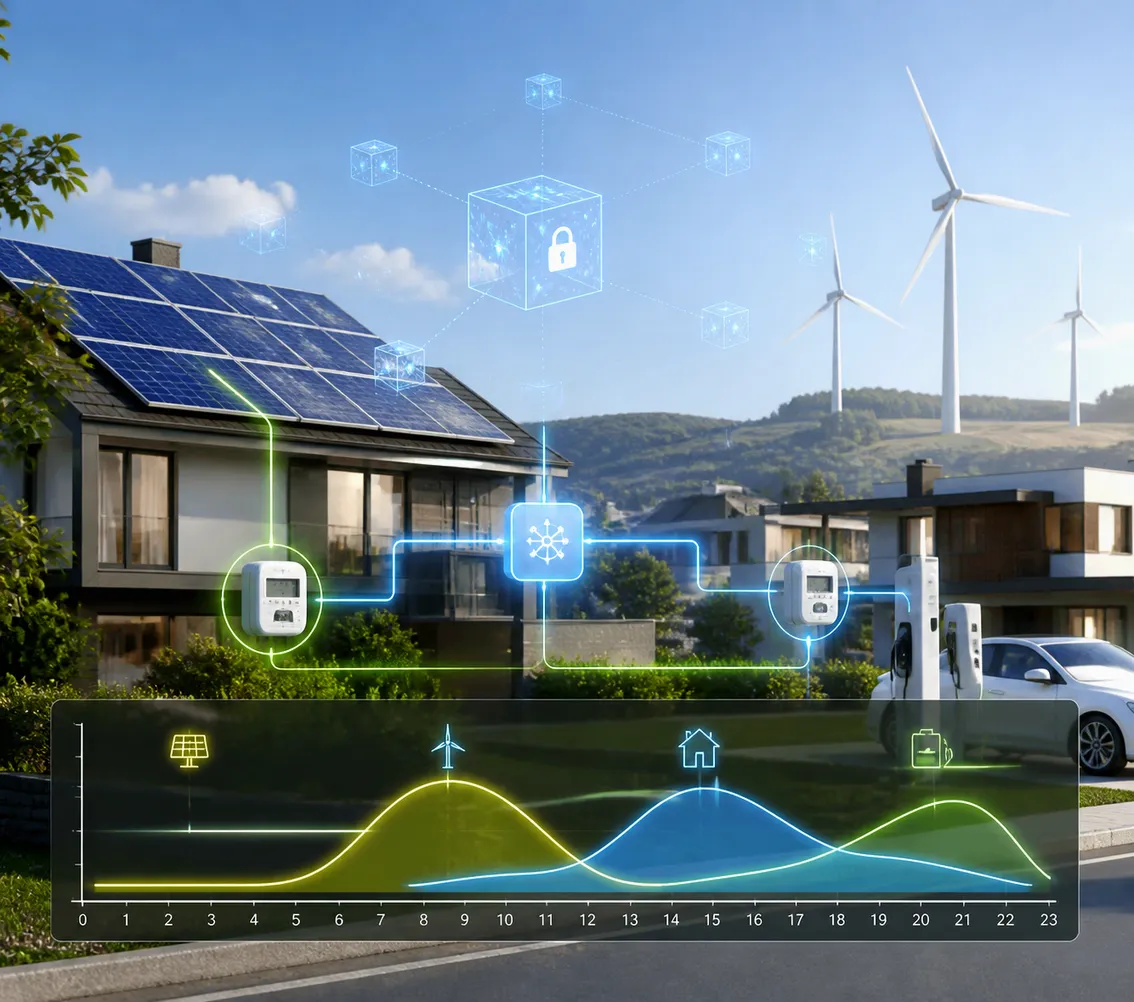
Renewable energy is another promising field for green blockchain solutions. Solar panels, wind turbines, and other distributed assets generate electricity at many locations and at different times. Tracking the environmental attributes of that electricity can be administratively complex.
Blockchain-based systems can connect smart meters, Internet of Things sensors, and certificate registries to create a more granular record of generation and consumption. A business could potentially match its electricity use with renewable production in shorter time intervals rather than relying only on annual accounting. This approach may improve the credibility of clean-energy procurement claims, especially as companies seek more accurate 24/7 carbon-free energy reporting.
Still, sensor inputs require controls. Devices must be calibrated, data feeds need security, and auditors must be able to investigate anomalies. In blockchain for environmental sustainability, the “oracle problem”—making sure off-chain information entering the ledger is reliable—is often the hardest part.
Supply-chain visibility for lower-impact products
From coffee and cotton to batteries and recycled materials, supply chains produce environmental claims that consumers and regulators increasingly expect brands to prove. Blockchain can support a digital product passport that records material origin, certifications, shipments, repairs, and recycling events.
A battery manufacturer, for instance, could use a permissioned blockchain to document responsible mineral sourcing and later record recovery of valuable materials at end of life. This may help companies identify gaps in supplier evidence, reduce manual paperwork, and provide customers with clearer product-level information.
However, privacy must be designed in from the beginning. Suppliers may not want commercial terms or exact sourcing volumes exposed publicly. Practical implementations often use selective disclosure, encrypted documents, or hashes that verify a document has not changed without publishing its full contents.
Choosing an energy-conscious blockchain design
A credible sustainability project should examine the environmental footprint of the network itself. Proof-of-stake networks generally use far less electricity than proof-of-work systems because they do not depend on energy-intensive mining competition. Permissioned ledgers can also be efficient when a limited set of trusted organizations needs to share records.
Before selecting a platform, project teams should ask:
- Does the ledger need to be public, private, or a hybrid model?
- What data truly needs immutability, and what can stay in an ordinary database?
- How will energy use, transaction costs, and network reliability be measured?
- Who can submit, correct, or challenge environmental data?
- Can independent auditors export and inspect the records?
- What happens if a sensor, verifier, or project developer provides inaccurate information?
These questions prevent “blockchain washing,” where technology is used mainly as a marketing label rather than as a useful accountability mechanism.
Exploring the digital-asset ecosystem responsibly
People researching tokenized climate assets or blockchain infrastructure may also want access to a major exchange for education and market research. Register with Binance using referral code CRYPTONEWER to access the stated promotion: a 20% fee discount and up to $10,000 in benefits, subject to Binance’s eligibility requirements, regional availability, and current promotional terms.
Digital assets are volatile, and tokenized environmental products can carry additional risks involving liquidity, project quality, regulation, custody, and marketing claims. Review the project documentation, verify the retirement mechanism for any environmental asset, and never treat a sustainability narrative as evidence of financial value.
Practical roadmap for sustainable blockchain technology
Organizations get better results when they start with a narrow and measurable workflow. First, identify the exact claim that needs evidence—such as “this batch contains 60% recycled material” or “these credits were retired once.” Next, map the people and systems that create the data. Then choose a governance model covering verification, dispute resolution, data access, and long-term maintenance.
A useful pilot should define performance indicators beyond transaction volume. Teams can track audit time saved, rate of documentation errors, number of duplicate claims prevented, reporting turnaround, energy consumed per process, and outcomes for project communities. If the system cannot improve one of those measures, a simpler database may be the more sustainable choice.
Frequently asked questions about blockchain for environmental sustainability


Can blockchain directly reduce carbon emissions?
Blockchain does not directly cut emissions on its own. It can support emissions reductions by improving measurement, traceability, financing, and accountability around activities such as renewable generation, efficient logistics, and verified climate projects.
Are all blockchain carbon credits trustworthy?
No. Trust depends on the underlying project, the methodology, independent verification, registry rules, and whether retirement is clearly documented. A blockchain record can strengthen traceability, but it cannot guarantee that a project delivered the environmental benefit it claims.
What is the best use case for green blockchain solutions?
The best use case is usually one with multiple parties that need a shared, tamper-evident record but do not fully trust a single organization to control it. Environmental certificate tracking, supply-chain passports, and transparent climate-finance reporting are common examples.
Related posts:
 Blockchain in the Music Industry: A Powerful Shift in Music Rights and Royalties
 Essential Answer to What Is a Blockchain Fork? Types, Risks, and Real Examples
 How Blockchain Ensures Data Security With Proven Design Patterns, Threat Models, and Real-World Checklists
 How Blockchain Can Change Education: A Powerful Shift for Credentials, Learning, and Access