

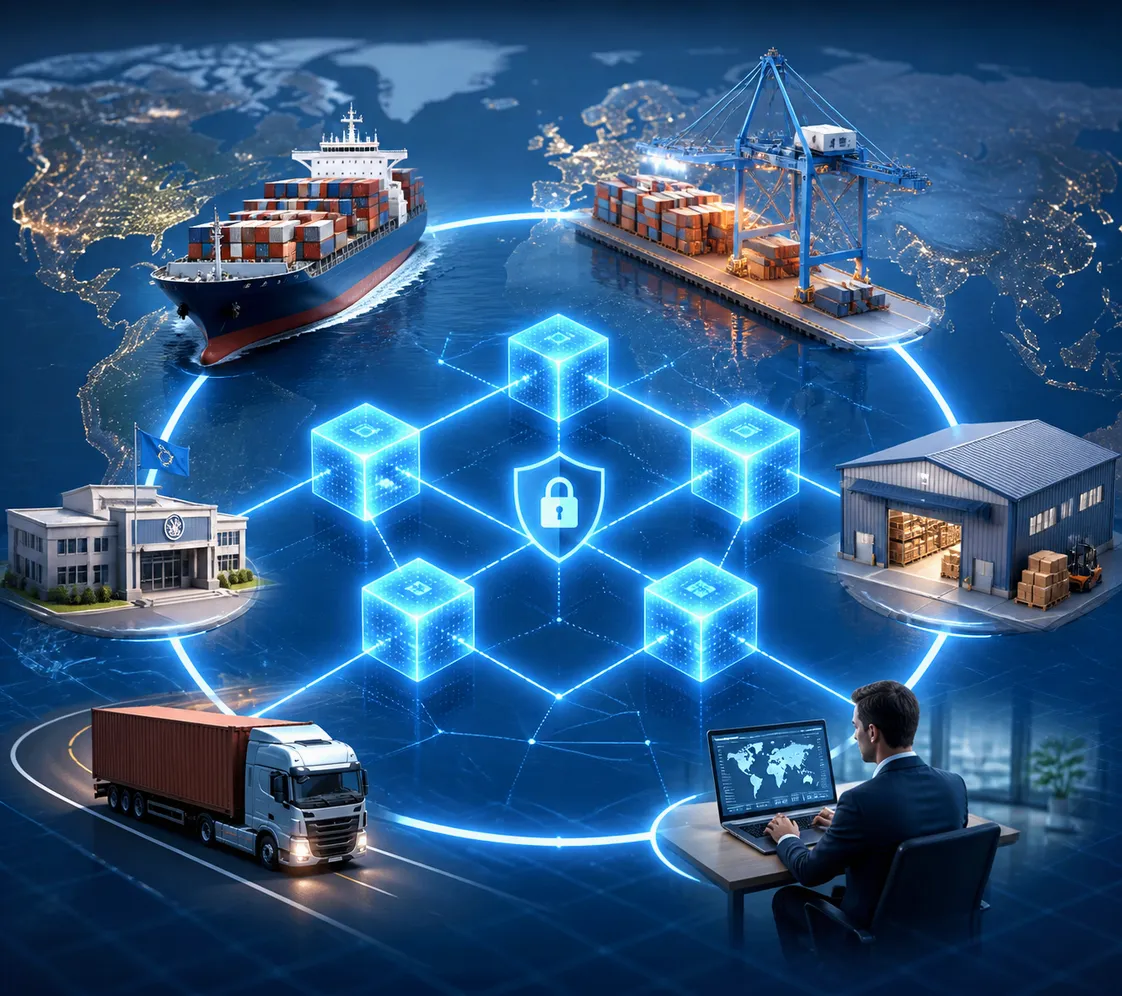
Blockchain in Logistics and Shipping is moving from a promising concept to a practical tool for companies that need cleaner data, faster document handling, and more confidence in international supply chains. A single container can involve freight forwarders, carriers, ports, customs authorities, insurers, banks, warehouses, and buyers. When each party operates from a separate system, shipment status and paperwork can become fragmented, slow, and difficult to verify.

- 50% trading fee discount
- 20% fee cashback
- $6,200 futures bonus

- 20% trading fee discount
- $30,050 signup bonus

- 20% fee cashback
- $10,000 bonus

- 20% trading fee discount
- $100 signup bonus
- $10,000 futures bonus

- 20% fee cashback
- $60,000 futures bonus

- 20% fee cashback
- $8,000 bonus

- Bonus pack worth $100–$1,500 USDT
- Fee discount
A blockchain-based logistics network does not magically move cargo faster. Instead, it creates a shared, tamper-evident record of important events: when a container was sealed, when it entered a terminal, whether a temperature threshold was breached, and when ownership documents changed hands. That shared record can reduce disputes caused by inconsistent data and make audits substantially easier.
What blockchain means in logistics
A blockchain is a database where records are grouped into blocks and linked cryptographically. In a blockchain logistics solution, authorized participants can validate and view the same agreed-upon information without relying on one company’s private spreadsheet or email trail as the source of truth.
In shipping, this model is most useful when many organizations need to coordinate but do not fully trust one another. Permissioned blockchain networks are common because they can restrict access by role. For example, a customer may see location milestones and delivery documentation, while a customs agency sees declarations and a financial institution sees only the data required for trade finance.
The real value is not simply putting documents “on-chain.” It is creating reliable workflows around events, approvals, identities, and data-sharing permissions.
Where blockchain in logistics and shipping creates value
1. Digital bills of lading and trade documents
Paper bills of lading, certificates of origin, commercial invoices, and inspection records can take days to circulate. Missing signatures, duplicate versions, and courier delays can hold up cargo even after a vessel arrives. Digitized documents supported by blockchain can provide a clear history of issuance, endorsement, transfer, and verification.
This approach helps participants confirm that a document is authentic and current. However, the legal recognition of electronic transferable records differs by jurisdiction. Businesses should confirm local regulations, contractual requirements, and the governing law before replacing established paper workflows.
2. Container tracking with IoT data
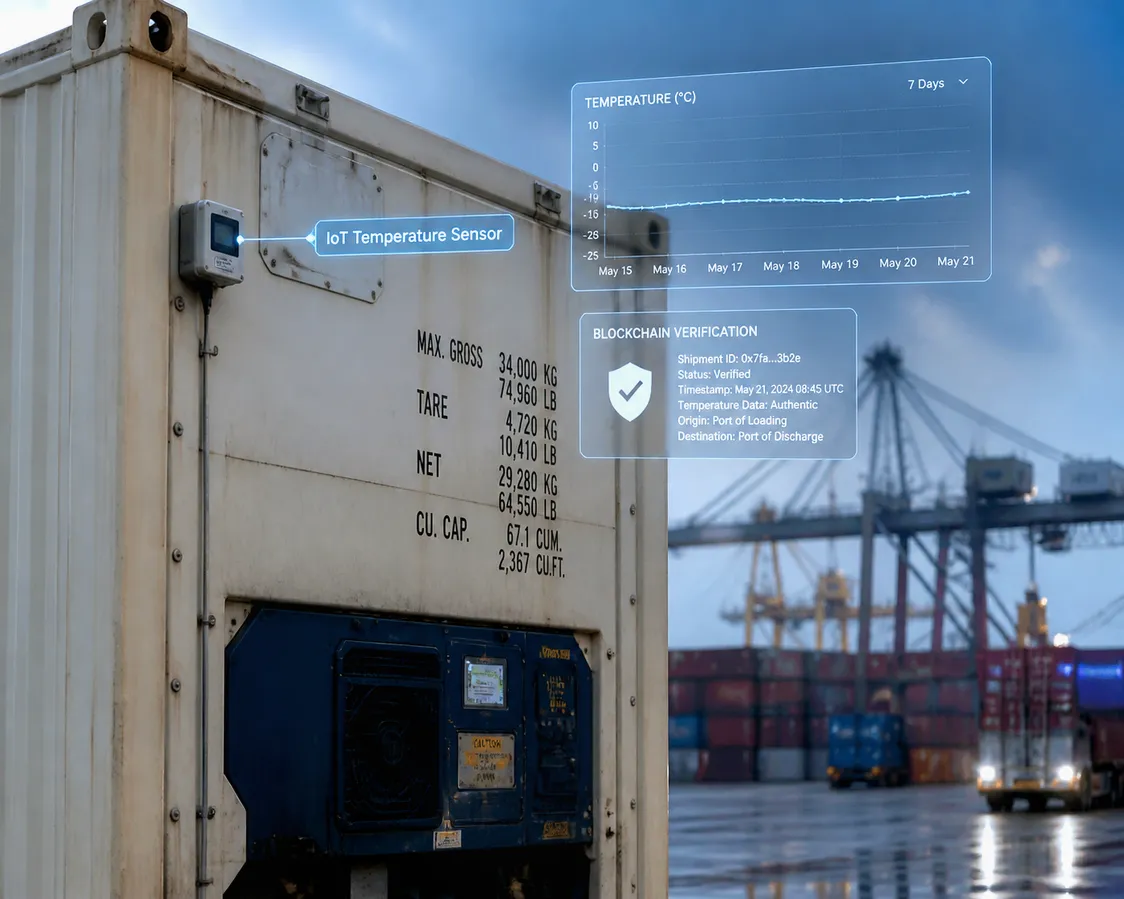
Internet of Things sensors can capture temperature, humidity, shock, location, and door-open events. Blockchain can timestamp selected sensor readings and make them available to permitted supply-chain partners. For cold-chain cargo such as vaccines, seafood, or specialty pharmaceuticals, this can support stronger evidence that handling requirements were met.
A key limitation remains: blockchain can preserve data after it is recorded, but it cannot prove that a faulty sensor produced accurate readings. Companies need calibrated devices, secure hardware, exception procedures, and independent checks. This is often described as the oracle problem—the quality of off-chain information still determines the quality of the blockchain record.
3. Customs compliance and provenance
Customs clearance depends on accurate product descriptions, values, origin claims, and supporting records. A shared audit trail can help authorities and importers verify provenance and reduce manual reconciliation. It may also improve traceability for regulated goods, conflict-mineral reporting, food safety investigations, and anti-counterfeit programs.
For exporters, the benefit is not merely visibility. Better traceability can make it easier to isolate affected batches during recalls, demonstrate compliance to buyers, and identify where documentation errors repeatedly enter the process.
4. Smart contracts for operational milestones
Smart contracts are programs that perform predefined actions when agreed conditions are met. In a shipping workflow, a smart contract might release a notification when a container reaches a port, trigger a quality-review task after a temperature exception, or mark an invoice as eligible for payment once proof of delivery is validated.
Businesses should avoid treating smart contracts as fully autonomous legal agreements by default. The code must reflect commercial terms accurately, and there must be a clear process for exceptions such as port congestion, force majeure, incorrect data feeds, or damaged cargo. Human review remains essential for high-value and high-risk transactions.
Benefits and trade-offs for supply-chain teams
The main benefits of blockchain shipping tracking are improved transparency, a stronger audit trail, less duplicate data entry, and faster reconciliation between parties. These improvements can reduce administrative friction, especially on routes with complex documentation and frequent handoffs.
Yet implementation is not simple. A network only works when partners agree on data standards, governance, privacy controls, onboarding rules, and responsibility for correcting errors. Blockchain also does not replace transport management systems, warehouse platforms, or port community systems. In many cases, it works as a trusted coordination layer connected to those existing tools.
| Potential benefit | Practical requirement |
|---|---|
| Shared shipment visibility | Common event definitions and reliable data feeds |
| Faster document verification | Legal acceptance of electronic records |
| Better recall and provenance response | Product-level identifiers and disciplined scanning |
| Automated workflow actions | Tested smart-contract logic and exception handling |
| Reduced reconciliation effort | Partner adoption and interoperable systems |
A practical adoption roadmap
Start with one painful, measurable workflow rather than an ambition to tokenize an entire supply chain. Good pilots often focus on a single trade lane, a specific document type, or temperature-sensitive cargo. Define baseline metrics before launch: document processing time, number of disputes, dwell time, manual touchpoints, and cost per shipment.
Next, choose what information belongs on-chain. Large files, commercially sensitive data, and personal information are often stored off-chain, while the blockchain stores hashes, timestamps, permissions, and references that make tampering detectable. This design can support privacy and lower storage costs.
Governance should be decided early. Participants need answers to practical questions: Who runs nodes? Who can add data? How are access rights revoked? How are errors corrected while preserving audit history? What happens when a partner leaves the network? A technically elegant platform without clear governance rarely gains durable adoption.
Why crypto literacy matters for logistics innovation
As supply chains experiment with tokenized documents, digital settlement, and blockchain-based trade finance, teams benefit from understanding wallets, transaction fees, network security, and counterparty risks. That does not mean every logistics company should hold crypto assets. It means decision-makers should understand the infrastructure they may encounter.
For readers who want to explore the broader digital-asset ecosystem, join Binance with referral code CRYPTONEWER. Eligible new users can access a 20% fee discount and up to $10,000 in benefits, subject to Binance terms, availability, identity verification, and regional restrictions. Digital assets are volatile, so research products carefully and never treat promotional benefits as a substitute for risk management.
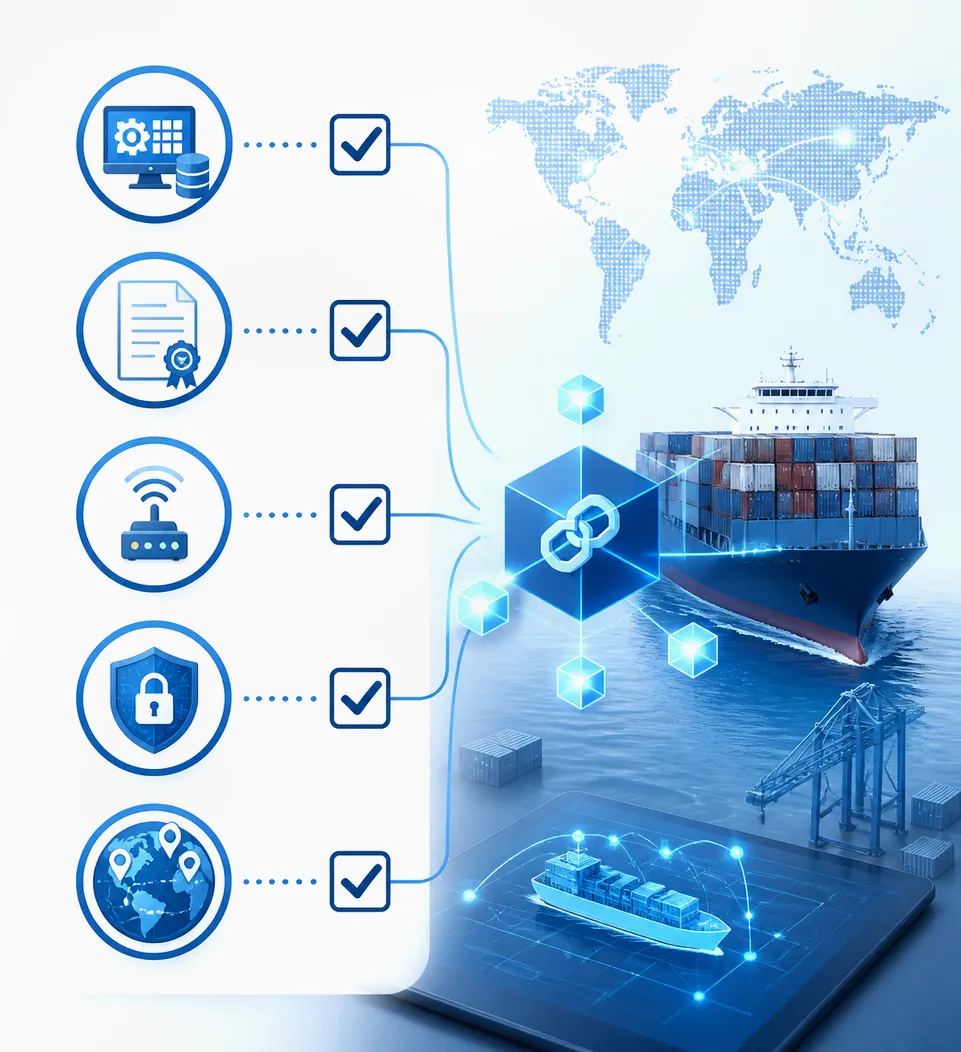
Questions to ask before selecting a blockchain logistics platform

- Is the network permissioned or public, and why does that fit our data-sharing needs?
- Can it integrate with our ERP, TMS, WMS, customs, and IoT systems?
- Which data standards does it support, including shipment event and product-identifier formats?
- How are confidential prices, customer information, and personal data protected?
- What legal framework supports digital bills of lading and electronic signatures on our routes?
- How will partners be onboarded, trained, and incentivized to contribute accurate data?
- What metrics will demonstrate that Blockchain in Logistics and Shipping is producing a return on investment?
The strongest projects keep the scope grounded in operational reality. They treat blockchain as one component of a broader digital supply-chain strategy, alongside data quality, interoperable APIs, cybersecurity, and collaborative commercial rules.
Related posts:
 What Is the MET (Meteora) Coin? A Smart Guide to Buying MET
 How Blockchain Can Change Education: A Powerful Shift for Credentials, Learning, and Access
 What is the MANTRA (MANTRA) Coin, and how to buy: Essential guide with step‑by‑step Binance walkthrough
 What Is a Blockchain Protocol? A Powerful Guide to How Networks Agree