
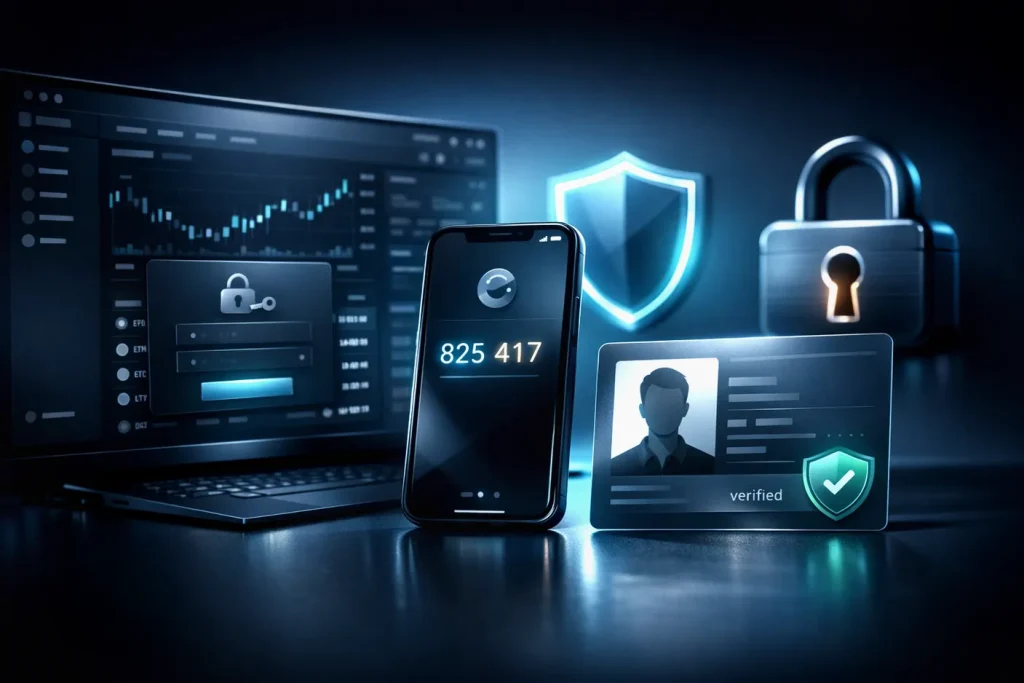
Keeping your exchange account locked down is non‑negotiable when you’re moving funds around the crypto markets. If you’re considering MEXC or already use it, understanding how MEXC Security Features (KYC, 2FA) work—and how to set them up properly—can make a decisive difference in your risk profile. This in‑depth guide covers MEXC KYC verification, two‑factor authentication, anti‑phishing protections, withdrawal whitelists, device management, and more, plus best practices you can apply today.

- 20% trading fee discount
- $100 signup bonus
- $10,000 futures bonus

- 50% trading fee discount
- 20% fee cashback
- $6,200 futures bonus

- 20% fee cashback
- $60,000 futures bonus

- 20% fee cashback
- $8,000 bonus

- 20% trading fee discount
- $30,050 signup bonus

- 20% fee cashback
- $10,000 bonus
Want lower trading fees while you harden your account security? New users can sign up on MEXC with code mexc-CRYPTONEWER to get 20% fee cashback and up to $8,000 in bonuses.
Why MEXC Security Features (KYC, 2FA) matter
- Attackers target exchanges because a single breached account can mean instant access to liquid assets.
- Many compromises stem from weak passwords, recycled credentials, or fake login pages.
- MEXC provides layered defenses—identity verification (KYC), time‑based one‑time passwords (2FA), anti‑phishing codes, withdrawal whitelists, device controls, and API restrictions—to reduce the chance that a single mistake becomes a costly loss.
Long‑tail (and useful) concepts to focus on:
– how to enable MEXC 2FA
– MEXC KYC verification steps
– MEXC account security checklist
– MEXC withdrawal whitelist setup
– anti‑phishing code MEXC
KYC on MEXC explained
Know Your Customer (KYC) is an identity verification process that aligns with global compliance standards. While specifics can vary by region and over time, the typical MEXC KYC flow looks like this:
- Submit personal information: legal name, date of birth, nationality, and residential address.
- Provide government‑issued ID: passport, national ID card, or driver’s license (requirements depend on your region).
- Complete liveness or facial verification: a quick on‑screen prompt or selfie process to ensure the ID matches the person applying.
Benefits of completing KYC:
– Higher withdrawal limits and smoother fiat on‑ramps/off‑ramps where available.
– Faster resolution when you need help from support.
– Extra risk controls tied to a verified identity, discouraging account takeovers and abuse.
Note: Regulations evolve, and availability differs by jurisdiction. Always check KYC requirements inside your MEXC account’s Identity Verification page.
Step‑by‑step MEXC KYC verification
Web
1) Log in to your MEXC account.
2) Hover over your profile icon and select Identity Verification.
3) Choose the level available for your region (e.g., Basic or Advanced).
4) Enter personal details exactly as they appear on your ID.
5) Upload clear photos of your ID and complete the liveness/selfie check.
6) Submit and wait for review; many verifications complete within minutes to hours.
App
1) Open the MEXC app and tap the profile icon.
2) Go to Security Center or Identity Verification (naming may differ slightly by version).
3) Follow the same steps as the web flow.
Pro tips for KYC success
– Use a well‑lit environment and flat background for your ID photos.
– Ensure your full name and ID number are perfectly legible.
– Avoid using a VPN during KYC to prevent mismatch flags.
2FA on MEXC: the cornerstone of your security
Two‑Factor Authentication (2FA) adds a dynamic, time‑sensitive code to your login, withdrawals, and sometimes trading or API actions. MEXC supports app‑based TOTP (Time‑based One‑Time Password) like Google Authenticator and may also allow SMS/email confirmations depending on region.
Recommended: TOTP via an authenticator app
– Authenticator apps work offline and are safer than SMS, which can be vulnerable to SIM‑swap attacks.
– Codes refresh every 30 seconds and are generated from a secret seed you store during setup.
How to enable MEXC 2FA (Authenticator app)
1) Log in and open Security Center.
2) Select Google Authenticator (or Authenticator App) and click Enable.
3) Scan the displayed QR code with your authenticator app. If scanning is not possible, manually enter the 16‑digit secret.
4) Back up the 16‑digit backup key offline and never share it.
5) Enter the 6‑digit code from your app to confirm.
Testing and recovery
– After setup, log out and back in to confirm 2FA is working.
– Store backup codes/secret in a password manager or an offline medium; this is crucial if you lose your phone.
SMS/email 2FA considerations
– If you must use SMS, set up number‑lock with your carrier and use a post‑paid plan with strong account security.
– Keep email secured with its own strong password and 2FA (preferably TOTP or security keys if your email provider supports them).
Go beyond the basics: advanced MEXC security settings
Anti‑phishing code
– Create a short custom code that MEXC will display in official emails to help you spot phishing.
– If an email lacks your code or looks suspicious, assume it’s fake and navigate to the site manually.
Withdrawal address whitelist
– Enable whitelist mode so funds can only be withdrawn to pre‑approved addresses.
– Keep your whitelist minimal and verify each address on‑chain before adding.
Device and session management
– Review currently logged‑in devices and active sessions.
– Revoke unknown sessions and change your password if you see anything unfamiliar.
Security or fund password
– MEXC provides an additional password layer sometimes called a “Fund Password” for sensitive actions like withdrawals or API operations.
– Make this different from your login password and store it safely.
API key management for algorithmic traders
– Create API keys with least privilege: only enable the permissions you need (read, trade, withdraw).
– Use IP whitelists so your keys only work from your server’s static IPs.
– Rotate keys periodically and revoke anything unused.
Login and withdrawal alerts
– Turn on notifications for logins from new locations, password changes, 2FA resets, and withdrawals.
– Instant alerts help you clamp down on a breach before funds move.
MEXC account security checklist you can apply today
- Use a password with 14+ random characters stored in a reputable password manager.
- Enable TOTP‑based 2FA, not just SMS.
- Set your anti‑phishing code and verify it on all MEXC emails.
- Turn on withdrawal address whitelist and keep it locked down.
- Create a unique fund/security password distinct from your login.
- Lock down your email with strong 2FA—your email is the recovery gateway.
- Keep your operating system and browser up to date.
- Bookmark the official MEXC site and verify the URL before logging in.
- Never share QR codes, backup keys, or screenshots of your 2FA secret.
Common threats and how MEXC defenses help
Phishing and fake sites
– Threat: Look‑alike domains and ad scams.
– Defense: Anti‑phishing codes, URL hygiene, and login alerts.
SIM‑swap attacks
– Threat: Attackers hijack SMS to intercept codes.
– Defense: Prefer TOTP 2FA; carrier PIN locks; avoid SMS where possible.
Malware and keyloggers
– Threat: Steals credentials and cookies.
– Defense: Password managers, secure devices, regular updates, and device/session reviews inside MEXC.
Social engineering
– Threat: Impersonation of support staff or influencers.
– Defense: Never share your codes; verify via official channels and in‑app notifications.
How KYC complements 2FA for layered protection
- 2FA verifies “you have your device,” while KYC verifies “you are you.”
- Together, they raise the bar for attackers, reduce withdrawal fraud, and speed up support when you need help.
- Completing KYC can unlock higher limits and features, reducing operational friction while keeping security tight.
Quick start for new users who want security and savings
If you’re setting up your MEXC account for the first time, you can secure your profile and claim fee benefits in one run:
1) Register using this link to auto‑apply the referral: Sign up on MEXC with code mexc-CRYPTONEWER.
2) Verify your email and set a strong login password.
3) Enable TOTP 2FA before depositing any funds.
4) Complete KYC so you can access higher limits and faster service.
5) Set anti‑phishing code, withdrawal whitelist, and a separate fund/security password.
6) If you trade via API, create keys with IP whitelists and least‑privileged permissions.
New account benefits
– 20% fee cashback credited automatically per the campaign rules.
– Up to $8,000 in bonuses for qualifying deposits and trades (see terms inside your account).
FAQs about MEXC Security Features (KYC, 2FA)
Can I trade on MEXC without KYC?
– Availability varies by region and product type, and policies can change. Completing KYC generally unlocks higher withdrawal limits and more features.
How long does KYC take on MEXC?
– Many verifications complete within minutes to a few hours, though it can take longer if images are unclear or additional checks are required.
Which 2FA method should I use?
– Prefer TOTP (authenticator app). It’s more resilient than SMS to SIM‑swap attacks.
What if I lose access to my 2FA device?
– Use your backup codes/secret to restore 2FA in your authenticator. If you didn’t back up, contact MEXC Support and be prepared to pass enhanced verification.
Is email 2FA enough?
– Treat email 2FA as an additional layer but not a replacement for TOTP. Secure your email account with its own robust 2FA.
How do I know an email is really from MEXC?
– Check the sender domain carefully and look for your unique anti‑phishing code. When in doubt, navigate to the official website manually and view in‑app notifications.
Best practices beyond the exchange
- Segment devices: Avoid installing random extensions on the same browser you use to trade.
- Use read‑only API keys on analytics dashboards; never paste trading keys into third‑party tools you don’t fully trust.
- Keep small operational balances on the exchange and store long‑term holdings in self‑custody solutions you control.
- Maintain a written incident plan: whom to contact, which sessions to revoke, and how to reset credentials quickly.
Ready to lock in security and benefits
- Harden your account with MEXC Security Features (KYC, 2FA) and the advanced protections outlined above.
- For lower fees and new‑user rewards, register via this referral to auto‑apply the code: mexc-CRYPTONEWER — 20% fee cashback and up to $8,000 bonus.
Security is a habit. Set it up once, review it periodically, and keep learning as the threat landscape evolves.
Related posts:
 High-Impact Top Blockchain Use Cases for Startups That Drive Real ROI
 Proven Bitget Account Creation Guide with Security Tips and Bonus Maximization
 Binance news today essential updates and market insights for crypto traders
 What is the MSTRon (MicroStrategy (Ondo)) Coin, and how to buy — a smart 2026 guide