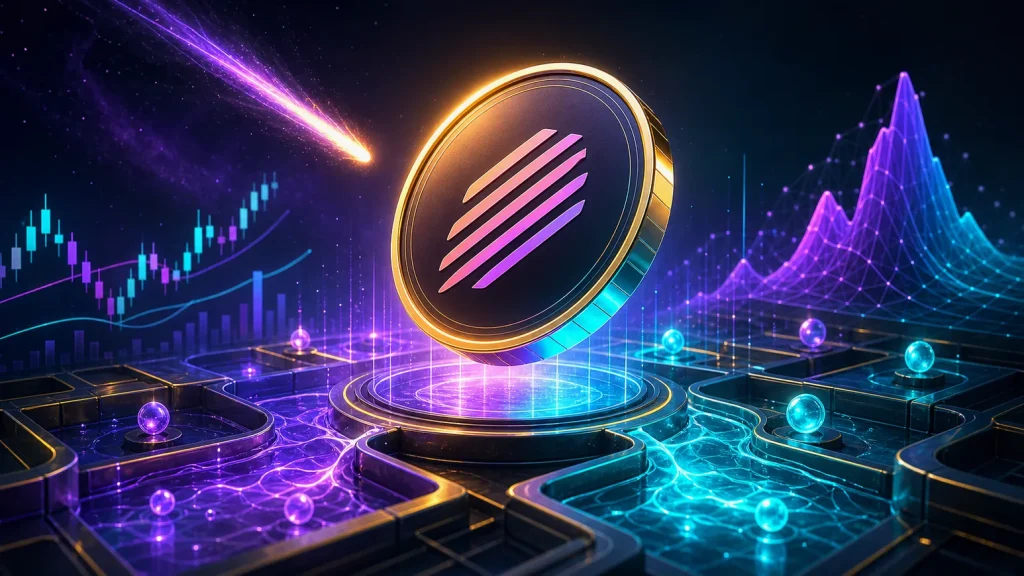
MET is the native token associated with Meteora, a Solana-based decentralized liquidity infrastructure protocol. If you are researching what is the MET coin or looking for a practical way to buy Meteora (MET), it is important to separate the token from the platform: Meteora is the liquidity and launch infrastructure, while MET is the Solana token designed for access, coordination, and ecosystem participation. (static.meteora.ag)

- 20% trading fee discount
- $100 signup bonus
- $10,000 futures bonus

- 20% fee cashback
- $8,000 bonus

- Bonus pack worth $100–$1,500 USDT
- Fee discount

- 50% trading fee discount
- 20% fee cashback
- $6,200 futures bonus

- 20% fee cashback
- $60,000 futures bonus

- 20% fee cashback
- $10,000 bonus

- 20% trading fee discount
- $30,050 signup bonus
Meteora’s product stack includes its Dynamic Liquidity Market Maker (DLMM), Dynamic AMM frameworks, Dynamic Bonding Curve launch tooling, vaults, and liquidity-management modules. Put simply, the protocol gives users and projects tools to create markets, deploy liquidity, and manage on-chain token launches on Solana. MET is intended to connect participation across that ecosystem rather than represent ownership in a company.
Quick answer: MET is a fungible SPL token on Solana. It is not a share of Meteora, does not provide dividends, and does not automatically entitle holders to protocol profits.
What Does the Meteora MET Token Do?
The central idea behind the Meteora MET token is ecosystem coordination. According to Meteora’s published token documentation, MET can be held, sent, received, and used in Meteora liquidity pools. Planned and phased features include access or priority for selected token launches and liquidity programs, plus the potential to stake MET for non-transferable engagement points that could affect participation tiers or access benefits.
That wording matters for anyone considering a MET coin purchase. MET is described as an access and coordination asset, not an equity investment. The documentation specifically says it carries no ownership, governance, profit-sharing, redemption, or repayment rights. Its market value can move sharply because it is determined by supply and demand, not by a price peg or external asset backing.
MET Tokenomics: Supply, Circulation, and Unlocks

MET has a fixed maximum supply of 1 billion tokens. Meteora’s 2025 token-holder report states that the mint authority was permanently burned, meaning additional MET cannot be created through future minting. At the token generation event, 48% of the supply—480 million MET—entered circulation, while the other 52% was designated for the Team and Meteora Reserve under long-term vesting. (ir.meteora.ag)
Here is the high-level allocation picture investors should understand before buying MET:
- 15% — LP Stimulus Plan
- 15% — Mercurial Stakeholders
- 5% — Mercurial Reserve
- 3% — Launchpads and Launchpool Ecosystem
- 2% — Off-Chain Contributions
- 3% — TGE Reserve
- 3% — Jupiter Stakers
- 2% — M3M3 Plan
- 18% — Team
- 34% — Meteora Reserve (ir.meteora.ag)
The fully unlocked allocations at launch account for the 48% circulating amount. The Team and Meteora Reserve allocations are scheduled to vest over six years according to the annual report. Token unlock schedules can influence available supply and market behavior, so checking the latest official Meteora investor-relations dashboard before trading is a sensible habit.
How to Buy Meteora (MET) on Binance
For users who prefer a centralized exchange experience, Binance currently provides a Meteora purchase page and lists multiple potential buying routes, subject to account eligibility and local availability. These may include card purchases, Apple Pay or Google Pay, Binance Convert, and the Spot market. Available methods, trading pairs, and services vary by jurisdiction, so always confirm what appears inside your own Binance account before depositing money. (binance.com)
Step 1: Create and verify your Binance account
You can register for Binance with referral code CRYPTONEWER. This promotion advertises a 20% trading-fee discount and up to $10,000 in benefits. Referral rewards, fee rebates, eligibility requirements, country availability, and campaign values can change, so review the offer displayed during registration and in the Binance Rewards Hub before relying on a specific benefit.
Binance requires identity verification for MET purchases through its platform. Verification also affects the payment methods and limits available to an account.
Step 2: Fund the account
After verification, choose the funding route available in your region. Depending on location and account status, Binance says users may be able to use a debit or credit card, bank transfer, P2P, or an existing cryptocurrency balance. Card-provider charges or bank fees may apply in addition to the price quote shown by the exchange.
Step 3: Buy MET with Convert or Spot
For a straightforward purchase, open Trade → Convert & Block Trade, select a supported asset such as USDC in the “From” field, choose MET in the “To” field, inspect the quote, and confirm before it expires. This route can be easier for beginners because it avoids a detailed order-book screen.
For more control, use Trade → Spot, search for MET, and select an available pair, such as MET/USDC where supported. A market order buys immediately at the best available price, while a limit order lets you set the maximum price you are willing to pay. Binance notes that supported pairs can differ by region, so do not assume a pair shown in a guide is available to every account.
Step 4: Decide where to hold your MET
Keeping MET on Binance is convenient for active trading, but withdrawing to a self-custody Solana wallet gives you direct control of the asset. If you withdraw, select the correct Solana network, paste the wallet address carefully, and consider sending a small test transaction first. Blockchain transfers are generally irreversible once confirmed, and Meteora’s documentation places responsibility for private-key and wallet security on the holder.
Buying MET Through Solana DeFi
Experienced Solana users can also acquire MET through decentralized trading venues that support the token. This approach generally requires a compatible self-custody wallet, enough SOL for network fees, and careful token verification. Never buy a token merely because its ticker says MET: ticker symbols are easy to copy, and fake assets can appear in wallet interfaces and search results.
Use Meteora’s official channels and verified token information before approving a swap. Review the pool liquidity, price impact, and route before signing any transaction. A decentralized exchange transaction may offer more direct on-chain access, but it also shifts responsibility for wallet security, token verification, slippage settings, and transaction approvals entirely to you.
Key Risks Before You Buy Meteora Coin
Crypto assets such as MET are volatile. A fixed supply does not guarantee price appreciation, and a token’s future utility roadmap does not guarantee that every planned feature will launch or generate demand. MET’s published materials say functionality may be introduced in phases and can be updated through official communications and technical changes.
Before purchasing, consider these practical checks:
- Read the official documentation. Understand the difference between holding MET, trading MET, staking when available, and supplying liquidity.
- Review token unlocks. Future vesting can increase the tradable supply over time.
- Check liquidity and spread. Thin markets can make market orders expensive due to slippage.
- Avoid leverage for a first purchase. Spot buying is easier to size and manage than derivatives.
- Use a defined budget. Only risk funds you can afford to lose, and do not treat promotional rewards as guaranteed investment returns.
- Secure the account and wallet. Enable two-factor authentication, use a unique password, and never share seed phrases or verification codes.
MET Coin Buying Checklist
- [ ] Confirm you are purchasing Meteora (MET), not another token with a similar ticker.
- [ ] Check whether MET is supported in your jurisdiction and on your Binance account.
- [ ] Compare the card, Convert, and Spot quotes before confirming.
- [ ] Read the displayed fees and minimum order amount.
- [ ] Use Binance referral code CRYPTONEWER at sign-up if the displayed referral terms work for your account.
- [ ] If withdrawing, verify the Solana address and network before sending MET.
- [ ] Keep a record of purchase price, fees, and transaction IDs for personal tracking and any applicable tax reporting.
Related posts:
 What Is XO (Xociety Token) Coin? A Powerful, Reality-Checked Guide to How to Buy XO
 What is the $PAAL(PAAL AI) Coin and how to buy — Actionable 2026 Guide
 What is the ADAUP(ADAUP) Coin, and how to buy — Essential 2026 Guide
 Field‑Tested Guide — What is the VOXEL (Voxies) Coin, and how to buy in 2026