
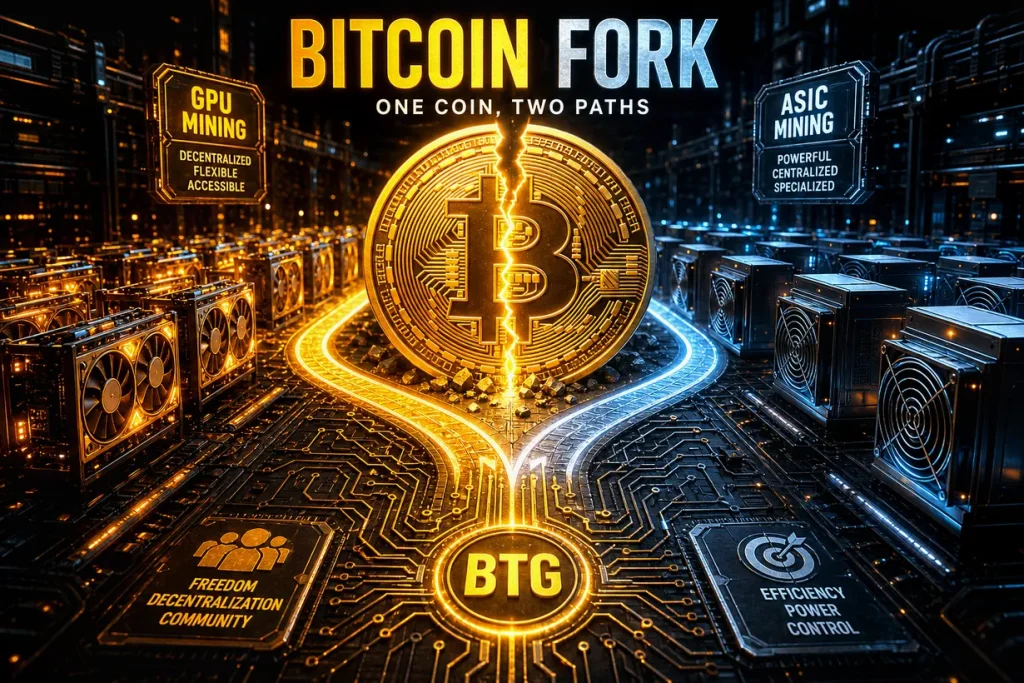
If you’ve ever wondered “What is the BTG(Bitcoin Gold) Coin, and how to buy,” you’re in the right place. Below I break down what Bitcoin Gold is, why it exists, how its network works, and the practical, no-fluff steps to acquire and store BTG safely in 2026. I’ll also flag the real risks (thin liquidity, prior 51% attacks, wallet support changes) so you can make informed decisions. Time context matters: today is June 14, 2026, and availability can shift—so I reference current sources throughout.

- 20% fee cashback
- $10,000 bonus

- 20% fee cashback
- $8,000 bonus

- 50% trading fee discount
- 20% fee cashback
- $6,200 futures bonus

- 20% trading fee discount
- $100 signup bonus
- $10,000 futures bonus

- 20% fee cashback
- $60,000 futures bonus

- 20% trading fee discount
- $30,050 signup bonus
TL;DR
- Bitcoin Gold (BTG) is a Bitcoin fork launched in 2017 to make mining more accessible to GPU miners rather than ASICs.
- Max supply is 21,000,000 BTG with a 10‑minute block time and halving events, most recently on April 24, 2024.
- Liquidity is low in 2026 and BTG is no longer listed on Binance; small exchanges list it intermittently—use limit orders and withdraw to a self-custody wallet.
- For broader crypto needs, you can still register on Binance—use code CRYPTONEWER—to get a 20% fee discount and up to $10,000 in benefits, then route stablecoins to an exchange that lists BTG.
What is Bitcoin Gold (BTG)?
Bitcoin Gold is a hard fork of the Bitcoin network. The fork point occurred on October 24, 2017 (block 491,407), and the BTG mainnet launched publicly on November 12, 2017. The project’s headline goal was to “make Bitcoin decentralized again” by switching mining away from Bitcoin’s SHA‑256 ASIC‑dominated landscape to a GPU‑friendly Proof‑of‑Work. (en.wikipedia.org)
In mid‑2018, BTG further personalized its PoW by adopting Equihash‑BTG (parameters 144,5), a memory‑hard variant designed to resist ASIC dominance. That changeover happened at block 536,200 on July 3, 2018, reinforcing the project’s GPU‑mining ethos. (bitcoingold.org)
Key facts and tokenomics (2026 snapshot)
- Supply: Maximum 21,000,000 BTG.
- Block time: ~10 minutes.
- Recent halving: April 24, 2024 (block 840,000), reducing the block reward to 3.125 BTG.
- Circulating supply reference: approximately 17.51 million BTG reported by major data aggregators in recent weeks.
These design choices mirror Bitcoin’s scarcity and issuance schedule while preserving BTG’s GPU‑mining identity. (en.wikipedia.org)
A short, candid history
Bitcoin Gold’s early days were eventful. The network suffered significant 51% attacks in May 2018 and again in January 2020—episodes that hurt confidence and led to at least one high‑profile delisting (Bittrex) after a dispute over compensation. Those incidents remain part of BTG’s risk profile and are essential context for buyers today.
Where BTG stands in 2026: availability and liquidity
As of June 14, 2026, BTG trading volumes are thin on most trackers. Coin aggregators show that activity concentrates on a small handful of centralized venues (e.g., Changelly PRO, HitBTC), with modest 24‑hour volumes. Expect wide spreads and shallow order books—use limit orders and only size positions you can comfortably fill and exit. (coingecko.com)
Important note about Binance: In 2024–2025, Binance announced a process to delist certain assets and convert user balances of some tokens—including Bitcoin Gold—into USDC based on a defined averaging window. Practically, this means you should not expect to buy BTG directly on Binance in 2026. (tradingview.com)
How to buy BTG in 2026 (step‑by‑step)
Below is a conservative, liquidity‑aware route for acquiring BTG while minimizing friction and avoiding unnecessary slippage.
1) Pick your route based on listing status
– If your preferred major exchange does not list BTG, choose a smaller CEX that does (check live markets on data sites before committing). Today, that typically means Changelly PRO or HitBTC, but always verify active pairs and volumes the day you trade.
2) Fund with a liquid base asset first
– Because BTG order books can be thin, start by acquiring a liquid base currency (USDT/USDC/BTC) on a high‑liquidity platform.
– If you don’t yet have an account on a deep‑liquidity venue, open one on Binance and complete KYC. Use this referral to save on fees and unlock perks: Join Binance with code CRYPTONEWER. You’ll get a 20% trading fee discount plus access to up to $10,000 in welcome benefits. Then withdraw stablecoins to the BTG‑listing exchange.
3) Transfer to the BTG‑listing exchange
– Withdraw your USDT/USDC/BTC from Binance to the chosen exchange that lists BTG. Always test with a small amount first, confirm the correct network, and double‑check deposit memos or tags if required.
4) Place a limit order, not a market order
– Thin order books can cause heavy slippage. Use limit orders and consider breaking your purchase into tranches. Watch the spread and depth; place your bids gradually to avoid moving the market.
5) Withdraw BTG to self‑custody
– After purchase, promptly withdraw BTG to a wallet you control. Never leave long‑term holdings on thin‑liquidity exchanges. I cover wallet options below.
Wallets and storage in 2026
- Trezor: Trezor previously supported BTG natively but announced that native BTG support in Trezor Suite ended as of February 2025. You can still hold keys on the device and manage BTG via compatible third‑party software if needed—check Trezor’s coin pages and documentation for the latest tooling. (trezor.io)
- Ledger: Ledger maintains a dedicated Bitcoin Gold wallet page and remains a common hardware option for BTG users. As always, verify the latest supported‑assets list before moving funds. (ledger.com)
- Full‑node / core wallet: For maximum sovereignty, consider the official BTG core wallet and run your own node. This demands more technical overhead but removes reliance on third‑party interfaces for transaction verification.
Security basics that still matter:
– Generate and store seed phrases offline; never type them into a website or share them with anyone.
– After any purchase on a small exchange, withdraw to self‑custody promptly.
– Keep firmware and wallet software updated to the latest compatible versions.
Why BTG exists: the GPU‑mining thesis
BTG’s founding thesis is that ASIC‑dominated mining centralizes power and undermines the “home miner.” By moving to Equihash‑BTG (144,5), the chain aimed to rebalance incentives toward commodity GPUs, widening miner participation. Whether GPU‑friendliness alone guarantees decentralization is debatable, but it explains BTG’s technical divergence from Bitcoin and speaks to the project’s ethos.
Risks you must weigh before buying BTG
- Network security history: Past 51% attacks in 2018 and 2020 are non‑trivial data points. Smaller PoW chains with concentrated hashpower can be more vulnerable to reorganizations and double‑spend attempts.
- Liquidity risk: In 2026, BTG’s daily volumes are low and spreads can be wide. Plan entries/exits carefully to avoid poor fills and consider the cost of withdrawing to self‑custody.
- Listing risk: Exchanges can delist assets; Binance executed a conversions program covering tokens such as BTG, which is why direct BTG trading there isn’t available now.
- Wallet support changes: Trezor deprecated native BTG in Suite in 2025; always confirm current wallet compatibility.
Practical purchase routing example
If you decide BTG fits your thesis and size it accordingly, here’s a pragmatic flow that many investors use for illiquid assets:
1) Acquire USDT on a high‑liquidity venue (Binance is convenient here; use this signup with code CRYPTONEWER for a 20% fee discount plus up to $10,000 in benefits).
2) Send USDT to an exchange currently listing BTG (re‑check markets on the day you trade; e.g., Changelly PRO or HitBTC).
3) Place a patient limit order and avoid chasing price.
4) Withdraw BTG to a hardware wallet you control (e.g., Ledger; or Trezor plus compatible third‑party software).
Frequently asked questions
-
Is BTG the same as BTC?
No. BTG is a separate blockchain born from a Bitcoin hard fork with different mining parameters and its own ledger. Holders at the 2017 fork received 1:1 BTG, but from that point onward, the chains diverged entirely. -
How many BTG exist and how are new coins issued?
BTG has a 21,000,000 coin cap and issues new coins via PoW block rewards. Like Bitcoin, rewards halve periodically; the most recent halving occurred on April 24, 2024. -
Where can I confirm current markets before trading?
Check multiple aggregators for redundancy and to spot dormant pairs. CoinGecko’s BTG page lists active markets and volumes, which can help you assess slippage risk ahead of time.
Final notes and a smart way to lower fees
Even if you’re purchasing BTG elsewhere, many traders still source their liquidity on a major venue first, then route to smaller exchanges. If that fits your plan, open a Binance account with my referral—Register on Binance with code CRYPTONEWER—to get a 20% trading fee discount and access to up to $10,000 in benefits. This can materially reduce costs when you’re converting into the stablecoins you’ll later deploy into BTG.
Sources worth bookmarking
- Bitcoin Gold launch details, fork timeline and purpose; block reward halving info; supply limit. (btgofficial.org)
- Equihash‑BTG PoW change and parameters (144,5); block height/date.
- 51% attacks and Bittrex delisting context.
- Binance’s delisting/conversion program that included BTG.
- Market/liquidity snapshot and current exchange listings.
- Wallet support landscape for BTG (Trezor change; Ledger page).